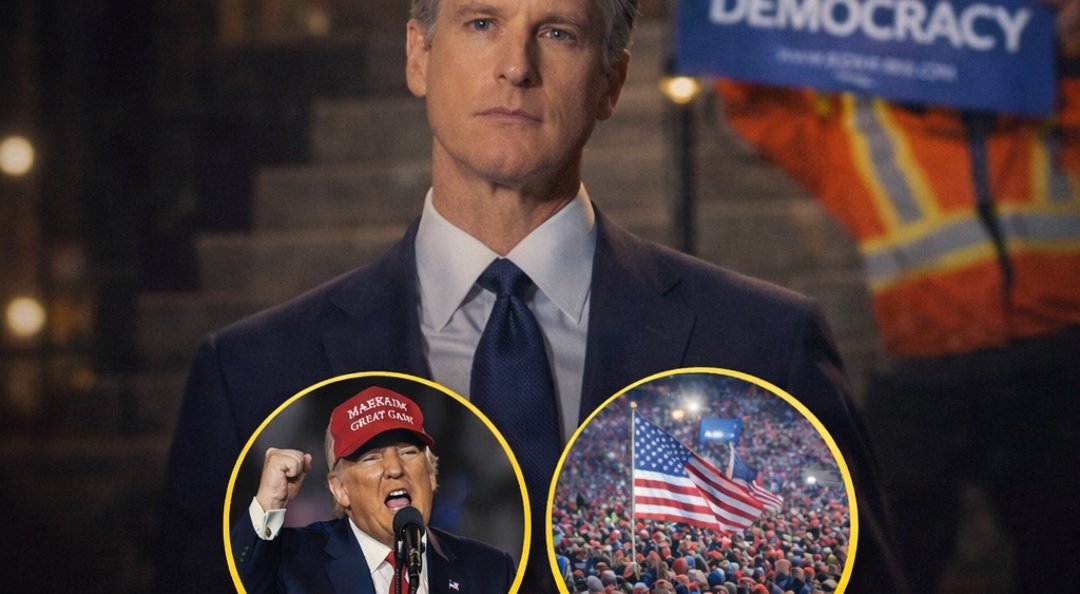
Critics of Newsom counter that majority sentiment is not determined by approval surveys alone. Elections are decided by turnout and the Electoral College, not raw national polling. Official results from recent federal elections, documented in Federal Election Commission reporting, show how vote distribution — not just total votes — shapes political outcomes. That structural reality continues to define American governance.
Still, the “majority” debate has become symbolic in 2026. It now represents a broader philosophical fight over who truly speaks for the country. Is it the candidate who dominates their party? Or the coalition that reflects a statistical plurality across regions and demographics?
Newsom’s language suggests he believes the latter is decisive. He has framed Trump’s political strength as concentrated rather than expansive. In other words, powerful but not wide-reaching enough to claim national consensus.
The timing of the renewed message is not accidental. With midterm tensions simmering and policy fights unfolding in Congress, both parties are testing narratives ahead of the next presidential cycle. Democrats want to reinforce the idea that Trump’s movement, while energized, does not mirror the broader electorate. Republicans argue the opposite — that institutional barriers, media framing, and electoral mechanics distort public will.
What makes 2026 distinct is the cumulative fatigue factor. After years of legal disputes, investigations, and polarizing rhetoric, voter exhaustion has become part of the equation. Political strategists across the spectrum acknowledge that enthusiasm gaps can determine outcomes more than persuasion alone.
For Newsom, framing Trump as outside the majority serves two purposes. First, it reassures moderates and independents that they are not isolated in their skepticism. Second, it attempts to chip away at the perception of inevitability that often surrounds Trump’s candidacy.