
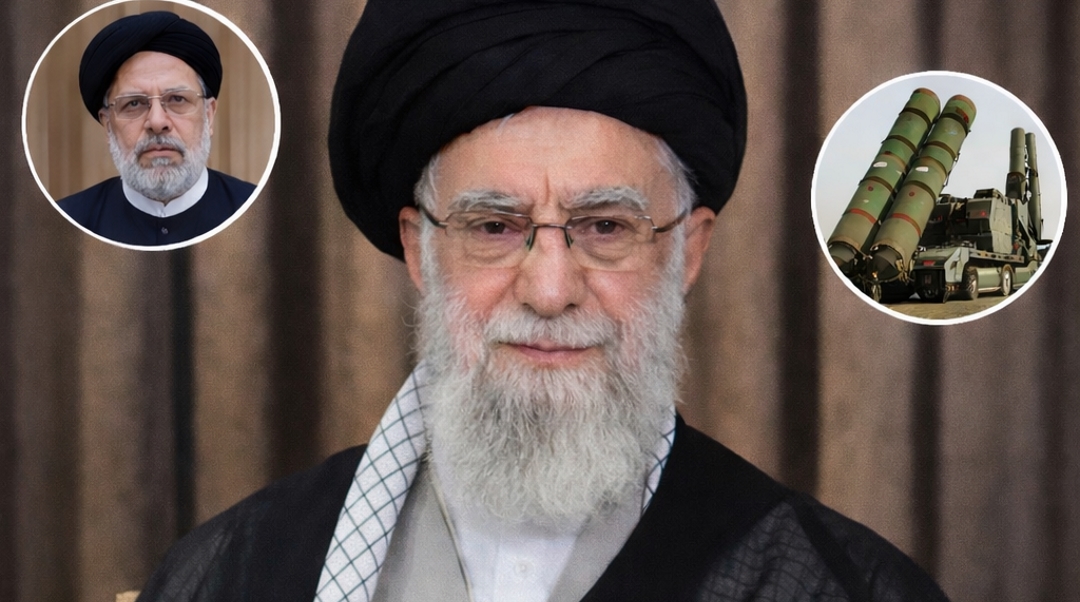
Iran has officially confirmed the death of its Supreme Leader, a moment that could mark one of the most significant turning points in the country’s modern political history. The announcement, delivered through state media and later echoed by senior government figures, immediately set off speculation inside Iran and across the world about what happens next.
The Supreme Leader is the most powerful figure in Iran’s political system, holding authority over the military, judiciary, intelligence apparatus, and many key national decisions. With that position suddenly vacant, the country now faces a rare and delicate transition that could reshape the balance of power in Tehran.
Under Iran’s constitution, the responsibility for selecting a new Supreme Leader falls to the Assembly of Experts, a body of clerics tasked with overseeing the leadership of the Islamic Republic. While the process exists on paper, transitions at this level are highly sensitive and often influenced by behind-the-scenes political maneuvering.
Iranian state television described the moment as one of national mourning while also emphasizing stability. Officials urged the public to remain calm and assured citizens that state institutions remain fully operational. Security forces were placed on heightened alert in major cities as crowds gathered for memorial ceremonies.
International observers are watching closely because leadership changes in Iran rarely occur without geopolitical consequences. The Supreme Leader shapes foreign policy, nuclear negotiations, military posture, and regional alliances. Any shift in leadership could affect relations with the United States, Israel, Gulf states, and Europe.
One of the most immediate questions is who might emerge as the next leader. Analysts have long speculated about possible successors, including senior clerics and figures tied to Iran’s powerful Revolutionary Guard. Each potential candidate represents a slightly different direction for the country’s political future.
Some experts believe the transition could reinforce the current system rather than transform it. Iran’s political structure was designed to survive leadership changes, and key institutions have already begun signaling continuity. Others argue that even subtle shifts at the top can ripple through the entire system.
The global reaction was swift. Governments across the Middle East issued statements calling for stability, while Western officials emphasized the importance of monitoring the transition. Diplomatic analysts note that leadership changes often open temporary windows for policy recalibration.
For context, the role of Supreme Leader was established after Iran’s 1979 revolution and has remained the central pillar of the country’s political framework ever since. The position carries authority beyond that of a traditional head of state. According to background information compiled by Encyclopaedia Britannica’s overview of Iran’s leadership structure, the office oversees military leadership, state broadcasting, and the final say in strategic decisions.
Inside Iran, reactions have been mixed. Some citizens expressed grief and national solidarity, particularly among those who strongly supported the ruling establishment. Others responded with uncertainty, unsure what the change might mean for daily life, economic conditions, and civil freedoms.
The economic stakes are considerable. Iran has faced years of sanctions, inflation, and fluctuating currency values. Investors and regional markets often react strongly to political uncertainty, and analysts are watching for signs that the leadership transition could influence economic policy.
Military considerations are also central. Iran’s armed forces, including the Revolutionary Guard, operate under the authority of the Supreme Leader. Ensuring continuity within the military hierarchy will likely be one of the government’s top priorities during the transition period.
Regional tensions could further complicate the moment. Iran remains deeply involved in Middle Eastern geopolitics through alliances, proxy groups, and strategic partnerships. Leadership changes sometimes invite external pressure or diplomatic testing from rival states.
Some analysts believe the internal dynamics of the ruling elite will matter more than public politics. In Iran, key decisions often emerge from negotiations among clerical authorities, military leadership, and influential political networks. The next Supreme Leader may ultimately be the candidate capable of maintaining consensus among these factions.
Observers have pointed to previous leadership transitions as a guide, though no two moments are identical. The last succession reshaped Iran’s power structure in ways that were not immediately visible but became clearer over time. Many experts expect the same could happen again.
The broader world is also evaluating what the change might mean for diplomacy. Iran’s nuclear program remains one of the most sensitive international issues. Any new leadership figure will inherit negotiations, tensions, and expectations surrounding that program.
Information about the transition continues to develop. International reporting agencies note that Iranian authorities are carefully controlling messaging while emphasizing unity and stability. Coverage from global outlets such as Reuters’ Middle East news desk highlights the uncertainty that typically surrounds leadership changes in tightly managed political systems.
For now, the focus inside Iran remains on mourning ceremonies and official statements honoring the late leader. Massive public gatherings are expected in major cities, with senior officials delivering speeches meant to reinforce national cohesion.
Behind those ceremonies, however, political calculations are likely underway. Selecting the next Supreme Leader is one of the most consequential decisions the Islamic Republic can make. The individual chosen will shape the country’s domestic direction and international posture for years.
Whether the transition leads to continuity or subtle transformation remains unclear. Iran’s political system has shown resilience during past crises, yet moments like this inevitably test the structure.
As the world watches, one thing is certain: the death of Iran’s Supreme Leader marks the beginning of a new chapter for the country. The coming weeks will reveal whether the shift strengthens the existing order or opens the door to unexpected change.