
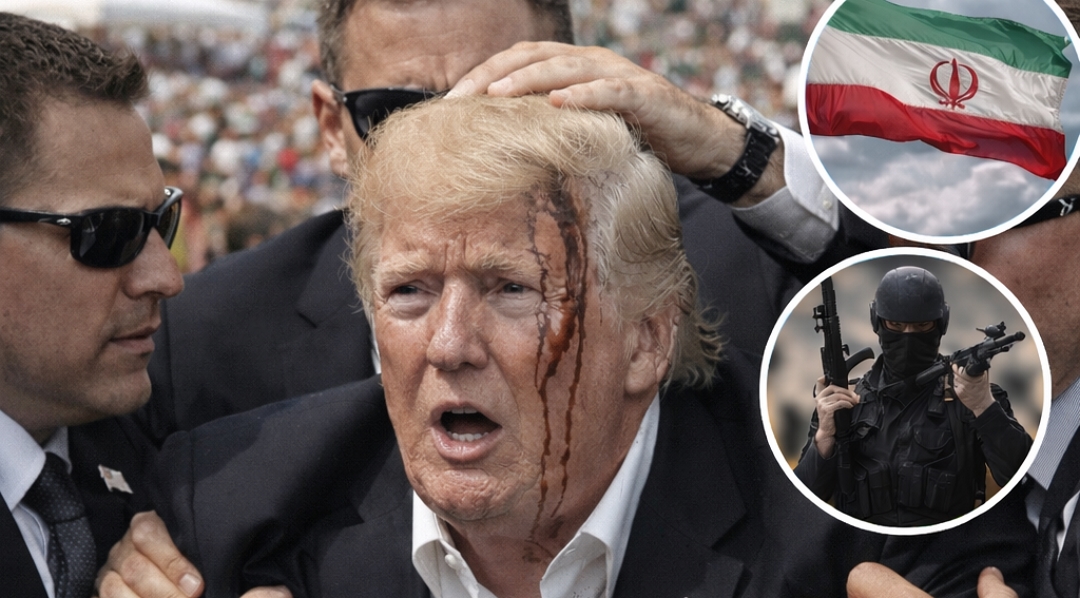
Iranian state television has aired a message interpreted by many viewers as a threat toward Donald Trump, with language implying that “next time” an attack would not fail. The broadcast, which spread rapidly online, immediately drew condemnation from critics who said it crossed a line from propaganda into incitement.
The remark landed in a country still raw from the shock of the attempted assassination attempt on Trump last year, and in a region where U.S.-Iran tensions never stay quiet for long. Even without an official policy statement attached, the tone was enough to set off a familiar chain reaction: viral clips, political outrage, and urgent questions about whether security agencies treat it as credible.
Iran’s state broadcaster, known as the Islamic Republic of Iran Broadcasting, operates under government influence and often reflects the regime’s messaging priorities, but the line between rhetoric and operational intent is not always clear. In the past, hardline media outlets and affiliated figures have used inflammatory language about U.S. leaders, especially when domestic politics inside Iran reward outward defiance.
What makes this episode especially volatile is the timing. Trump remains a central symbol in Iran’s political narrative because of the 2020 U.S. strike that killed Qassem Soleimani, and the regime has repeatedly vowed retaliation in various forms ever since.
In the U.S., threats against a former president are treated with extreme seriousness regardless of the source, and the assessment does not depend on whether the threat came from a foreign government, an individual, or a broadcast. Protective agencies evaluate intent, capability, pattern, and whether the messaging could inspire copycats or lone actors who interpret it as permission to act.
The agency primarily responsible for presidential protection is the U.S. Secret Service, which routinely investigates threats and coordinates with federal and local partners. Even when officials do not publicly discuss protective details, elevated threats typically influence travel planning, venue security, staffing, screening procedures, and how closely online chatter is monitored.
The Iranian broadcast also collided with a broader pattern in which political violence and political language feed each other. A single menacing line on state TV can become content for extremist corners of the internet, where it can be reinterpreted, remixed, and used to glorify the idea of violence as a political tool.
That risk is not hypothetical. Security experts have long warned that violent rhetoric can function like a spark in dry grass, especially when audiences are already primed by conspiracy culture, grievance politics, or geopolitical anger.
At the same time, it is important to separate what is known from what is merely suggested. A threatening statement, even from a state-aligned broadcaster, is not the same thing as operational evidence of a planned attack, and it does not automatically indicate a direct order from the highest levels of government. But protective agencies are not in the business of assuming the best-case scenario, particularly after a world in which “unlikely” events have happened on camera.
Trump’s allies framed the remark as proof that he remains a target of hostile foreign actors and argued that the U.S. should respond forcefully to any rhetoric that appears to encourage assassination. Critics of Trump, while condemning threats as unacceptable, warned against using a dangerous message as political fuel in a domestic fight.
Diplomatically, statements like this also complicate already fragile channels. Even when official spokespeople remain silent, hostile messaging can tighten the political space for negotiation, because leaders on both sides face internal pressure not to appear weak.
For Iran, hardline messaging can serve multiple purposes at once: rallying domestic supporters, projecting strength externally, and reinforcing the idea that the regime remains in a permanent struggle with the United States. For American audiences, it can read as something else entirely: an ominous signal that a foreign adversary is willing to flirt with political assassination rhetoric on public airwaves.
What happens next depends on whether U.S. officials treat the broadcast as noise, as a propaganda stunt, or as part of a wider threat environment that includes online actors and transnational networks. In the background, security assessments will continue quietly, because that is how protection works: the public sees the headline, while agencies track the details most people never know exist.
One thing is nonnegotiable in any democracy: threats of political violence are never normal, never acceptable, and never harmless, even when they are packaged as “messaging.” In a moment where tension is already high, that kind of language does not just inflame opinion, it raises the stakes.