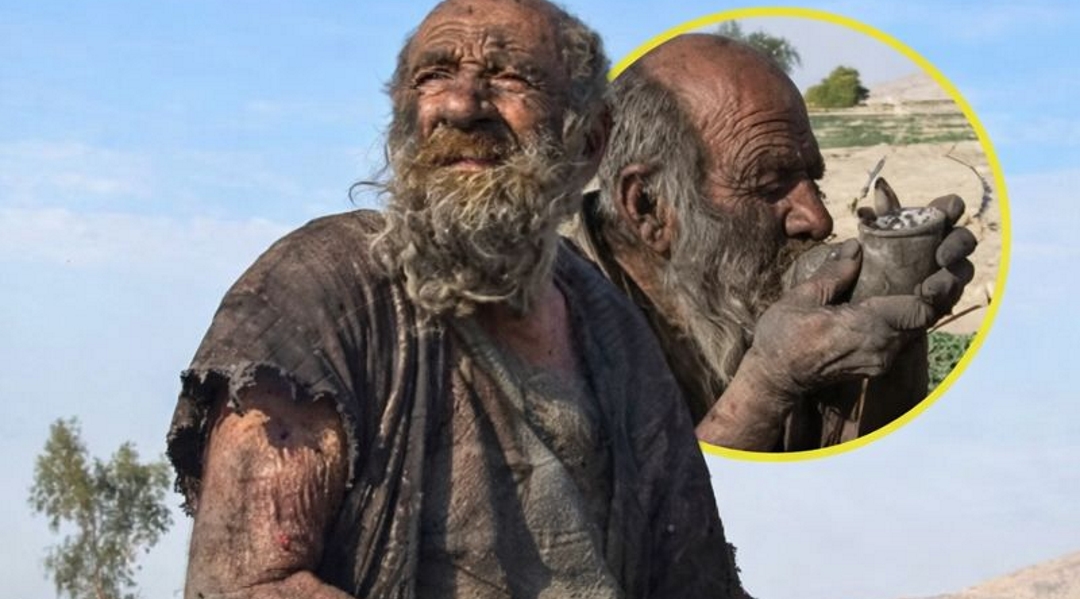
In a dusty corner of southern Iran, a man spent more than half a century refusing the most basic ritual most people take for granted: a wash. His name was Amou Haji, a nickname locals used for an older man, and for years his life felt like something halfway between a folk tale and a documentary that people shared with disbelief. Then, in October 2022, reports said he died at 94 in the village of Dezhgah in Fars province, and the strange details of his life rushed back into the spotlight all at once.
What made the story hit so hard wasn’t just the spectacle of it. It was the way his choices seemed to be wrapped in fear and stubborn self-protection, like he’d built a life around the one thing he believed would keep him alive: staying exactly as he was. According to a report describing the local accounts of his death, he had avoided bathing for decades because he believed it would make him sick, and villagers had recently persuaded him to wash for the first time in years, with headlines later drawing a dramatic line between that bath and what happened next.
But even in the most viral versions, the truth is murkier than the meme. The reporting did not prove that washing killed him, and no widely published medical explanation has ever neatly tied a single bath to a death at 94. Still, the timing became part of the narrative because it felt like a cruel twist: a man who spent his whole adult life convinced cleanliness would harm him finally relented, and then he was gone not long after.