
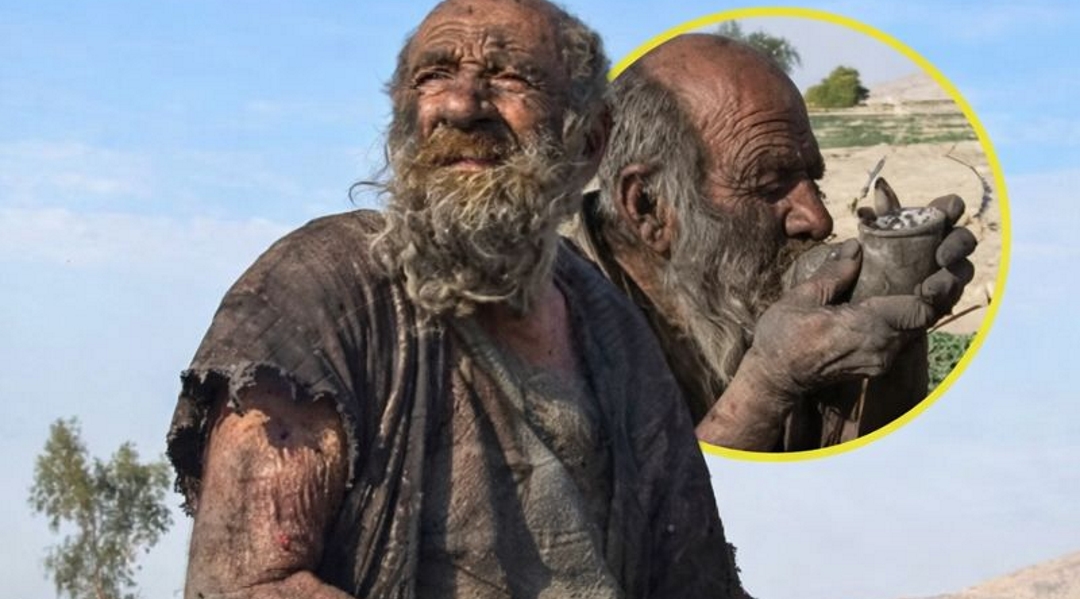
In a dusty corner of southern Iran, a man spent more than half a century refusing the most basic ritual most people take for granted: a wash. His name was Amou Haji, a nickname locals used for an older man, and for years his life felt like something halfway between a folk tale and a documentary that people shared with disbelief. Then, in October 2022, reports said he died at 94 in the village of Dezhgah in Fars province, and the strange details of his life rushed back into the spotlight all at once.
What made the story hit so hard wasn’t just the spectacle of it. It was the way his choices seemed to be wrapped in fear and stubborn self-protection, like he’d built a life around the one thing he believed would keep him alive: staying exactly as he was. According to a report describing the local accounts of his death, he had avoided bathing for decades because he believed it would make him sick, and villagers had recently persuaded him to wash for the first time in years, with headlines later drawing a dramatic line between that bath and what happened next.
But even in the most viral versions, the truth is murkier than the meme. The reporting did not prove that washing killed him, and no widely published medical explanation has ever neatly tied a single bath to a death at 94. Still, the timing became part of the narrative because it felt like a cruel twist: a man who spent his whole adult life convinced cleanliness would harm him finally relented, and then he was gone not long after.
For people who only saw the photos, it was easy to reduce him to a headline. He was described as covered in grime, living outdoors, and shunning the routines that most of us associate with dignity and health. Stories about him often repeated the same jarring details: the cigarettes, the isolation, the way he seemed to exist in a different century even while the world around him was modernizing. The images did what images always do online — they turned him into a character — but the underlying human question never really went away. What kind of heartbreak or trauma makes someone decide the safest thing is to never be touched by water again?
Some accounts said he was pushed into isolation by emotional setbacks, the kind of vague phrase that feels too small to carry the weight of a lifetime. If that’s true, it suggests something sadder than shock value: that his refusal to bathe wasn’t just eccentricity, it was armor. In that frame, his “rules” weren’t a stunt or a quirky habit. They were a system he believed kept danger out, even if it also kept comfort out.
Locals in his area reportedly tried to help him at different times, sometimes building a simple shelter, sometimes urging him to change his habits, sometimes backing off when it was clear pressure only made him dig in harder. There’s a particular kind of loneliness to that dynamic — people watching someone slip further outside the boundaries of normal life, unsure whether intervention is kindness or violence when the person refuses it. Even the widely repeated detail that he was “persuaded” to wash can land differently depending on how it happened: gentle coaxing is one thing; force is another.
And then there’s the way the internet treated the story once it broke. The immediate impulse was to moralize: to claim it proved a point about hygiene, or to laugh at the idea that washing “finally did him in,” or to turn it into a spooky cautionary tale. But that kind of simplicity doesn’t match the reality of aging, poverty, isolation, and mental health. If he lived to 94 with extreme habits, it doesn’t mean those habits were safe. It means the human body is sometimes stubbornly resilient until it isn’t, and the moment it stops being resilient, people want a single clean explanation.
The starkest truth is that at 94, death doesn’t need a cinematic trigger. It can come after a cold night, a small infection, a weakened heart, or simply the quiet accumulation of years. Reports from major outlets framed his death as something Iranian state media confirmed, describing him as a hermit figure whose lifestyle had become famous far beyond his village. One widely shared account of the announcement also emphasized that his bathing avoidance was tied to fear of illness, and that he died in Dezhgah after finally washing months earlier, with the timing repeatedly highlighted because it stunned readers.
What remains, after the shock wears off, is the unsettling image of a life lived on the edge of society — not in the glamorous, romanticized way people sometimes imagine “hermits,” but in the gritty, physically harsh way that ages a body and narrows a world. If you strip away the headline, his story is still about a person who didn’t trust safety, didn’t trust institutions, didn’t trust the basic comforts most people rely on, and kept choosing the familiar over the unknown even when the familiar looked brutal.
And that’s why the story still lands. Because there’s something deeply human, and deeply disturbing, about the idea that someone could believe the very thing meant to care for them — soap, water, help — was the threat. Whether the final chapter involved a bath, an illness, or simply time running out, the grim takeaway isn’t “cleanliness kills.” It’s that fear can shape an entire life, and the world will only notice it at the end, when it’s too late to ask what happened at the beginning.