
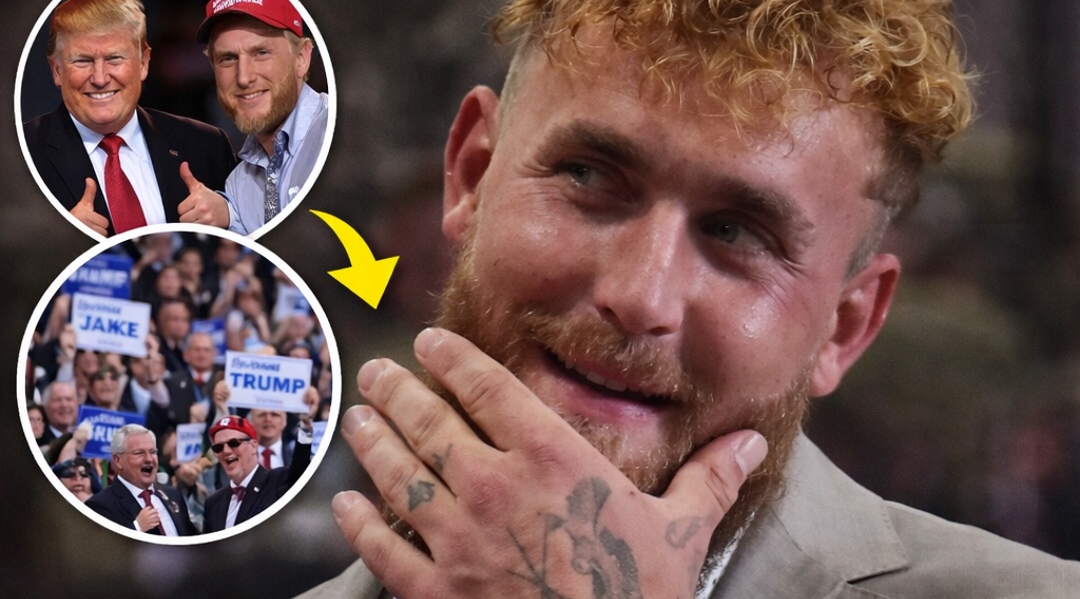
Jake Paul has spent years building a career on attention. From viral YouTube stunts to headline-grabbing boxing matches, controversy has often followed him as closely as his millions of followers.
Now, a different kind of conversation is forming around his name — not about pay-per-view fights or social media feuds, but about whether internet fame can translate into political credibility.
The latest wave of discussion comes after public commentary and online speculation about Paul’s potential political ambitions, alongside reactions from political figures who have occasionally praised his influence among younger audiences.
The idea itself reflects a broader shift already happening in American culture.
Influencers, athletes, and entertainers are increasingly stepping into political conversations, sometimes testing whether personal brands built online can carry weight in traditional institutions. Paul, with more than 20 million YouTube subscribers and a massive Gen-Z following, represents a test case for how that crossover might look.
But popularity online does not always translate to public trust offline.
Recent polling discussions circulating online suggest mixed public perception. Among his core fan base, Paul is often viewed as an ambitious entrepreneur who successfully reinvented himself from controversial creator to combat sports promoter.
Among critics, however, skepticism remains tied to his past controversies, including public stunts, regulatory scrutiny during his early influencer years, and questions about whether entertainment personas can adapt to the responsibilities of governance.
Political strategists say this divide is not unusual.
Celebrity interest in politics often produces strong reactions because name recognition can be both an advantage and a liability. While it guarantees visibility, it also brings years of public record that voters may scrutinize differently when leadership is involved.
The phenomenon is not entirely new.
The United States has seen entertainers successfully transition into politics before, most notably Ronald Reagan and Donald Trump, both of whom leveraged media familiarity into political campaigns built around outsider appeal.
You can read more about how celebrity candidates have historically performed in U.S. elections here:
Overview of celebrity involvement in politics
For Paul, the speculation appears driven more by discussion than by any formal campaign structure. There has been no official filing for office, no campaign committee announcement, and no policy platform released.
That makes much of the current conversation theoretical rather than procedural.
Still, his name surfacing in political discussions highlights how influence itself has become a form of currency. Analysts who study digital culture say follower counts can sometimes function like early political capital — a built-in audience that traditional candidates spend years trying to assemble.
At the same time, approval ratings — when discussed — often reveal the limits of that influence.
While supporters point to his business ventures, boxing promotion company, and ability to attract younger viewers to sports, critics question whether those achievements translate into public service experience.
This tension reflects a larger generational question: whether younger voters raised in the creator economy evaluate leadership differently than previous generations.
Some see entrepreneurial success as proof of capability. Others still prioritize traditional political or legal experience.
Public reaction online mirrors that divide.
Some commenters describe Paul as an example of self-made success in the digital era, while others argue that politics requires a fundamentally different skill set than entertainment or sports promotion.
Researchers who study voter behavior say this kind of polarization is typical when nontraditional figures enter political discussion. Recognition creates curiosity, but credibility tends to depend on policy positions, communication discipline, and long-term public engagement beyond entertainment.
Guidelines about who can run for federal office remain straightforward regardless of fame.
The U.S. Constitution sets basic eligibility requirements for candidates, focusing on age, citizenship, and residency rather than profession or background.
You can review those constitutional requirements here:
Full text of U.S. constitutional eligibility rules
For now, Paul remains what he has long been: a polarizing but undeniably effective attention-builder whose next move often keeps both fans and critics watching.
Whether that attention ever turns into a formal political path remains uncertain.
What is clear is that the conversation itself says as much about modern politics as it does about Jake Paul — a landscape where visibility, personality, and audience loyalty increasingly intersect with traditional ideas about leadership.
And until any real campaign takes shape, the discussion around his political future may say less about his intentions and more about how Americans now measure influence itself.