The stakes are immense. Japan’s monarchy traces its lineage back more than 2,000 years, a continuity that has survived wars, occupations, political upheaval, and constitutional change. Today, that continuity rests on a single life path.
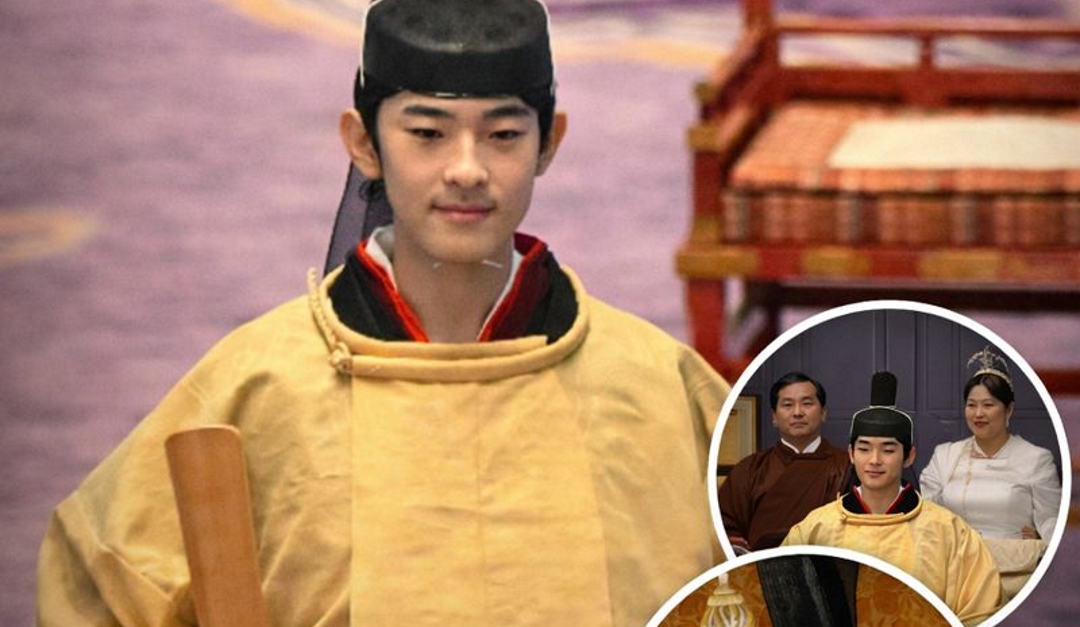
Now a university student, Prince Hisahito has begun appearing more frequently at public ceremonies, marking a subtle but deliberate shift in how the Imperial Household Agency prepares the public for his eventual role. His appearances are measured, formal, and carefully choreographed, reflecting both tradition and the enormous expectations placed upon him.
Under Japan’s post-war constitution, the emperor serves as a symbolic figure rather than a political ruler. Still, the role carries immense cultural, historical, and emotional significance. Any disruption to the succession would force Japan to confront long-avoided questions about gender, tradition, and modernization.
Those questions are already simmering. Polls consistently show that a majority of the Japanese public supports allowing women to ascend the throne. Several former prime ministers and constitutional scholars have argued that reform is inevitable if the monarchy is to survive.
Yet political resistance remains strong among conservative lawmakers, who view male-only succession as essential to preserving imperial legitimacy. For them, changing the rules risks breaking an unbroken paternal line that they consider sacred.
The result is a system under strain. If Prince Hisahito were to choose a life outside royal expectations, face health challenges, or simply not have male children, Japan could find itself without a legal successor.
This reality has quietly reshaped how the country views the young prince. Every milestone — his education, his public demeanor, his future marriage — is now watched through the lens of national continuity rather than personal growth.
Experts say the pressure is unprecedented. Unlike previous heirs, Prince Hisahito does not share the burden with siblings or cousins. He alone represents the future of the throne under current law.
The situation has prompted renewed debate in parliament, with some lawmakers proposing limited reforms, such as allowing female members to remain in the imperial family after marriage. Others argue that full female succession must be considered sooner rather than later.
So far, the government has avoided sweeping change, opting instead for incremental adjustments that preserve tradition while buying time. Critics say this strategy merely postpones an inevitable reckoning.
International observers have also taken note. A detailed breakdown of Japan’s looming succession dilemma can be found in reporting examining how the monarchy reached this point, outlining the demographic and political forces behind the crisis.
For Prince Hisahito himself, the challenge is deeply personal. He has expressed interest in biology and environmental studies, signaling a desire for an academic life alongside royal duties. Balancing those ambitions with the expectations of an ancient institution will define much of his adulthood.
The imperial family has traditionally maintained a careful distance from public commentary, and Prince Hisahito has not spoken openly about the weight of his role. Instead, the message conveyed through official appearances is one of calm continuity.
But behind the formality lies a stark reality: Japan’s monarchy has no margin for error. One unexpected turn could force rapid legal change or plunge the institution into uncertainty.
Historians note that Japan has had female emperors in the distant past, even if modern law excludes them. That historical precedent has fueled arguments that reform would not break tradition so much as restore it.
The debate is no longer theoretical. As Emperor Naruhito ages and Crown Prince Akishino advances toward the throne, attention will increasingly shift to the next generation — a generation represented by a single name.
More context on Prince Hisahito’s upbringing and the public debate surrounding his role is available in coverage exploring how Japan is preparing its last male heir, highlighting the delicate balance between privacy and national expectation.
For now, the monarchy endures, carried forward by ceremony, law, and the quiet presence of a young man growing into a role centuries older than the nation itself.
Whether Japan ultimately chooses reform or tradition, one truth is clear: the future of the world’s oldest monarchy has never depended so heavily on one person.