
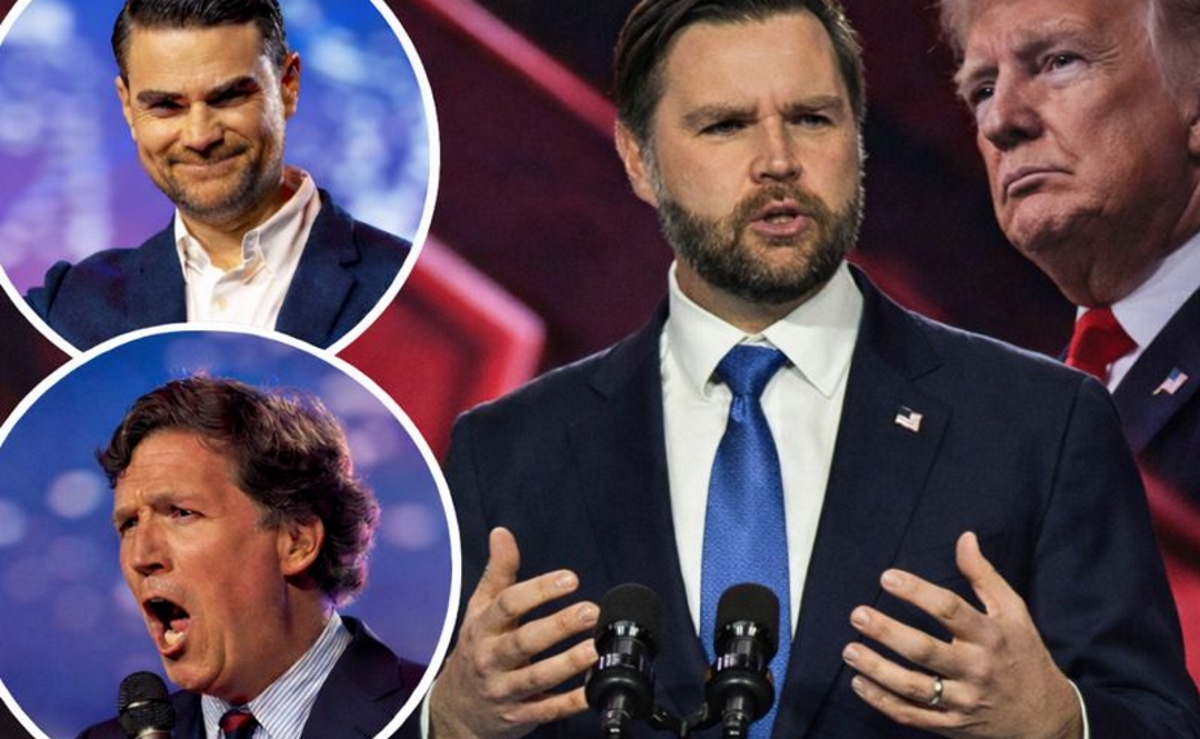
JD Vance walked onto the AmericaFest stage expecting applause and instead ignited a fault line that has been quietly splitting the MAGA movement from within. In a moment that surprised even seasoned activists in the room, the Ohio senator turned his fire inward, warning conservatives that their growing habit of “canceling each other” is tearing the movement apart.
The remarks landed with a thud at AmericaFest, an annual gathering organized by Turning Point USA that has become a proving ground for conservative stars and future power brokers. The audience, primed for red-meat rhetoric aimed at Democrats and the media, instead found itself being told to look in the mirror.
Vance, long viewed as a bridge between populist MAGA voters and institutional Republican power, made it clear he believes the internal bloodletting has reached a dangerous point. He described a movement so eager to purge dissent that it risks shrinking itself into irrelevance, a warning that cut against the prevailing mood of ideological purity tests.
Speaking plainly, argued that conservatives have adopted the very tactics they once claimed to despise. “If someone disagrees with you on one issue,” he said, “the instinct now is to destroy them.” The line drew a mix of applause and visible discomfort from the crowd.
The comments immediately reverberated through conservative media spaces, where factionalism has been simmering for years. Influencers, podcasters, and grassroots organizers have increasingly turned on one another over loyalty tests, personal feuds, and competing visions of what MAGA should become, a dynamic quietly explored in behind-the-scenes reporting on movement fractures.
Watching JD Vance tell MAGA activists to stop canceling each other was not on my AmericaFest bingo card. — Conservative commentator (@RightWingWatch) Dec 2025
AmericaFest itself has become a symbol of MAGA’s evolution — and its growing pains. What began as a youth-focused conservative conference has morphed into a sprawling arena of competing factions, where loyalty to Donald Trump is assumed but agreement on strategy is anything but.
Vance’s intervention came as tensions between establishment-aligned conservatives and hardline purists have escalated. Disputes over foreign policy, tech regulation, and even personal conduct have spiraled into public pile-ons that leave little room for disagreement without exile.
In his speech, Vance warned that a movement obsessed with purging its own ranks will struggle to govern even if it wins elections. He framed the issue not as ideological softness, but as strategic self-sabotage, echoing arguments raised quietly in long-form analysis of coalition politics that rarely make it onto rally stages.
The reaction was split almost immediately. Some attendees praised Vance for saying what many had been thinking but were afraid to voice. Others accused him of undermining accountability and protecting bad actors under the guise of unity.
Unity without accountability is how movements rot from the inside. — MAGA activist (@PatriotPulse) Dec 2025
Vance anticipated that criticism, arguing that disagreement is not the same as betrayal. He pointed out that a movement demanding total conformity will inevitably turn inward, devouring allies until only a narrow echo chamber remains.
That argument strikes at the heart of MAGA’s identity crisis. Is the movement a big-tent populist revolt, or a tightly policed ideological tribe? The answer has shifted depending on who holds the microphone, a tension visible in recent examinations of Republican factional warfare.
Vance’s position is especially notable given his own political evolution. Once a sharp critic of Donald Trump, he reinvented himself as a MAGA-aligned figure who speaks the language of populist grievance while courting institutional legitimacy. That balancing act has made him both influential and suspect.
At AmericaFest, he leaned into that contradiction rather than running from it. He framed his warning as tough love, insisting that a movement incapable of internal debate will collapse under its own weight.
A movement that eats its own eventually starves. — Political strategist (@CampaignSignals) Dec 2025
Some observers believe Vance is positioning himself as a future unifier — someone who can inherit MAGA energy without inheriting its self-destructive tendencies. Others see the speech as a risky gamble that could alienate the most aggressive activists who dominate online discourse.
The timing of the remarks also mattered. With multiple conservative leaders jockeying for influence, internal conflict has intensified as the stakes grow higher. Every disagreement now feels existential, every misstep amplified into a loyalty crisis.
Vance argued that this environment discourages capable people from entering politics altogether. He warned that if every disagreement becomes grounds for exile, the movement will be left with performers rather than problem-solvers.
That sentiment resonated with some younger attendees, who say the online culture of constant denunciation feels unsustainable. They described an ecosystem where mistakes are unforgivable and apologies meaningless, a reality discussed more broadly in research on movement collapse.
Still, skepticism remains. Critics question whether calls for unity are genuine or simply a way to protect rising leaders from accountability. They argue that “canceling each other” is often just a euphemism for refusing to tolerate harmful behavior.
Vance pushed back on that interpretation, insisting that moral standards and internal debate can coexist. The danger, he said, is when disagreement becomes indistinguishable from treason.
The speech also underscored a deeper anxiety within MAGA circles: winning elections is not the same as governing effectively. Vance suggested that a movement unable to manage internal conflict will struggle to translate power into policy.
Winning isn’t the hard part. Governing is. — Policy commentator (@GovWatch) Dec 2025
As clips from the speech spread online, reactions hardened along predictable lines. Some praised Vance as a rare voice of restraint. Others accused him of weakening the movement at a critical moment.
What’s undeniable is that the speech exposed cracks that have been widening for years. The MAGA coalition now includes libertarians, nationalists, religious conservatives, and online provocateurs — groups united more by opposition than by consensus.
Vance’s warning suggested that opposition alone may no longer be enough. Without a shared tolerance for disagreement, the movement risks imploding before it can consolidate power.
Whether his message takes hold remains uncertain. MAGA has thrived on conflict, and asking it to turn down the temperature may be easier said than done.
But by choosing AmericaFest as the venue for this confrontation, Vance ensured the debate could not be ignored. In front of thousands of activists, he forced a reckoning over what kind of movement MAGA wants to be — and whether it can survive its own appetite for purity.
For now, the civil war he named is no longer whispered. It’s out in the open, playing out in speeches, social feeds, and power struggles that will shape the movement’s future.
And whether JD Vance emerges as a mediator or another casualty of that war may depend on whether MAGA is willing to hear what it doesn’t want to hear.