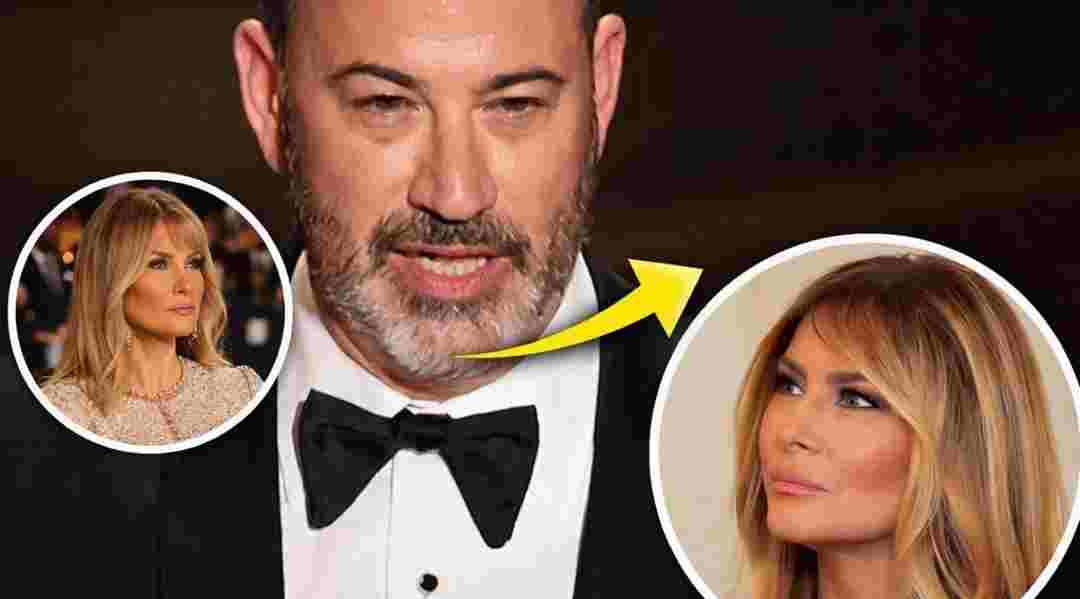
Award shows have long walked a careful line between entertainment and commentary, but every year there is usually at least one moment that reminds audiences how thin that line can be.
During his time on stage at the Academy Awards, late-night host Jimmy Kimmel delivered a series of jokes that touched on politics, celebrity culture, and the personalities who often sit at the intersection of both.
One remark referencing former First Lady Melania Trump quickly became a talking point online.
As is often the case with awards show humor, reactions depended largely on where viewers already stood. Some audiences viewed the joke as part of the long tradition of political satire that has shaped late-night television for decades. Others criticized it as an unnecessary personal reference during what is meant to be a celebration of film.
The moment reflects a broader reality about modern awards ceremonies.
Hosts are often expected not just to entertain, but to generate viral moments. In the social media era, a monologue can reach far beyond the theater audience within minutes, making sharp humor both a risk and a strategy.
Kimmel, who has hosted the Oscars multiple times, is known for mixing traditional celebrity humor with political commentary — a style that mirrors the tone he has developed over years on late-night television.
You can read more about the history of Oscars hosts and their evolving role here:
History of Academy Awards ceremonies
Political references at the Oscars are hardly new.
From speeches about war and civil rights to commentary on elections and social issues, the ceremony has often reflected the broader national conversation. Some viewers see this as part of Hollywood’s cultural voice, while others argue it risks alienating audiences who prefer entertainment without political framing.
Media scholars say these tensions have grown as audiences themselves have become more politically polarized.
What once might have been received as general satire is now often interpreted through partisan lenses, meaning even brief jokes can trigger outsized reactions online.
For public figures mentioned in such moments, responses vary. Some ignore the remarks entirely, while others respond through media statements or social media.
In this case, there has been no widely reported direct response connected to the specific joke referenced in online discussions.
The episode underscores how awards shows have evolved from industry celebrations into global media events where even small moments can dominate headlines for days.
Entertainment analysts say the challenge for hosts is balancing humor that feels relevant without overshadowing the achievements the ceremony is meant to recognize.
You can read more about how awards shows have adapted to the social media era here:
Research on social media’s influence on media events
For viewers, the debate often comes down to expectation. Some tune in for escapism, others for commentary, and increasingly, award shows attempt to deliver both.
As long as comedians host major ceremonies, moments like this are likely to remain part of the landscape — brief lines in a monologue that sometimes travel further than the awards themselves.
And as this year’s reaction shows, the conversation that follows can be just as much a part of the show as anything that happens on stage.