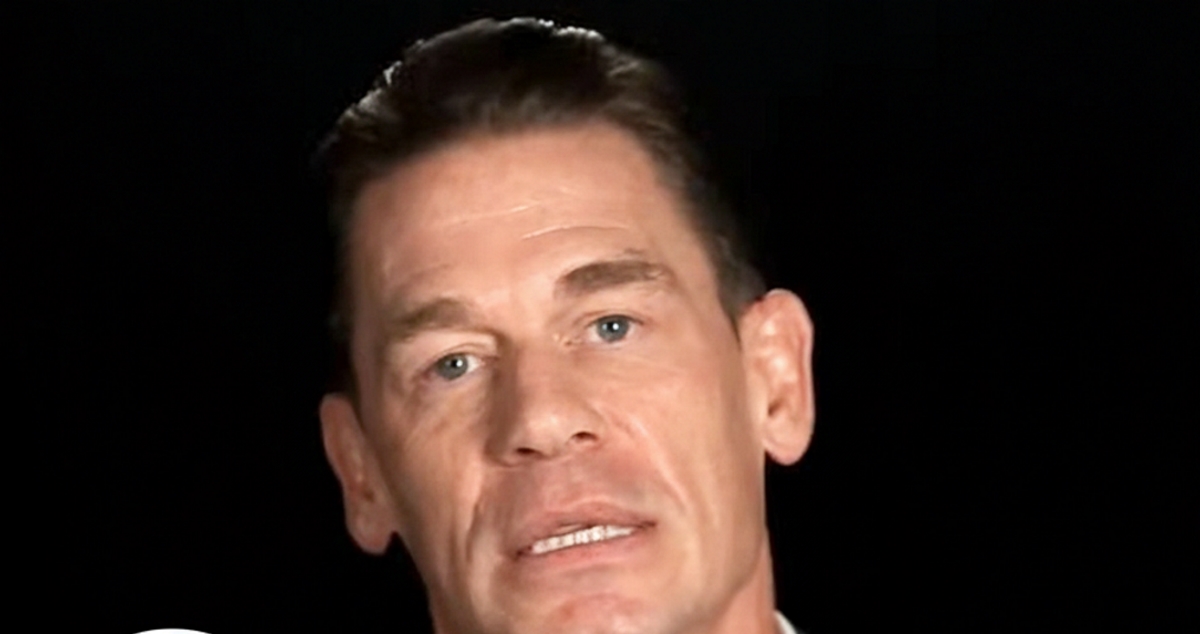
The image stopped fans cold. John Cena, usually framed as indestructible, suit pressed, posture firm, staring straight into the camera as the words “cancer diagnosis revealed” spread across screens. For a man whose career was built on strength and invincibility, the message carried a very different weight.
Cena has now confirmed that he has faced cancer — not once, but multiple times — a reality he says forced him to confront his own mortality in ways fame and physical conditioning never prepared him for.
The diagnosis, he explained, was skin cancer. Quiet. Easily overlooked. And potentially deadly if ignored.
For years, Cena lived under intense lighting, outdoor training, and long filming schedules. Like many athletes and entertainers, he admits he didn’t prioritize sun protection early in his career. “I thought I was invincible,” he said in a recent conversation that resurfaced alongside the image now circulating.
Doctors later discovered cancerous spots that required immediate removal. One procedure turned into another. Then another. What initially felt routine quickly became a wake-up call.
Health experts say Cena’s experience mirrors a growing trend. Skin cancer remains one of the most common — and most underestimated — cancers, particularly among people who spend years exposed to sunlight without protection. According to longstanding dermatology research, early detection is critical, yet many patients delay screenings because symptoms feel minor.
Cena has been open about how the diagnosis reshaped his mindset. He described lying on a medical table realizing that muscle, discipline, and celebrity offered zero protection against biology.
“You don’t think it’ll be you,” he said. “Until it is.”
Fans reacted with shock not because cancer is rare, but because Cena rarely shows vulnerability. His public image has long been built on perseverance, endurance, and pushing through pain. Cancer forced him to slow down.
What unsettled many supporters was how close the danger came without dramatic warning signs. No collapse. No visible illness. Just a doctor pointing to a spot and saying it needed to be addressed immediately.
Medical professionals emphasize that skin cancer often progresses quietly. Reviews of public health data show that millions underestimate their personal risk, particularly men who are statistically less likely to seek preventive screenings.
Cena has since become outspoken about routine checkups, sunscreen use, and listening when something feels off — even if it doesn’t hurt.
The image has reignited discussion across social media, with fans expressing disbelief that someone as physically elite as Cena could be blindsided.
If John Cena can get cancer without realizing it, nobody should be skipping checkups.— Health Watch (@HealthWatchNow) June 2025
Others focused on the emotional impact. Cena admitted the diagnosis shook his sense of control. The man known for commanding arenas suddenly had to trust surgeons and pathology reports.
Psychologists note that high-performance individuals often struggle more with illness because identity is tied to capability. Research into illness and identity shows that confronting physical limits can trigger anxiety, humility, and deep reassessment.
Cena said the experience made him reevaluate priorities, relationships, and the illusion that discipline alone guarantees safety. Strength, he learned, also means paying attention.
Importantly, he emphasized that he is currently healthy and continues to work, but the word “cancer” never fully leaves once it enters your life. Every new spot. Every checkup. Every wait for results carries echoes.
Doctors confirm that prior skin cancer increases future risk, making lifelong vigilance essential. That reality, Cena says, is now part of his routine.
Fans have praised his willingness to speak publicly, noting that men — especially those idolized for toughness — rarely model preventive health behavior.
Public health advocates argue that visibility matters. When high-profile figures share experiences, screening rates rise. Studies examining celebrity health disclosures show measurable increases in early detection after public conversations.
The image itself feels intentionally stark. No wrestling gear. No movie costume. Just a man in a suit, speaking plainly about something that doesn’t care who you are.
John Cena talking about cancer hits hard because he’s always been the symbol of invincibility.— Pop Insight (@PopInsightHQ) June 2025
Cena has said he hopes people don’t see his story as fear, but as motivation. A reminder that prevention isn’t weakness, and paying attention isn’t paranoia.
He’s also acknowledged that had he ignored the signs longer, the outcome could have been far worse. That thought, he says, stays with him.
In an industry obsessed with appearances, his message cuts through: cancer doesn’t announce itself loudly. It doesn’t wait for the right moment. And it doesn’t care how strong you look.
The image now circulating isn’t about shock for shock’s sake. It’s about disruption — breaking the illusion that health is guaranteed if you train hard enough.
For fans who grew up chanting his name, the message lands differently. John Cena didn’t lose a match.
He faced something far more serious — and chose to talk about it.
And that honesty, many say, may end up saving lives far beyond his own.