
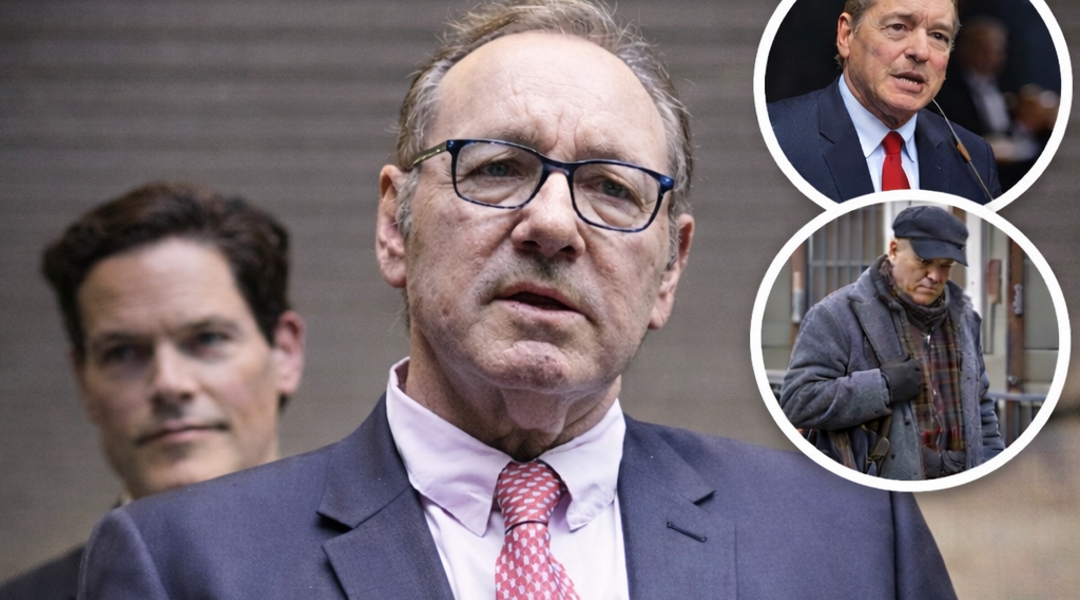
Kevin Spacey once lived at the center of Hollywood power. Oscar wins, acclaimed performances, private jets, and luxury homes were all part of his public image for decades. Now, seven years after multiple sexual assault allegations derailed his career, the disgraced actor says he no longer has a permanent home and is living day to day after what he describes as a total personal and financial collapse.
Spacey made the revelation during a recent interview in which he spoke candidly about the fallout from the allegations that surfaced in 2017. Although he has since been acquitted or had charges dropped in several criminal cases, he says the damage was already irreversible by the time legal outcomes were decided.
“I lost everything,” Spacey said, describing a period marked by isolation, financial strain, and the slow erosion of professional relationships. According to the actor, projects vanished overnight, longtime friends stopped returning calls, and the lifestyle he had built over decades disappeared faster than he ever imagined.
The allegations against Spacey first emerged during the height of the #MeToo movement, when actor Anthony Rapp accused him of sexual misconduct dating back to the 1980s. That accusation triggered a cascade of additional claims and resulted in Spacey being fired from major productions, including Netflix’s “House of Cards,” which had been one of the most successful series of his career.
As reporting on Spacey’s legal battles has detailed, the actor was later found not liable in a U.S. civil trial brought by Rapp and was acquitted in a high-profile criminal case in London. Still, those legal victories did little to restore his standing in the industry.
Spacey claims the financial consequences were devastating. He says legal fees drained his savings, work opportunities evaporated, and maintaining properties became impossible. At one point, he reportedly lost access to his Baltimore home after foreclosure proceedings, leaving him without a stable place to live.
In the interview, Spacey described couch-surfing, staying with acquaintances, and relying on temporary arrangements rather than a permanent residence. While he did not frame his situation as living on the streets, he emphasized that homelessness can take many forms and that losing housing stability was one of the most humiliating aspects of his downfall.
Critics have reacted sharply to Spacey’s comments, arguing that financial hardship does not erase the harm alleged victims say they experienced. Many online responses accused the actor of centering his own suffering while minimizing the impact of the accusations that reshaped public perceptions of abuse and power in Hollywood.
Others, however, pointed out the complexity of the situation. Spacey was removed from projects and effectively blacklisted long before courts weighed in on the allegations. For some observers, his case has become a flashpoint in debates over accountability, due process, and whether reputational punishment can outweigh legal outcomes.
Hollywood insiders say Spacey’s experience is an extreme example of how swiftly the industry can distance itself from controversy. Once studios, insurers, and distributors determine that an actor represents financial or reputational risk, even acquittals may not reverse those decisions.
Spacey himself acknowledged that reality. He said trust in the entertainment industry operates on perception as much as proof, and once that trust is broken, rebuilding it is nearly impossible. According to him, offers to return to acting have been minimal, and any attempts to restart his career have been met with resistance.
In analysis following his acquittal in the UK, legal experts noted that while Spacey avoided prison, the reputational consequences were always likely to be permanent. Civil liability, studio contracts, and public opinion function on standards far different from criminal law.
Spacey has framed his current circumstances as a cautionary tale about how quickly power can vanish. He described moments of reflection where he questioned how much of his former identity was tied to fame and wealth, and how little remained once both were stripped away.
At the same time, advocacy groups stress that the focus should remain on survivors of abuse, not on rehabilitating the image of accused figures. They argue that centering narratives on fallen celebrities risks overshadowing the broader cultural reckoning that forced institutions to confront long-ignored misconduct.
Spacey has said he hopes to work again and believes time will eventually allow audiences to separate art from allegations. But even he admitted that any comeback would likely be limited and controversial, if it happens at all.
What remains undeniable is the scale of his fall. From one of the most powerful actors in the industry to someone describing himself as effectively homeless, Spacey’s story illustrates how fame offers no insulation once public trust collapses.
Seven years on, the scandal continues to shape his life in ways court rulings never fully resolved. Whether audiences see him as a victim of irreversible public judgment or as someone facing the consequences of long-standing behavior depends largely on perspective.
For now, Spacey’s admission has reopened uncomfortable conversations about punishment beyond the courtroom, the permanence of public condemnation, and what accountability looks like in an era where careers can end overnight.
What is clear is that the life Kevin Spacey once knew no longer exists. In his own words, everything that defined him is gone, replaced by uncertainty and a future that bears little resemblance to the past he lost.