
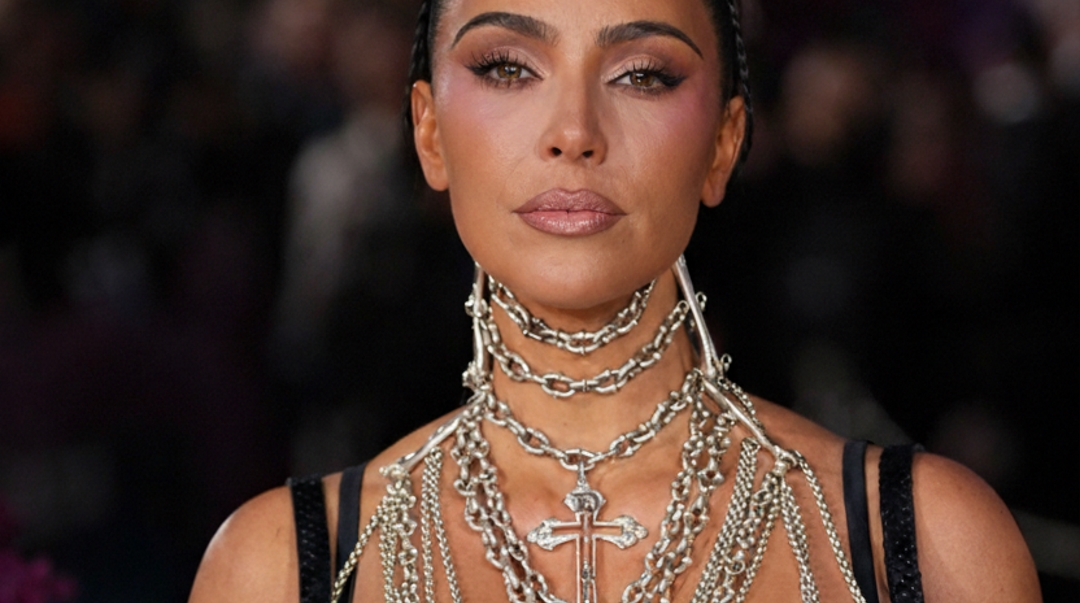
Kim Kardashian has spent most of her adult life being watched, photographed, and judged, but she says the most revealing changes brought by fame happen far away from cameras. In recent comments, Kardashian reflected on how becoming one of the most recognizable women in the world altered the way men interact with her behind closed doors—subtly at first, then in ways that became impossible to ignore.
From the outside, Kardashian’s life appears saturated with power, wealth, and influence. Yet she has described a private reality where fame reshaped dynamics in ways that left her feeling objectified, dismissed, or approached with motives that had little to do with genuine connection. The shift, she says, wasn’t always loud or dramatic. Often, it was quiet and transactional.
Early in her rise to fame, Kardashian noticed men treating her less like a person and more like an idea. Conversations felt performative. Compliments came loaded with expectations. She has said that once her image became globally recognizable, some men stopped engaging with her as an equal and instead interacted with the version of her they believed they already knew.
That disconnect, she explained, created a strange loneliness. People assumed access. They assumed familiarity. And in private moments, she says, some men behaved as though her public persona erased the need for basic respect. Fame didn’t just amplify attention—it changed the power dynamics inside relationships.
Kardashian has spoken candidly about how men would sometimes project fantasies or insecurities onto her, treating her success as either a threat or a trophy. In some cases, she felt she had to downplay her intelligence or achievements to make others comfortable. In others, she felt reduced to her image, as if her humanity was secondary to her visibility.
Those experiences didn’t always involve strangers. She has suggested that even men she dated or trusted sometimes behaved differently once the doors were closed, revealing resentment, control issues, or entitlement that hadn’t been obvious at first. Fame, she says, magnified those traits rather than creating them.
Psychologists who study celebrity culture often note that extreme fame distorts interpersonal relationships. According to research on how fame alters relationship dynamics, public recognition can cause others to dehumanize celebrities, treating them as symbols rather than individuals with emotional boundaries.
Kardashian’s reflections align with that pattern. She has described moments where men assumed she would tolerate disrespect because of her status, or conversely, expected gratitude simply for treating her decently. Both reactions, she says, stem from the same root problem: fame replacing empathy.
Her comments also touch on gendered expectations. Kardashian believes women in the public eye are judged more harshly for their success, sexuality, and ambition. When those judgments move into private interactions, they can shape how men speak, listen, and assert control. She has said that fame made her more cautious, not more confident, in romantic spaces.
Over time, those experiences influenced how she sets boundaries. Kardashian has explained that she now pays closer attention to how people behave when there’s nothing to gain publicly. How they speak to staff. How they react to her independence. How they respond when she says no. Those moments, she says, reveal far more than charm or attention ever could.
She has also acknowledged her own growth in recognizing red flags she once overlooked. Early in her career, she admits she sometimes confused intensity with affection or control with concern. Fame forced her to confront how often women are conditioned to excuse behavior that feels wrong but is socially normalized.
Critics sometimes dismiss Kardashian’s reflections as complaints from privilege, but supporters argue her experience highlights a broader issue. Power and visibility don’t shield women from mistreatment—they often change its form. Instead of overt dismissal, it becomes subtle manipulation. Instead of disbelief, it becomes entitlement.
Media analysts note that Kardashian’s willingness to discuss these private dynamics marks a shift from her earlier public image. Where she was once framed primarily through appearance and controversy, she increasingly speaks about agency, boundaries, and the emotional cost of visibility. That evolution has resonated with many women who recognize similar patterns in their own lives, even without fame.
In coverage examining her recent remarks, commentators noted that Kardashian’s reflections challenge the assumption that power eliminates vulnerability. Instead, they suggest that power can attract new forms of control, disguised as admiration.
Kardashian has emphasized that she is not interested in blaming all men or presenting herself as uniquely victimized. Her goal, she says, is honesty. Fame changed how people approached her, and pretending otherwise would erase real experiences that shaped her sense of trust and self-worth.
She has also said motherhood sharpened her awareness. Watching how the world perceives women—especially women who are visible—made her more determined to model boundaries for her children. She wants them to understand that respect should not depend on status, beauty, or public approval.
Ultimately, Kardashian’s confession is less about celebrity than it is about power. Fame did not invent the behaviors she encountered, but it revealed them faster and more clearly. It stripped away politeness and exposed intent.
Behind closed doors, she says, the truth of how people see you always surfaces. Fame simply changes who feels entitled to speak—and who believes you owe them something in return.
By naming those experiences, Kardashian adds to a growing conversation about how visibility intersects with gender, respect, and control. Her story suggests that even at the highest levels of influence, women still navigate spaces where recognition does not guarantee dignity.
And perhaps that is the quiet revelation at the heart of her confession: fame may open doors, but it also reveals who believes they have the right to walk through them uninvited.