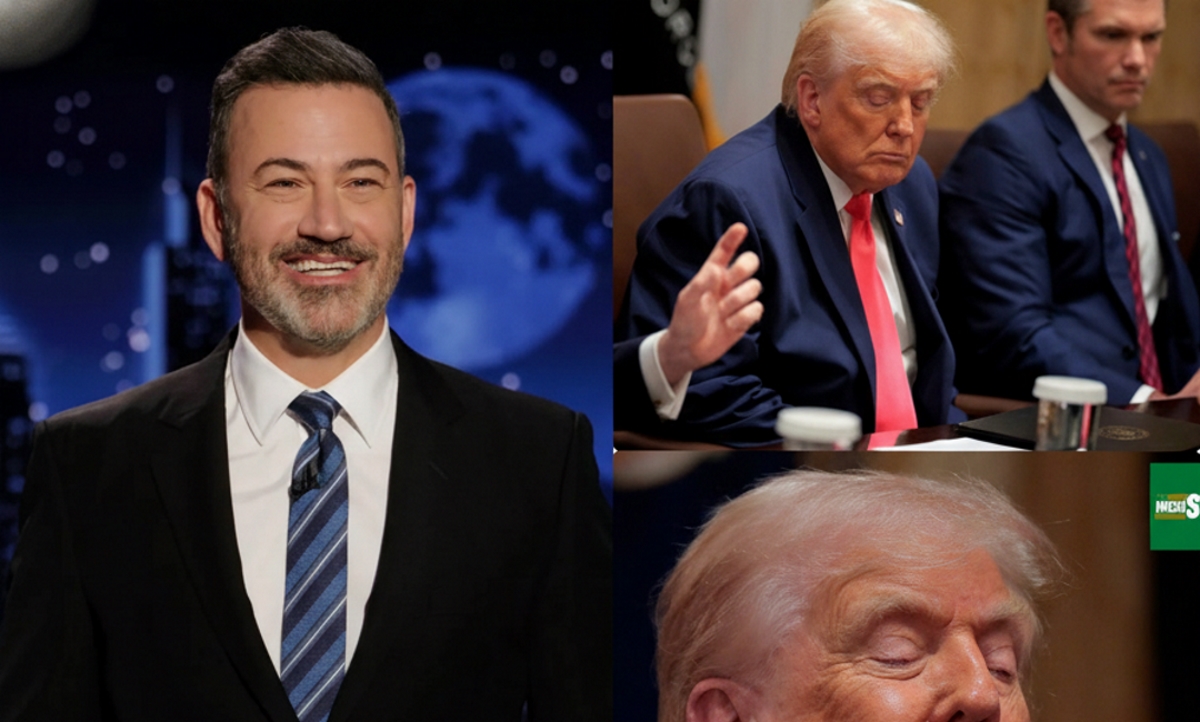
Jimmy Kimmel ignited another political firestorm this week after delivering a blistering late-night segment that revisited Donald Trump’s reputation for rambling social-media rants and unpredictable public moments, drawing from commentary reflected in a widely discussed entertainment recap that charted their long-running feud. The monologue triggered an immediate wave of online responses, especially from Trump supporters who blasted the comedian for “obsession,” a criticism similar to earlier reactions documented inside a conservative media segment highlighting Trump’s counterattacks.
The tension escalated further when Trump posted a late-night series of messages calling for viewers to abandon networks airing Kimmel’s show, a move consistent with boycott demands he previously issued against media outlets connected to ABC, illustrated through an earlier Business Insider review analyzing his history of calling for public retaliation. The renewed uproar underscored how frequently their feud resurfaces during moments of heightened political pressure.
As clips of Kimmel’s monologue spread, analysts pointed out that the comedian’s jokes often target Trump’s erratic public statements, mimicking patterns described in a CNN breakdown of their televised exchanges that captured how deeply Trump reacts to late-night criticism. One viewer summed up the cycle in a post that quickly went viral:
Every time Kimmel jokingly pokes Trump, Trump launches a boycott. They’re stuck in the world’s pettiest Cold War — and both know it. — J. Marco (@JMNightly) Dec 9, 2025
Kimmel’s writers appeared to anticipate the backlash, weaving references to Trump’s social-media habits throughout the segment in a style reminiscent of content highlighted in a Guardian cultural analysis exploring how late-night hosts craft segments specifically tuned to provoke Trump. The formula worked again: within minutes, commentators were scrutinizing the former president’s Truth Social posts for evidence of a brewing fight.
Pro-Trump influencers immediately amplified calls to boycott ABC, echoing energy seen during earlier clashes chronicled through a Newsweek report detailing conservative backlash. Analysts noted that these boycott attempts rarely materialize into measurable change, but the rhetoric itself has become symbolic fuel for Trump’s base.
Boycotts, threats, insults — Trump’s playbook against late-night hasn’t changed in years. But Kimmel’s trolling clearly gets under his skin. — R. Delgado (@DelgadoReports) Dec 9, 2025
The feud’s longevity is what fascinates cultural critics. Their rivalry dates back to Trump’s early political rise, with Kimmel repeatedly highlighting contradictions in Trump’s public persona — segments that resurfaced inside a Los Angeles Times overview of late-night reactions to Trump’s stance on vaccines, boosters, and public messaging. The monologues consistently go viral, often overshadowing the political stories they reference.
The latest round of conflict arrived during a period of increased political scrutiny around Trump’s legal battles and campaign messaging, topics Kimmel integrated into his jokes in ways reminiscent of commentary described in a Washington Post summary focused on their Oscars confrontation. By tying humor to unfolding news events, Kimmel ensured that his monologue would circulate far beyond traditional entertainment audiences.
Trump doesn’t fear the jokes — he fears how many people see them. Late-night hits harder than any press release. — T. Wexler (@WexlerMedia) Dec 9, 2025
Meanwhile, Trump’s critics argue that his escalating responses reveal a sensitivity that fuels media obsession. Supporters counter that Kimmel is part of a coordinated cultural effort to undermine conservative voices. Both narratives intensified online as users shared older clips cataloged inside a Vulture timeline of their feud showing how each exchange builds upon years of tension.
Media scholars say this pattern — comedian mocks politician, politician retaliates loudly — has become a defining feature of the Trump era, particularly because Trump’s reactions often amplify the very jokes he objects to. They also note that Kimmel’s style works because he leans into Trump’s own words, not fabricated claims, a strategy highlighted within a Politico commentary on political comedy assessing how satire functions in hyperpolarized environments.
As the feud resurfaces once again, observers predict the cycle will continue through the election season, with late-night television serving as one of the few remaining platforms capable of provoking Trump into real-time responses — a dynamic that ensures neither will let go of the spotlight anytime soon.