
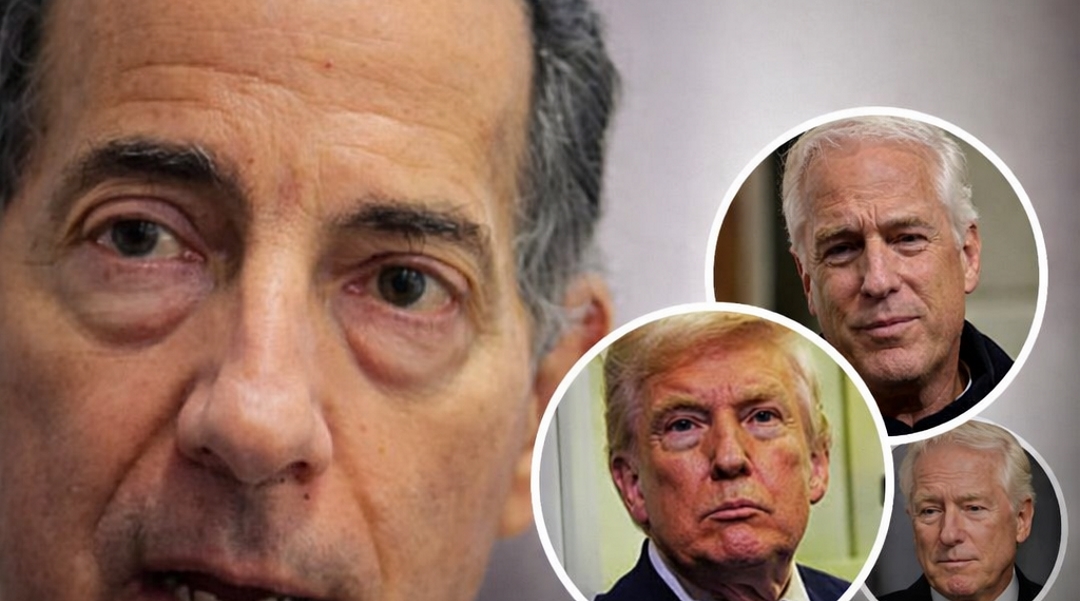
A member of Congress says that after reviewing unredacted documents tied to Jeffrey Epstein, former President Donald Trump’s name appears throughout the files — a statement that has quickly fueled fresh controversy around one of the most scrutinized criminal cases in modern American history.
The claim surfaced during a media appearance in which the congressman described viewing documents that have not been publicly released in full. According to his remarks, Trump’s name is referenced repeatedly in various logs and materials associated with Epstein’s network.
The assertion immediately ricocheted across political and media circles.
Epstein, the financier who was arrested in 2019 on federal sex trafficking charges, maintained connections with numerous high-profile figures across politics, business, and entertainment before his death in jail that same year. His case triggered widespread demands for transparency regarding his contacts and associates. Court records and flight logs released over time have revealed names of many public figures, though appearing in such records does not automatically imply wrongdoing.
Federal prosecutors have consistently emphasized that context matters when interpreting these documents. As detailed in prior reporting by the U.S. Attorney’s Office for the Southern District of New York, Epstein’s case involved allegations of trafficking and abuse spanning years, with multiple individuals under investigation.
The congressman’s statement did not specify the nature of each reference to Trump’s name — whether in flight logs, contact lists, or other materials. Nor did he provide copies of the alleged unredacted documents during the interview. Instead, he framed the frequency of the name’s appearance as notable in itself.
Trump has previously acknowledged knowing Epstein socially in the 1990s and early 2000s but has repeatedly denied any wrongdoing or involvement in criminal activity connected to Epstein. In earlier public comments, he has said he eventually distanced himself from the financier long before Epstein’s arrest.
Legal experts caution against drawing conclusions solely from the presence of a name in investigative records. High-profile individuals often appear in documents because of social, professional, or peripheral associations. Without additional context, repetition alone does not establish culpability.
Still, the political ramifications are difficult to ignore. The Epstein case has become a lightning rod across party lines, with lawmakers and activists demanding fuller disclosure of documents believed to shed light on powerful figures who may have had contact with him.
Public pressure for transparency intensified following Epstein’s death in federal custody, which was officially ruled a suicide. The circumstances surrounding his death have continued to generate skepticism and congressional inquiries. As reported by NBC News, investigations identified procedural failures within the jail but found no evidence contradicting the medical examiner’s determination.
The congressman’s claim adds another layer to an already complex narrative. Critics of Trump argue that any repeated appearance in sensitive files warrants further scrutiny. Supporters counter that political motivations may be driving selective disclosures or exaggerated characterizations.
On Capitol Hill, calls for releasing additional unredacted documents have grown louder. Some lawmakers advocate for full transparency, arguing that public confidence depends on equal accountability regardless of status or party affiliation. Others warn that releasing raw investigative materials without context could risk misinterpretation or privacy violations.
For now, the documents in question remain largely inaccessible to the public. Portions of Epstein-related materials have been unsealed in civil litigation over the years, but significant sections remain redacted due to ongoing legal considerations and privacy concerns.
Political analysts note that the timing of such claims can influence public perception, particularly in an election cycle. Allegations tied to high-profile criminal cases tend to resurface during periods of heightened political tension.
The congressman has not formally submitted the documents for public record, nor has an independent body confirmed the frequency of references described in his statement. Without broader access to the materials, verification remains limited to those granted clearance to review them.
Meanwhile, Trump representatives have dismissed the claim as misleading, reiterating prior statements that association does not equate to involvement. They argue that the focus should remain on verified evidence rather than headline-grabbing numbers.
The Epstein saga continues to cast a long shadow over American politics. Years after his arrest and death, the case remains intertwined with debates about elite accountability, judicial transparency, and institutional trust.
Whether the congressman’s assertion leads to additional disclosures or fades into partisan dispute will likely depend on what, if anything, emerges from future court proceedings or congressional actions. Until then, the controversy underscores a familiar reality in Washington: even unsealed documents can leave more questions than answers.