
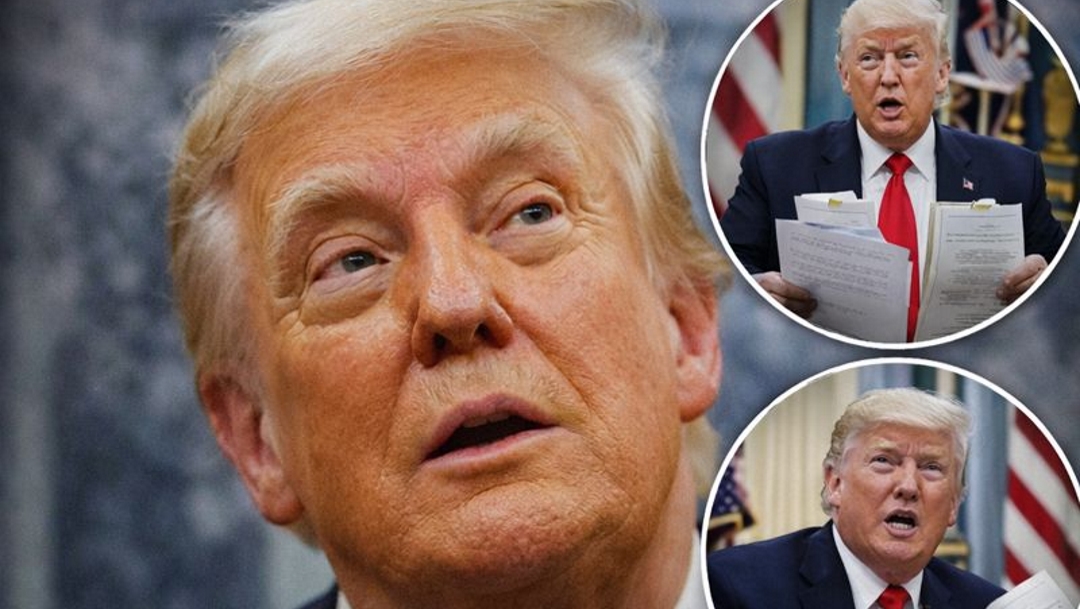
The image circulating online shows Donald Trump holding documents, his expression caught somewhere between defiance and concern. But behind the visuals, a much deeper debate has quietly taken shape among constitutional lawyers, former judges, and political historians — one that centers on how far presidential behavior can go before the system itself intervenes.
Over the past several weeks, legal analysts have increasingly warned that unchecked escalation in conduct, rhetoric, or defiance of institutional norms could trigger constitutional mechanisms rarely discussed outside law schools. While removal from office is extraordinary, experts say the framework already exists, and it doesn’t rely on elections alone.
At the heart of the discussion is the Constitution’s balance between executive authority and accountability. While impeachment is the most familiar route, legal scholars note that other pathways — including congressional censure, court-enforced compliance, or cabinet-driven actions — have historical grounding. A breakdown of these options has resurfaced in recent legal commentary examining executive overreach.
What has intensified concern is not a single incident, but a pattern. Former federal prosecutors argue that escalation often matters more than any individual action, particularly when it signals disregard for judicial rulings or constitutional constraints. That concern is echoed in constitutional analysis that emphasizes precedent over personality.
Privately, lawmakers from both parties have acknowledged that sustained institutional strain can force action even when political will is fractured. One senior legal scholar described it as “the system defending itself,” a concept explored in democracy guardrail research that tracks how governments respond to internal pressure.
What makes the current moment unusual is the public visibility of legal warnings. Rarely do experts speak so openly about hypothetical removal scenarios while a president is actively in office. Some argue that this openness reflects rising anxiety about long-term damage rather than short-term politics.
When legal experts start talking about constitutional backstops, it usually means norms are already under strain. — Constitutional Watch (@ConstWatch) January 2026
Supporters counter that such warnings are exaggerated and politically motivated. They argue that strong rhetoric and unconventional leadership styles, while controversial, do not automatically translate into constitutional violations. That argument has gained traction in counter-analysis pieces emphasizing voter mandate over elite concern.
Still, historians caution against ignoring warning signs. They point to global examples where gradual normalization of extreme behavior eventually forced abrupt institutional responses. In those cases, delay often worsened outcomes, a lesson explored in comparative governance studies.
Inside the White House ecosystem, former aides describe an atmosphere where legal counsel plays an increasingly critical role. Decisions once framed as political are now reportedly reviewed through a legal-risk lens, a shift that itself signals growing concern behind the scenes.
Another factor is public trust. Legal experts stress that constitutional systems rely not just on written rules, but on public confidence that those rules apply universally. When that confidence erodes, pressure builds for visible accountability — regardless of political cost.
Constitutional crises rarely arrive suddenly. They build slowly, then force decisions nobody wanted to make. — Civic Law Project (@CivicLawProj) January 2026
Ultimately, experts emphasize that no outcome is predetermined. Escalation can still be reversed, tensions cooled, and norms restored. But the warnings themselves serve as a signal — not of inevitability, but of consequence.
As legal debate intensifies, one thing is clear: the question is no longer whether the system can respond, but how long it will wait before doing so.