
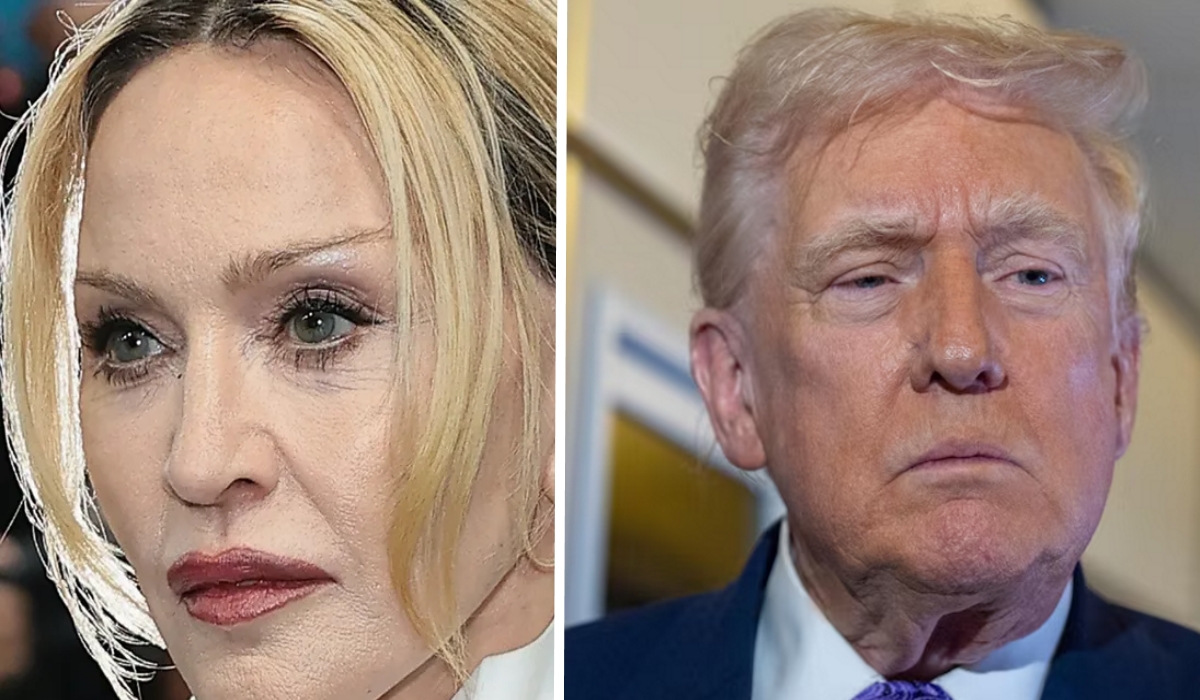
Madonna has never been shy about calling out indifference, but the moment she stepped forward to condemn the U.S. government for abandoning World AIDS Day hit a nerve deeper than politics. The move, quietly revealed through internal guidance obtained by reporters and detailed in a major investigation, confirmed that the administration had instructed federal agencies not to issue statements, social posts or public acknowledgment of the day. For millions who lost loved ones, the silence felt like erasure — and for Madonna, it cut straight into old wounds.
The singer took to Instagram within hours, posting a message that spread faster than any official statement ever could. She wrote that the decision “defies humanity,” echoing language documented in a detailed entertainment recap. Her anger wasn’t performative; it was rooted in decades of loss, activism and memories of watching friends fade during a crisis the world was once too afraid to name out loud.
That grief resurfaced sharply when she heard that commemorations — long championed by public-health groups and referenced in a policy breakdown — had been halted. World AIDS Day, she reminded followers, wasn’t symbolic. It was a living memorial, a global acknowledgement, a yearly promise to keep fighting for those who could no longer speak. And for the U.S. government to fall silent after nearly four decades felt to her like a betrayal of an entire generation.
Her post immediately ignited conversation across social platforms. One user captured the raw disbelief that spread among activists and survivors:
I can’t believe we’re here — a World AIDS Day with no acknowledgement from the U.S. Not one word. People fought too hard for this.— Alex R. (@AlexRemembers) Dec 1, 2025
Behind the scenes, public-health advocates were already unnerved. Grants that once supported awareness events were suddenly restricted from referencing the day at all, according to early reporting built into a political update. For organizers who relied on federal channels to reach vulnerable communities, the new instructions felt like an intentional step backward — a reminder that silence can be just as destructive as stigma.
Madonna’s statement brought that fear into the spotlight. She referenced friends she lost in the 1980s and 1990s, echoing stories revisited in a deeply personal profile that chronicled how the epidemic shaped her life. She reminded her audience that these memories were not abstract tragedies. They were human beings, some artists, some unknown, all gone too soon.
Even among younger fans, the silence from Washington sparked confusion. For many, World AIDS Day had always been a constant — something educational, solemn, uncontroversial. A second viral tweet read:
The U.S. has recognized World AIDS Day since the 80s. Stopping it now is cruel, strange, and dangerous.— D. Castillo (@DrewCastillo_) Dec 1, 2025
What stunned many experts wasn’t just the policy change, but the historical context. The United States led one of the most important global health initiatives in history through PEPFAR, credited with saving millions of lives — a legacy frequently discussed in a San Francisco Chronicle recap. To step back now felt, to many in the community, like choosing to forget.
Activists in San Francisco, New York and Chicago reported record turnout for their own grassroots commemorations, partially because Madonna’s words amplified their anger. Organizers said they hadn’t seen this level of engagement since early-2000s marches, a shift explored in a public-health analysis that tracked how community momentum accelerates when institutional support is withdrawn.
In a grim way, the government’s silence brought more attention than a press statement ever would. Instagram comments multiplied into hundreds of thousands. Activists shared stories, photos and names of the people they lost — many of whom never had funerals, acknowledged in a national LGBTQ+ report about the crisis’s long shadow. Madonna wrote that she saw their faces “as clearly as yesterday.”
The public debate intensified as policy analysts pointed out that defunding and de-emphasizing awareness programs create real-world consequences. HIV infection rates had already begun rising among young adults, according to data referenced in CDC surveillance summaries. Without reminders, without campaigns, without visibility, prevention often slips — and lives get lost quietly.
Another tweet that caught fire underscored the fear of repeating history:
Every generation forgets until it’s too late. If the gov won’t say it, we will: AIDS is still here. And people are still dying.— L. Moreno (@LMorenoWrites) Dec 1, 2025
In interviews circulating shortly after her post, Madonna insisted she wasn’t trying to “make a political moment.” She said she was protecting memory — something echoed by advocates quoted in a cultural analysis examining how celebrity activism preserves narratives that institutions sometimes bury. She said she feared what would happen if people stopped telling the stories of those lost. “Silence,” she added, “is the beginning of forgetting.”
Survivors echoed her sentiment publicly. Some shared photos of partners lost years ago; others posted the names of friends who never saw treatment advances and would have been saved had they lived a little longer. The emotional weight of these posts was captured in a national profile on AIDS memorial culture, highlighting how remembrance holds communities together long after the crisis’s peak.
As the rest of the world marked the day with red ribbons, statements and memorials, the U.S. government’s silence grew louder. It lingered in the absence of federal messaging, in the unlit landmarks, in the empty official timelines that once honored a global fight. Madonna’s post didn’t just respond to that silence — it forced millions to confront it.
For activists, for families, for survivors, her fury felt like a reminder of what remembrance actually means: not a hashtag, not a ceremony, not a symbolic ribbon — but a promise not to let the dead disappear behind bureaucracy or political indifference. In that promise, millions found their voice again.