
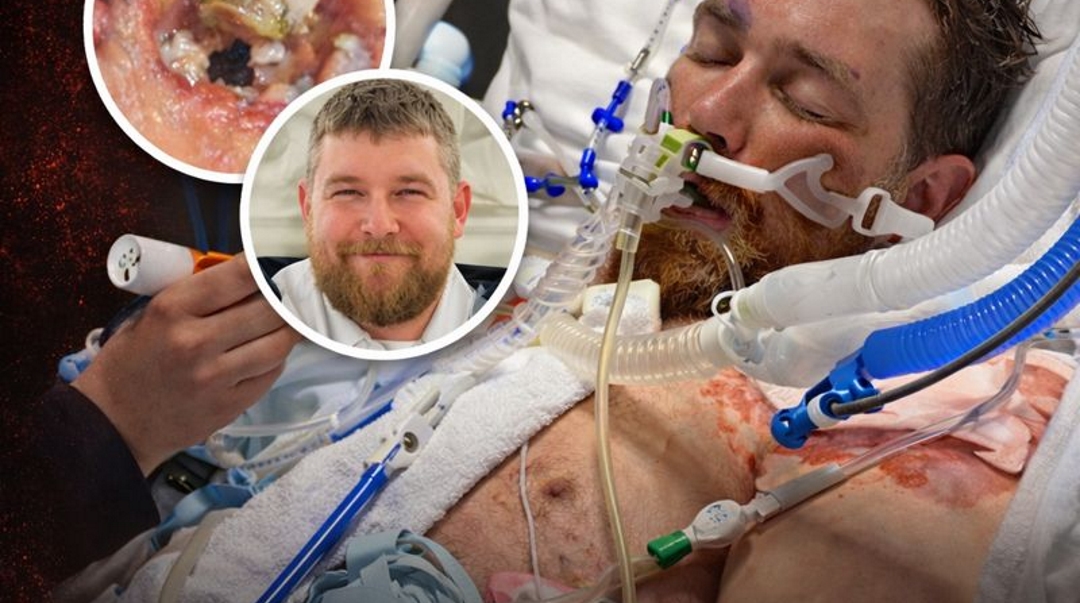
What started as a minor, painful irritation quickly spiraled into a medical nightmare no one saw coming. A man who initially sought treatment for what appeared to be a routine ingrown hair ended up fighting for his life in intensive care, placed into a medically induced coma with doctors giving him only a 4 percent chance of survival.
The incident began innocently enough. He noticed swelling, redness, and pain in an area he assumed would heal on its own. Ingrown hairs are common, especially in areas where friction, shaving, or sweating occur, and most resolve without serious complications.
This one didn’t.
Within days, the area became severely infected. The pain intensified, the swelling spread, and he began experiencing fever, chills, and extreme fatigue. By the time he arrived at the emergency room, the infection had already entered his bloodstream.
Doctors quickly identified the condition as sepsis, a life-threatening response to infection that can cause organ failure if not treated immediately. Despite aggressive antibiotics and emergency surgery, his condition continued to deteriorate.
He was rushed into intensive care and placed on life support. To reduce the strain on his body and give doctors a chance to control the infection, he was placed into a medically induced coma.
At one point, medical staff warned his family that his odds of survival were alarmingly low.
“They told us to prepare for the worst,” a family member later shared. “It didn’t feel real. All of this… from an ingrown hair.”
According to infectious disease specialists, seemingly minor skin infections can become deadly when bacteria enter the bloodstream, particularly if caused by aggressive strains such as staphylococcus or streptococcus.
The U.S. Centers for Disease Control and Prevention warns that sepsis can develop rapidly and may not always present obvious early symptoms, especially when infections originate under the skin. More information on how quickly sepsis can escalate is outlined in official CDC guidance on sepsis.
During his coma, surgeons performed multiple procedures to remove infected tissue and prevent further spread. He was connected to ventilators, IV antibiotics, and continuous monitoring as doctors worked around the clock.
For days, his condition remained critical. His organs struggled. His immune system was overwhelmed. Each update felt uncertain.
Then, slowly, signs of improvement appeared.
Inflammation markers began to drop. His blood pressure stabilized. Doctors cautiously reduced sedation levels to see if his body could respond.
When he finally woke up, he had no memory of what had happened. He later learned that he had come within hours of death.
Recovery was far from easy.
Weeks in the hospital were followed by months of rehabilitation. Muscle loss, weakness, and lingering pain made even basic tasks exhausting. The emotional toll was just as heavy.
“I kept thinking about how close I came to not being here,” he said later. “All because I ignored something I thought was small.”
Doctors say his experience is a stark reminder that infections should never be dismissed, especially when symptoms worsen rapidly or are accompanied by fever, spreading redness, or severe pain.
Medical experts note that ingrown hairs can sometimes lead to abscesses, which may require drainage or antibiotics. If untreated, bacteria can spread beyond the skin, triggering systemic infection.
Research published by the National Institutes of Health highlights how skin-based infections are a leading cause of community-acquired sepsis, particularly when treatment is delayed. That risk is further explained in clinical studies on skin infections and sepsis progression.
Today, the man says the ordeal permanently changed how he views his health.
“I don’t brush things off anymore,” he said. “If something feels wrong, I get it checked. No hesitation.”
He has chosen to share his story publicly to raise awareness, not to frighten people, but to emphasize how quickly the human body can turn against itself when infections go unchecked.
Doctors involved in his care echo that message. Early treatment saves lives. Listening to warning signs matters.
“People think sepsis only happens from major injuries or surgeries,” one physician explained. “But it often starts small. That’s what makes it so dangerous.”
Now fully conscious and continuing his recovery, the survivor says he carries a new appreciation for life and the fragility of the body.
“I got a second chance,” he said. “And I won’t waste it.”
His story serves as a sobering reminder that even the most ordinary health issues can become extraordinary emergencies—and that vigilance can mean the difference between life and death.