
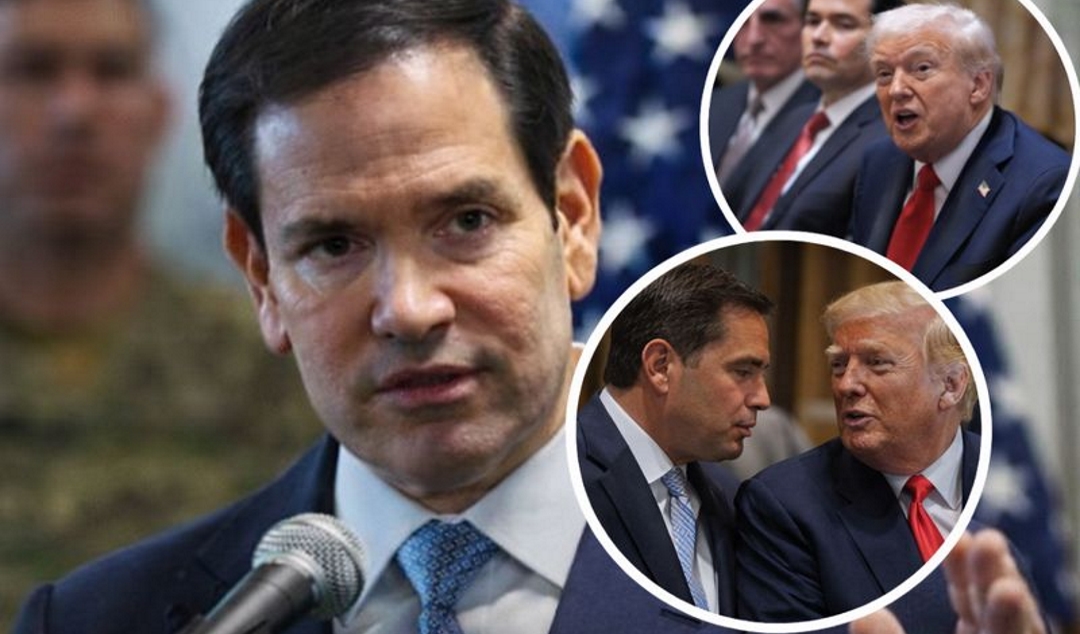
The moment came with little warning and even less ceremony. Standing at a podium, Senator Marco Rubio delivered a line that immediately ricocheted across political media: Donald Trump, he said, would be remembered as a “president of peace.”
The comment alone would have been enough to ignite debate, but it landed alongside another development that raised eyebrows across Washington. The State Department had quietly moved to rename a long-standing institute, a shift that many insiders saw as symbolic rather than bureaucratic.
Rubio’s remarks were framed as a reflection on foreign policy legacy. He pointed to the absence of new large-scale wars during Trump’s presidency, emphasizing diplomatic pressure campaigns and unconventional negotiations rather than troop-heavy interventions. The phrasing, carefully chosen, signaled an attempt to reshape how history might eventually frame those four years.
Critics immediately pushed back, noting that “peace” depends heavily on definition. While no new major wars were launched, tensions flared globally, from escalating rhetoric with Iran to brinkmanship with North Korea. Analysts referenced long-running global risk assessments that warned how close several of those standoffs came to direct conflict.
The timing made the statement harder to ignore. Just days earlier, the State Department had updated internal documents reflecting the renaming of an institute tied to diplomacy and conflict prevention. Officials insisted it was a modernization effort, but longtime staffers privately described it as a political rebrand.
For supporters, the move fit neatly into a broader narrative: that Trump’s foreign policy approach prioritized leverage over intervention. They pointed to normalization agreements in the Middle East and stalled nuclear talks as evidence of deals pursued without boots on the ground, often citing policy breakdowns from the era that highlighted nontraditional diplomacy.
Opponents, however, saw something more calculated. They argued the language was designed to launder chaos into calm, reframing unpredictability as restraint. One former diplomat described it as “revisionist optimism,” noting that diplomatic institutions are usually renamed after consensus—not controversy.
Rubio, a former Trump critic turned ally, has increasingly positioned himself as a translator of Trump-era policy for mainstream audiences. His words carried weight precisely because of his past skepticism. That evolution was not lost on observers familiar with shifts inside the Republican foreign policy wing.
Online reaction was immediate and polarized. Supporters celebrated the phrase “president of peace” as overdue recognition, while critics accused Rubio of bending language to fit political needs.
Calling Trump a “president of peace” is either bold reframing or historical gymnastics, depending on who you ask. — Foreign Policy Watch (@FPWatchers) March 2024
The institute renaming only intensified scrutiny. Though officials declined to publicly connect it to Rubio’s remarks, internal emails circulated among staff suggested concern about optics. One senior employee reportedly questioned whether institutional memory was being reshaped in real time.
That concern taps into a deeper anxiety about how legacies are written. Foreign policy, more than most domains, is vulnerable to reinterpretation once the immediate consequences fade. As one historian noted in a recent essay, “absence of war is not the same as presence of peace.”
Rubio defended his language by emphasizing outcomes over tone. He argued that restraint, even when paired with inflammatory rhetoric, should count in historical accounting. That framing resonated with voters weary of prolonged overseas conflicts and skeptical of interventionist doctrine.
Still, unanswered questions linger. Does peace mean stability, or simply pause? Does diplomacy count if it rests on threats rather than trust? And who gets to decide which definition history adopts?
The renaming of the institute, though procedurally minor, became a symbol of that struggle. Names carry intent. They signal values. And in Washington, they often foreshadow battles yet to come.
History isn’t written by press releases. It’s written by consequences. — Policy Archive (@PolicyArchive) March 2024
Whether Rubio’s words endure or fade may depend less on rhetoric than on what comes next. For now, they have reopened an old debate at a moment when political memory is being actively contested.
And as institutions quietly change names and leaders redefine legacies, one thing is clear: the fight over how the past is remembered is far from over.