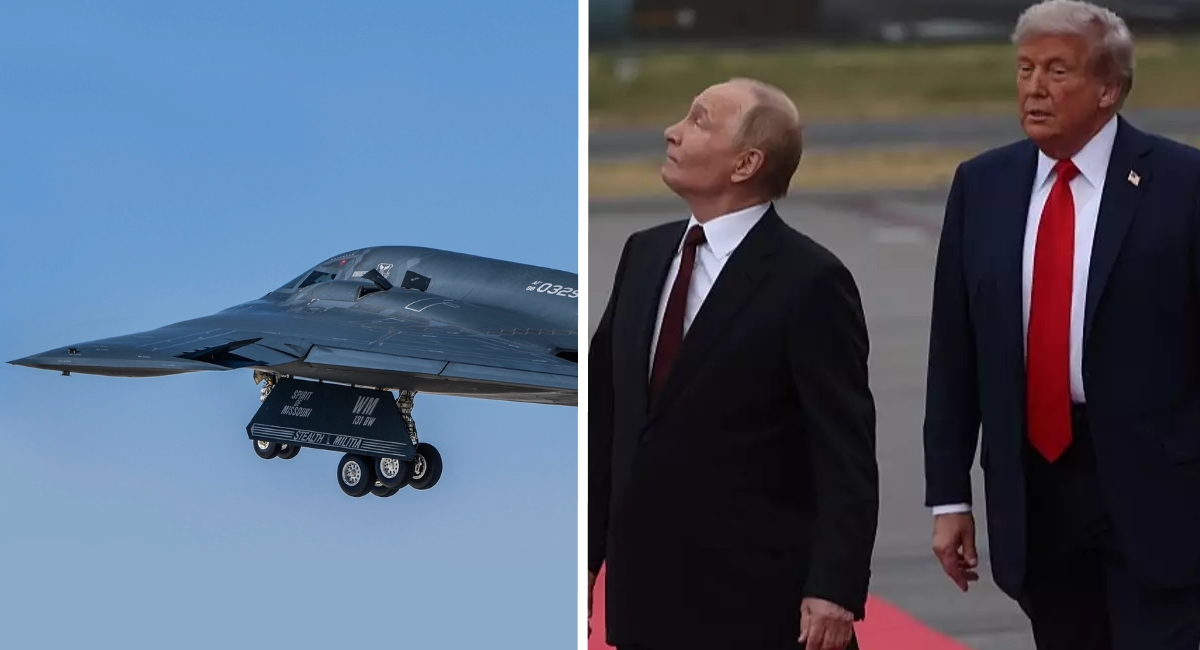
The jets tore through the sky above Alaska, but it wasn’t the roar of engines that drew the most attention. As Donald Trump ordered nuclear-capable bombers to fly directly over Vladimir Putin’s arrival, cameras captured a fleeting yet telling moment: the Russian president’s hand freezing at his side, hovering near his pocket in a rigid, defensive posture. That gesture, according to one renowned body language expert, may reveal more about Putin’s state of mind than any speech ever could outlined in UNILAD’s chilling report.
The display happened as Trump arranged for B-2 stealth bombers and F-35 fighter jets to roar above the tarmac, a show of dominance aimed squarely at Russia’s leader. Most political figures might have flinched or craned their heads upward. Putin, however, remained statuesque, save for one detail: his right hand stiffened into position, close to where a sidearm might once have rested during his KGB years. To Inbaal Honigman, a body language analyst known for her forensic readings of leaders and celebrities, that gesture was not casual—it was instinctual, a remnant of years trained to react first and question later.
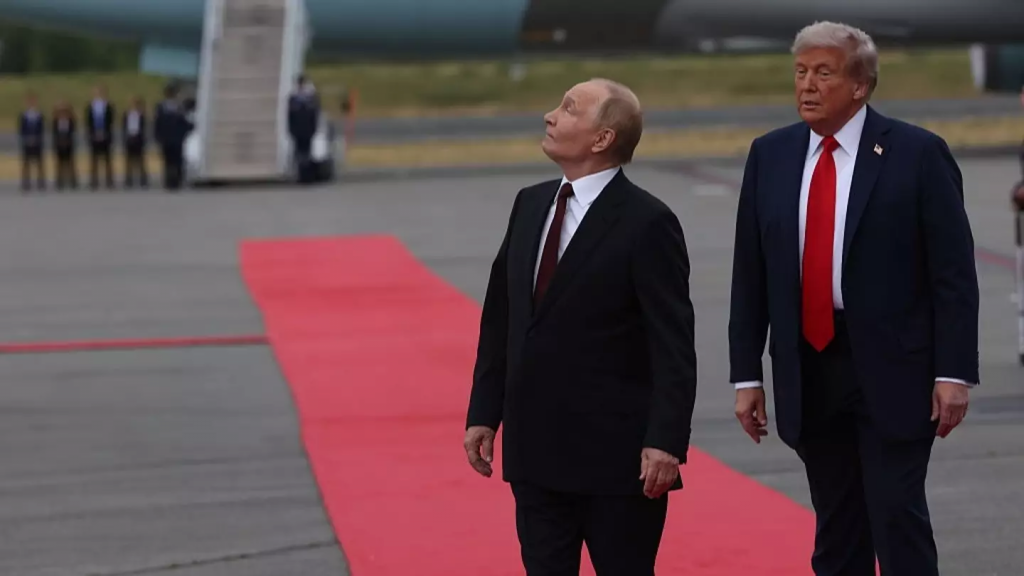
That brief flicker of Putin’s hand wasn’t just nerves. It was pure KGB conditioning — a man prepared to act without hesitation. https://twitter.com/BodyKitty/status/16902783412276— Body Insight (@BodyKitty) August 16, 2025
Analysts often refer to this phenomenon as the “Gunslinger’s Gait,” a walking style where one arm swings freely while the other remains stiff, hovering near the torso. In Soviet and later Russian intelligence training, this stance allowed an operative to quickly draw a concealed weapon at any moment. Putin, a former KGB officer, has displayed this posture repeatedly in past public appearances, and researchers have catalogued it extensively documented in encyclopedic analyses of his walk. What set this Alaska moment apart, however, was the context: nuclear bombers screaming overhead while his hand reflexively drifted to his side.
Honigman told UNILAD that this was no accident. “When startled or put under pressure, our bodies revert to our earliest training. Putin didn’t wait for aides or bodyguards—his body prepared itself. That is who he is.” Her conclusion adds a chilling dimension to a summit already dripping with Cold War theatrics. The planes were Trump’s move, but the gesture was Putin’s counter—a silent promise of composure under fire.
The handshake that followed only deepened the intrigue. Trump approached with his signature double-handed grip, a maneuver often described as a dominance play masked by warmth. Putin, rather than recoil, matched him with a firm, steady squeeze. Body language specialist Patty Ann Wood, who has analyzed countless presidential greetings, explained that the Russian leader’s reaction showed he would not be overpowered. “Trump brings the flourish; Putin brings the stone. It’s two different languages meeting at once,” she told reporters examining the handshake.
The arm-pat handshake was theater. Trump’s flourish says, “I control the stage.” Putin’s stillness says, “Not me.” https://twitter.com/PowerPosture/status/1690304578921— Madeline Reed (@PowerPosture) August 16, 2025
Psychologist Dr. Peter Collett, speaking to Sky News, noticed that Putin actually landed the first pat in the exchange—a subtle reclaiming of ground. Yet Trump delivered the final pat, a quiet assertion that he would write the last note of the encounter. To Collett, this wasn’t a trivial handshake—it was a duel in miniature, each touch a coded message interpreted in Sky’s behavioral breakdown.
The sitting arrangement was equally revealing. Observers noted Putin’s deliberate manspreading once seated, knees angled confidently outward, a posture that body language specialists identify with dominance and entitlement. Trump leaned forward, hands in motion, the classic salesman’s posture. Both were playing to their strengths—Putin with stillness, Trump with performance. In moments like these, gestures replace speeches. Each man communicates in ways words can’t contain.
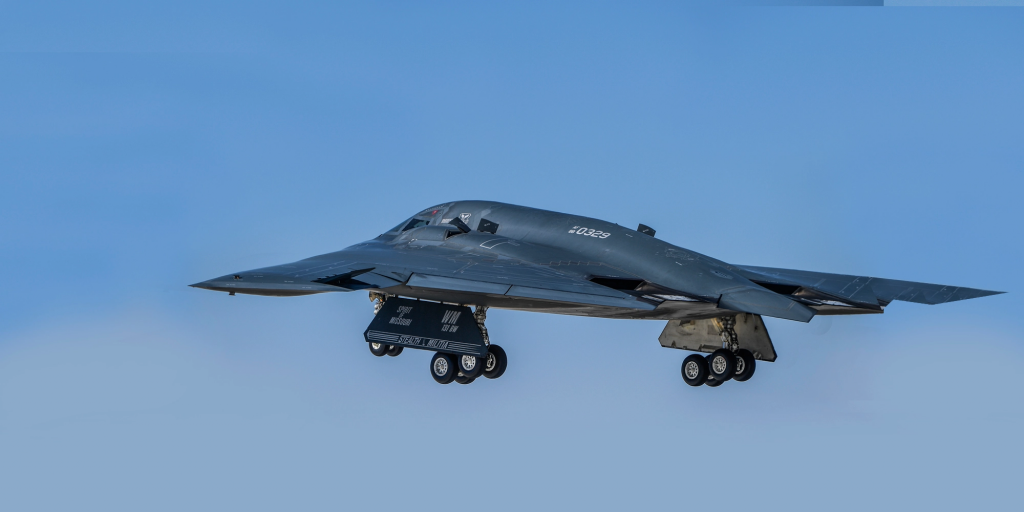
The fascination with Putin’s hand isn’t new. Analysts have tracked his controlled demeanor for years, from his stone-faced poker looks during summits to the famously restrained smile at the 2018 Helsinki press conference with Trump. But this Alaskan moment is different—it combined an immediate physical reaction with global theater. As one expert put it, “The planes roared overhead, but the real noise was in his silence.”
Forget the jets. Watch Putin’s fingers. That’s where you’ll find the story. https://twitter.com/SignalStudies/status/1690347829011— Signal Studies (@SignalStudies) August 16, 2025
Beyond the expert analyses, ordinary viewers online interpreted the gesture with unease. Some described it as a flashback to Cold War standoffs; others saw it as proof of Putin’s refusal to show weakness, even under the shadow of American nuclear might. The clip spread rapidly, dissected in TikTok breakdowns, Reddit threads, and late-night talk shows. On social media, the consensus was clear: it wasn’t the bombers that unsettled them, but the look of a man who seemed prepared to act if cornered.
Historical comparisons quickly surfaced. During the Cuban Missile Crisis, John F. Kennedy’s gestures were famously analyzed for signs of hesitation or resolve. Experts noted how his tight-lipped expression betrayed inner turmoil while outwardly projecting calm. Putin’s frozen hand, in this new drama, fits squarely into that tradition—moments when the fate of nations seems to rest on a flicker of muscle memory, a twitch of the wrist, a glance downward.
Political analysts also framed the scene as Trump’s calculated provocation. The decision to fly nuclear bombers over the arrival of a foreign head of state—particularly Russia’s—was no logistical coincidence. It was theater, designed to remind Putin of American firepower before a single word was exchanged. Yet the unintended consequence may be that viewers remember not the planes, but the gesture they provoked. As one columnist argued, “Trump brought the jets, but Putin brought the myth.”
Other body language experts joined the conversation. Allan Pease, author of “The Definitive Book of Body Language,” explained to the New York Post that gestures like Putin’s are most revealing when they break a pattern. “You can fake smiles. You can rehearse handshakes. But a flash of the hand when you’re startled? That’s raw, unfiltered.”
Meanwhile, commentators in Russia painted the moment differently. Kremlin-friendly outlets described Putin’s composure as proof of his unshakable resolve, suggesting the hand gesture was simply a relaxed stance taken out of context. Yet among Western audiences, particularly those familiar with intelligence training, the image only fueled suspicions that Putin remains perpetually prepared for confrontation.
The broader cultural reaction speaks to a world trained to decode leaders not just by their words, but by their posture, their glances, their unconscious tells. In an era where nuclear arsenals hang over every summit, people seek certainty in the smallest details—whether a smile signals surrender or a stiff hand hints at war. For a public weary of scripted statements, body language has become the real communiqué.
As for Trump, analysts noted his visible satisfaction in orchestrating the flyover. Supporters online called it a masterstroke of intimidation, proof that America would not bow to Russian aggression. Critics, however, warned that such theatrical provocations could backfire, escalating tensions unnecessarily. Either way, the moment left its mark: a handshake on the ground, nuclear bombers above, and a hand frozen at Putin’s side—a trifecta of imagery that will linger in history books.
Ultimately, the hand that didn’t move may speak louder than the planes that did. And for those trained to read between the lines, Putin’s stillness was not peace—it was a reminder that in his world, every moment is a battlefield, and every gesture a weapon.