
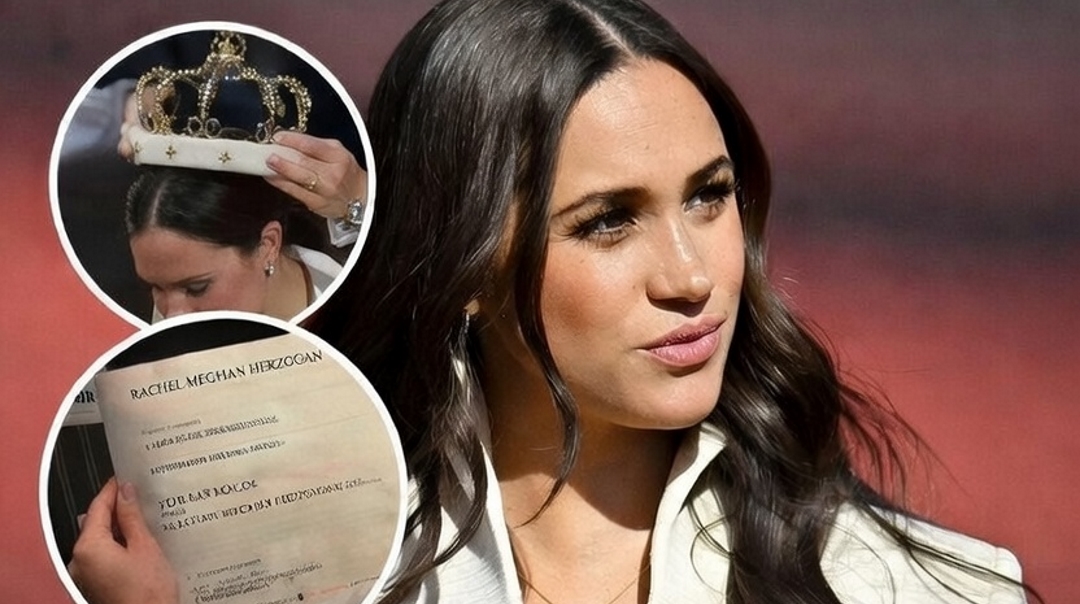
Meghan Markle has made another subtle but telling move as she continues to redefine her life outside the British royal system. Without fanfare or formal announcement, the Duchess of Sussex has begun using a different version of her name in professional and public-facing settings, a shift that has reignited discussion about how far she is stepping away from her royal identity.
The change did not come through a press release or a televised interview. Instead, it appeared quietly in documents, branding materials, and public references tied to her post-royal ventures. That understated approach has only intensified speculation, with observers reading the move as both practical and symbolic.
Since stepping back from official royal duties in 2020, Markle has been navigating a complicated balance between her past and her future. While she retains the title Duchess of Sussex, her professional projects in media, philanthropy, and business have increasingly emphasized independence rather than royal association.
In recent appearances and filings, Markle has been referenced without the “HRH” styling and, in some cases, without the “Duchess of Sussex” designation entirely. Instead, she appears to be leaning into a simplified identity that aligns more closely with her pre-royal career and her current role as a private citizen living in the United States.
For supporters, the shift feels natural. Markle entered the royal family as an established actor and public figure, and her departure was framed as a desire for autonomy and control over her own work. Adjusting how she uses her name fits neatly into that narrative.
Critics, however, argue that any move away from royal branding contradicts the continued use of titles connected to the monarchy. That tension has followed Markle and Prince Harry since their exit, with every decision scrutinized for signs of contradiction or strategic messaging.
Royal historians note that name usage within the monarchy has always been deeply symbolic. Titles signal hierarchy, duty, and allegiance. Choosing when and how to use them is rarely accidental, especially for someone whose public identity has been so closely tied to institutional tradition.
Markle’s name change does not appear to be a legal renunciation of her title. Instead, it functions more as a branding and identity choice—one that reflects where she sees her future. In the modern media landscape, names are not just labels; they are signals about alignment, values, and audience.
Since relocating to California, Markle has launched and participated in multiple projects that exist firmly outside royal frameworks. From production deals to advocacy work, her focus has shifted toward causes and creative control rather than ceremonial roles.
Observers point out that distancing from royal identifiers may also be a protective move. The Sussexes have spoken openly about the intense scrutiny and pressure they experienced while inside the institution. Reducing overt royal branding could be a way to create clearer boundaries between public work and private life.
As biographical coverage of Meghan Markle notes, her transition from working royal to independent public figure is unprecedented in modern monarchy. There is no clear template for how such a shift should look, leaving room for experimentation—and controversy.
The quiet nature of the change is also notable. Markle has often been criticized for being overly media-savvy or strategic. By allowing the update to surface organically rather than announcing it, she avoided fueling immediate backlash, even if speculation followed anyway.
For some royal watchers, the move underscores a deeper truth: Markle was never fully embraced by the institution, and her gradual shedding of royal markers reflects a mutual distancing rather than a one-sided rejection.
At the same time, her continued relevance ensures that even the smallest adjustments become headline material. A name change that might go unnoticed for another public figure becomes a referendum on loyalty, identity, and intention when it involves the monarchy.
Prince Harry has made similar shifts, increasingly presenting himself as a private individual rather than a royal emissary. Together, the couple has emphasized family life, mental health advocacy, and independent work as the core of their post-royal identity.
Royal commentators caution against overinterpreting the move. Titles, they argue, are not erased by branding decisions, and the Sussexes remain part of royal history regardless of how they choose to present themselves day to day.
Still, symbolism matters. Names shape perception, and perception shapes legacy. Markle’s choice reflects an ongoing effort to define herself on her own terms rather than through an inherited structure that never fully fit.
Public reaction remains divided. Some see empowerment and clarity; others see rejection and inconsistency. That divide mirrors the broader conversation around Markle herself—admired by many, criticized by others, rarely ignored.
As analysis of the Sussexes’ royal exit has shown, the fallout from their departure continues to evolve years later. Each decision builds upon the last, shaping how their story is understood over time.
For Markle, the name adjustment appears less about erasing the past and more about controlling the future. Royal life may always be part of her story, but it no longer defines the whole narrative.
In an era where identity is increasingly self-directed, her choice reflects a broader cultural shift. Titles can be inherited, but meaning is chosen. And for Meghan Markle, that choice seems to be pointing steadily away from the palace.
Whether the change will have long-term implications remains to be seen. What’s clear is that Markle continues to make her moves quietly, deliberately, and on her own timeline—regardless of how loudly the world reacts.