
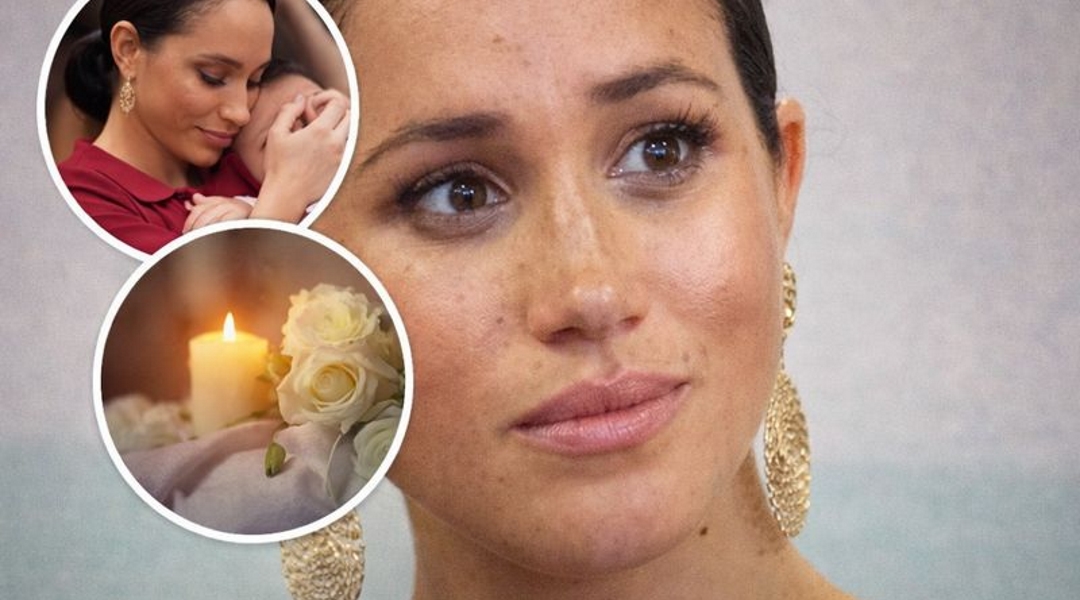
Meghan Markle has been pulled back into the spotlight again after a wave of posts circulated claiming she’d made a “heartbreaking baby announcement.” The framing spread fast because it sounded urgent, emotional, and new — but the real story people are reacting to is older, deeply personal, and still painful enough to hit like fresh news when it resurfaces.
The announcement at the center of the confusion traces back to Markle’s public disclosure that she suffered a miscarriage, a moment she described in raw detail while reflecting on grief, motherhood, and the quiet isolation that can come with loss. That original essay made headlines because it didn’t read like a press release — it read like a mother trying to find language for something that feels impossible to hold.
Over time, that story has repeatedly been recycled online, often stripped of context and reposted with captions designed to make it look like a breaking development. It’s the same pattern people have seen over and over: an old quote or old article gets repackaged into a new “announcement,” and by the time anyone checks the details, the emotional reaction has already done its job.
What gets lost in the churn is that miscarriage isn’t celebrity gossip. It’s trauma, and for many families it’s a trauma that never fully closes. When Markle shared her experience, she wrote about a moment of physical pain that quickly turned into fear, then realization — a private crisis unfolding in the middle of an ordinary day. The piece resonated because it captured the whiplash of loss: one moment you’re living your normal life, the next you’re trying to breathe through something you never saw coming.
In the months and years since, people have debated her decision to write about it at all. Some praised the openness and the way it invited compassion toward women who suffer in silence. Others accused her of “using” the experience, as if there’s a correct way to grieve only if it’s invisible and convenient for strangers.
That tension is exactly why the “heartbreaking baby announcement” phrasing keeps catching fire. It plays into the idea that motherhood stories exist primarily for public consumption — that a woman’s loss can be recast into a headline, packaged into outrage, and fed into engagement loops without anyone stopping to ask what it costs the person living it.
When Markle’s miscarriage essay first circulated widely, it also sparked broader discussion about how often people avoid talking about pregnancy loss, and how isolating that silence can be. Many women described reading her words and feeling seen, even if they didn’t relate to her life. Others felt angry that they’d gone through the same thing without anyone caring — not because she spoke, but because society usually doesn’t listen until fame forces it to.
The bigger problem now is how misinformation wraps itself around that history. In some corners of social media, the miscarriage disclosure gets mashed together with unrelated rumors — claims about new pregnancies, claims about family drama, claims about “secret” events — and the result becomes a messy, emotional bait post that has almost nothing to do with reality.
It’s not just annoying. It’s cruel. Turning a miscarriage into a recycled click moment treats grief like content, and it risks doing real harm to people who are already vulnerable. For anyone who has experienced pregnancy loss, seeing it presented like a viral scandal can feel like being pushed back into the worst day of your life, except now strangers are arguing in the comments as if it’s entertainment.
It also creates a strange secondary backlash: people get angry at Markle for “making another announcement,” even when she hasn’t made one. The outrage attaches to her name because the internet told them something happened, and by the time the truth surfaces, the anger has already been spent.
That’s why fact-checking matters here, even if the topic is emotional. A reliable rundown of what Markle actually disclosed — and when — is still available in coverage of her original miscarriage revelation, where the focus is on the loss itself rather than rumor fuel, including the report detailing her miscarriage disclosure and the public response that followed.
At the same time, the rumor ecosystem around “heartbreaking announcements” has become so persistent that it has required repeated debunks. There have been waves of posts claiming fresh baby news that never existed, and outlets have had to clarify what’s real versus what was manufactured for clicks, with a fact-check breaking down the false viral claim and explaining how the story got distorted.
None of this changes the emotional core that keeps pulling people in: a mother describing the moment she lost a pregnancy and the ache that followed. It’s a story that doesn’t expire just because time passes, and it’s understandable that it still hits hard when people see it again.
But there’s a difference between being moved by someone’s pain and using it. The internet’s habit of resurfacing tragedy as “new” content doesn’t just mislead readers — it reduces real grief into a repeatable format, and it trains audiences to respond with outrage first, understanding later.
If anything, the renewed attention should be a reminder to slow down before sharing. Check the date. Check the source. Ask whether you’re spreading something truthful or just forwarding a feeling. Because when the subject is pregnancy loss, the cost of careless virality isn’t abstract. It lands on real people — including the ones reading quietly because they’ve lived it too.