
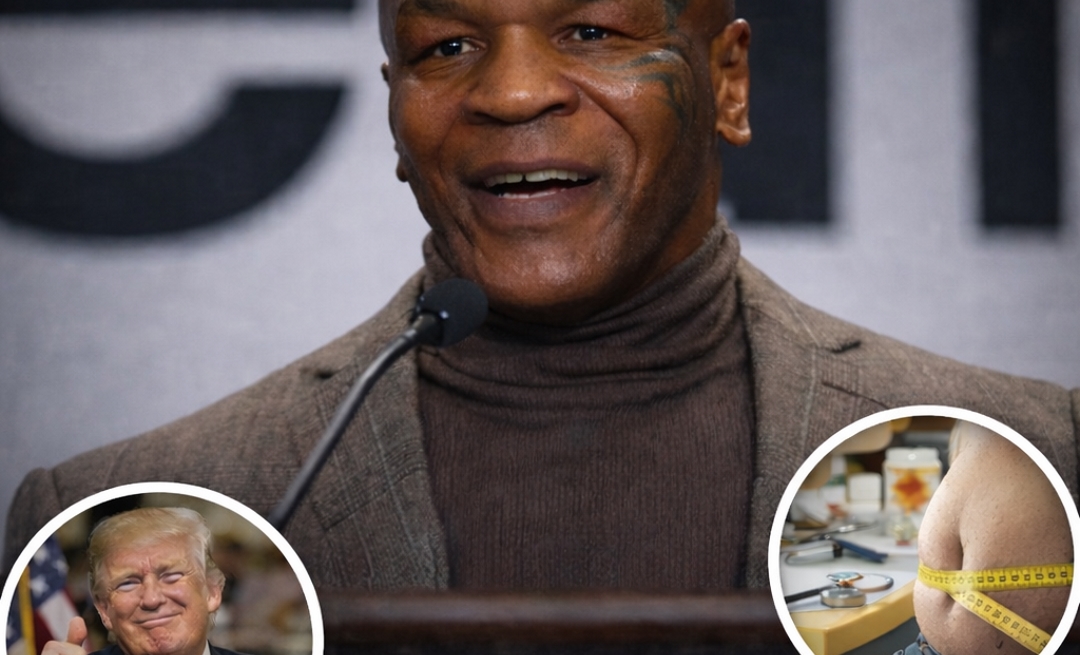
In an unexpected pairing that quickly drew national attention, former heavyweight champion Mike Tyson has joined forces with the Trump administration to promote a new federal health initiative aimed at combating obesity across the United States.
The announcement, made during a press appearance in Washington, framed the effort as a broad public health campaign focused on prevention, education, and personal accountability. Tyson, standing at a podium flanked by health officials, spoke candidly about his own physical transformation over the years — from elite athlete to retirement struggles and back to disciplined training.
“I know what it takes to fight,” Tyson said. “And this is a fight we have to take seriously.”
The initiative outlines plans for expanded community fitness programs, nutritional education partnerships, and public awareness campaigns encouraging healthier lifestyles. Administration officials described it as a multi-agency effort involving schools, local governments, and private sector partners.
Obesity remains one of the most pressing health challenges in the United States. According to data published by the Centers for Disease Control and Prevention, adult obesity prevalence has steadily risen over the past two decades, increasing the risk of heart disease, diabetes, and certain cancers. Public health experts have repeatedly warned that without sustained intervention, long-term medical costs will continue to climb.
The administration’s plan includes funding incentives for states that expand physical activity programs in schools and promote accessible recreational spaces in underserved communities. Officials say the goal is to move beyond awareness and into measurable change.
Tyson’s involvement adds a layer of celebrity influence to the campaign. Once known primarily for his dominance in the ring, Tyson has reinvented himself in recent years as a media personality, entrepreneur, and outspoken advocate for personal reinvention. His dramatic weight loss and return to exhibition boxing in his 50s have become part of his public narrative.
White House representatives emphasized that the partnership is designed to resonate with audiences who may not traditionally engage with government health messaging. “We want this to reach everyone — especially communities where obesity rates are highest,” one official said.
The policy rollout arrives amid ongoing national debate about the role of government in shaping health outcomes. Supporters argue that federal coordination can amplify prevention strategies and reduce long-term healthcare burdens. Critics caution that lifestyle decisions ultimately rest with individuals and question how far government initiatives should extend.
Public health researchers note that obesity is influenced by a complex mix of socioeconomic, environmental, and behavioral factors. Access to affordable nutritious food, safe exercise spaces, and education all play significant roles. The National Institutes of Health has long identified obesity as a multifactorial condition requiring comprehensive approaches rather than single-solution fixes, as outlined in research summaries available through the National Institute of Diabetes and Digestive and Kidney Diseases.
At the press event, Tyson spoke openly about discipline and structure — themes that defined his early boxing career. He acknowledged that maintaining physical health becomes more challenging with age but insisted that small daily decisions can accumulate into lasting change.
“You don’t win the fight in one punch,” he said. “You win it by staying in shape every day.”
The campaign will feature televised public service announcements, digital outreach, and partnerships with athletic organizations. Tyson is expected to appear in several promotional materials, including youth-focused fitness clinics scheduled in multiple states over the coming year.
Reaction to the collaboration has been mixed. Some supporters view Tyson’s redemption arc as a compelling symbol of second chances and resilience. Others question the optics of aligning a polarizing political administration with a celebrity figure whose career has included controversy alongside athletic achievement.
Administration officials maintain that the focus remains squarely on public health outcomes. They point to rising healthcare expenditures linked to obesity-related conditions and argue that proactive intervention could ease long-term economic strain.
Healthcare economists have long stressed that prevention strategies, while sometimes slower to show results, can yield substantial savings over time. Programs encouraging exercise and improved diet may reduce hospitalizations tied to chronic disease, though sustained funding and community engagement are critical to success.
As the initiative rolls out, metrics will be closely watched. Officials have pledged transparency in reporting participation rates and measurable health indicators. Whether the campaign can significantly shift national trends remains to be seen.
For Tyson, the partnership represents another chapter in a life defined by dramatic highs and lows. From youngest heavyweight champion in history to personal struggles and eventual comeback, his journey mirrors the theme he now promotes: transformation through persistence.
The administration, meanwhile, is betting that a familiar face known for discipline and resilience can help energize a conversation that has long been clouded by statistics and policy language.
In a nation where waistlines have steadily expanded and healthcare costs continue to rise, the fight against obesity is not a metaphorical one. It is a measurable, deeply human challenge affecting millions of families. Whether this unlikely alliance will make a lasting impact may depend less on headlines and more on sustained community engagement — and on whether Americans are ready to lace up for a fight of their own.