
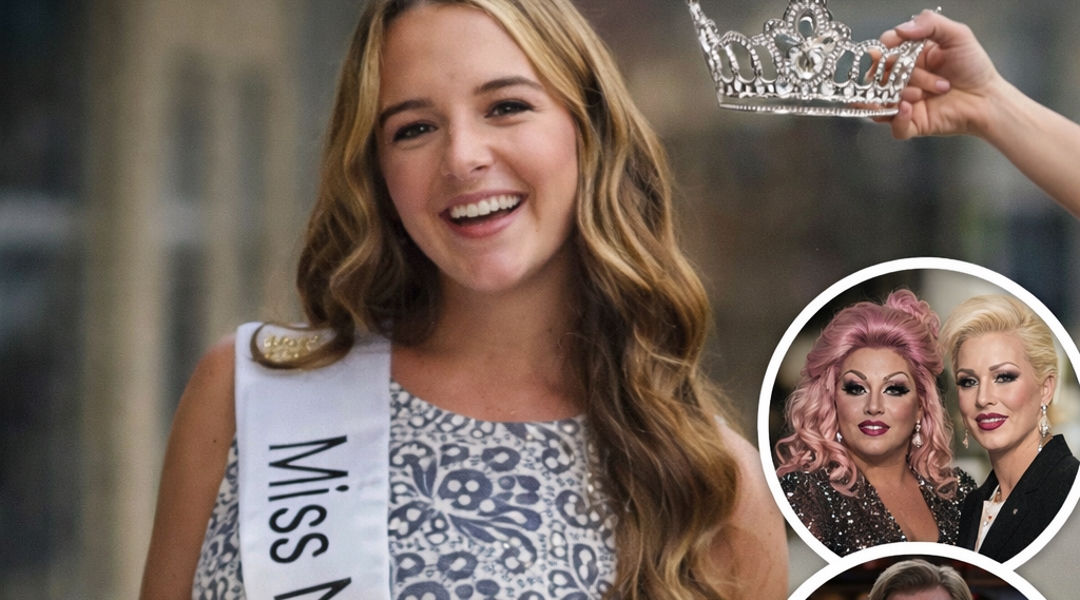
What began as a local pageant celebration quickly spiraled into a national controversy. The reigning Miss North Florida found herself at the center of a cultural firestorm after publicly stating she would not refer to biological men as women — comments that pageant organizers later described as inconsistent with the organization’s values.
Within days, her crown was revoked.
The decision stunned supporters who had watched her rise through the ranks of regional competitions. Just weeks earlier, she had stood smiling with a sash across her shoulder, posing for photos and preparing for future appearances tied to her title. The pageant world, often associated with poise and diplomacy, suddenly collided with one of the most divisive social debates in America.
According to a public statement issued by pageant officials, the organization promotes inclusivity and expects titleholders to uphold standards that reflect respect for all communities. Though the statement did not quote her remarks directly, it confirmed that her comments led to an internal review and the eventual removal of her title.
The broader conversation surrounding gender identity has intensified in recent years, particularly in competitive spaces. Policies involving participation, language, and recognition have shifted across institutions, from athletics to pageantry. Reporting from NBC News has documented how such disputes increasingly play out in public forums, often escalating far beyond the original event.
In this case, the backlash unfolded rapidly across social media. Clips of her remarks circulated widely, drawing both applause and outrage. Supporters framed her stance as an expression of personal belief and free speech. Critics argued her comments marginalized transgender individuals and contradicted the inclusive direction many pageant systems have adopted.
The former titleholder later released her own statement defending her position. She maintained that she had spoken honestly when asked about language and gender identity, and said she did not intend to harm anyone. At the same time, she acknowledged that her views differ from those of the organization that crowned her.
The pageant’s leadership moved swiftly. After consultations and review, they announced her removal and confirmed that a successor would assume the role. The crown, symbolic and ceremonial, was formally transferred — an act that signaled the finality of their decision.
Observers note that beauty pageants have undergone significant evolution over the past decade. Once primarily focused on appearance and stage performance, many competitions now emphasize advocacy, social engagement, and representation. The inclusion of transgender contestants in major pageants, including Miss Universe, reflects that broader transformation. As detailed in coverage from CNN, organizations have increasingly embraced policies designed to reflect changing societal norms.
For some, this shift represents progress. For others, it underscores a widening cultural divide.
In North Florida, community reactions mirrored that national split. Some local residents expressed disappointment in the organization’s decision, arguing that personal beliefs should not automatically disqualify someone from holding a ceremonial title. Others praised officials for acting decisively, insisting that leadership roles tied to public representation demand alignment with inclusive principles.
Behind the headlines lies a young woman whose year of appearances, charity events, and pageant preparations abruptly ended. Friends described her as dedicated and sincere. They say she worked hard for the crown and never anticipated that a single exchange would alter her trajectory so dramatically.
Legal analysts note that private organizations generally retain the authority to set conduct standards for representatives. Titles, sponsorships, and contracts often include clauses allowing removal if conduct is deemed inconsistent with organizational missions. While public offices are bound by constitutional free speech protections, private pageant systems operate under different rules.
Still, the optics of revoking a crown over a public comment carry symbolic weight. Beauty pageants have long occupied a space where image, messaging, and cultural values intersect. A titleholder’s words are not merely personal — they become associated with the brand itself.
In interviews following her removal, the former Miss North Florida reiterated that she stands by her beliefs. She described the experience as both painful and clarifying, saying it revealed how deeply divided opinions remain on issues of identity and language.
The pageant organization, for its part, has emphasized moving forward. Officials reaffirmed their commitment to inclusivity and respect, stating that their mission includes providing a platform that welcomes diverse identities and perspectives. They declined further comment beyond their official release.
As the story continues to circulate online, it has become less about a single pageant and more about the broader tension shaping cultural discourse. Supporters on both sides view the episode as emblematic of larger debates — about speech, inclusion, tradition, and change.
For the young woman at the center of it, the tiara is gone. The photographs remain. So does the controversy.
Whether the decision will fade from public attention or remain a flashpoint in ongoing discussions about gender and representation is unclear. What is certain is that a local pageant title, once confined to parades and ribbon cuttings, has become part of a national conversation — one that shows no signs of quieting anytime soon.