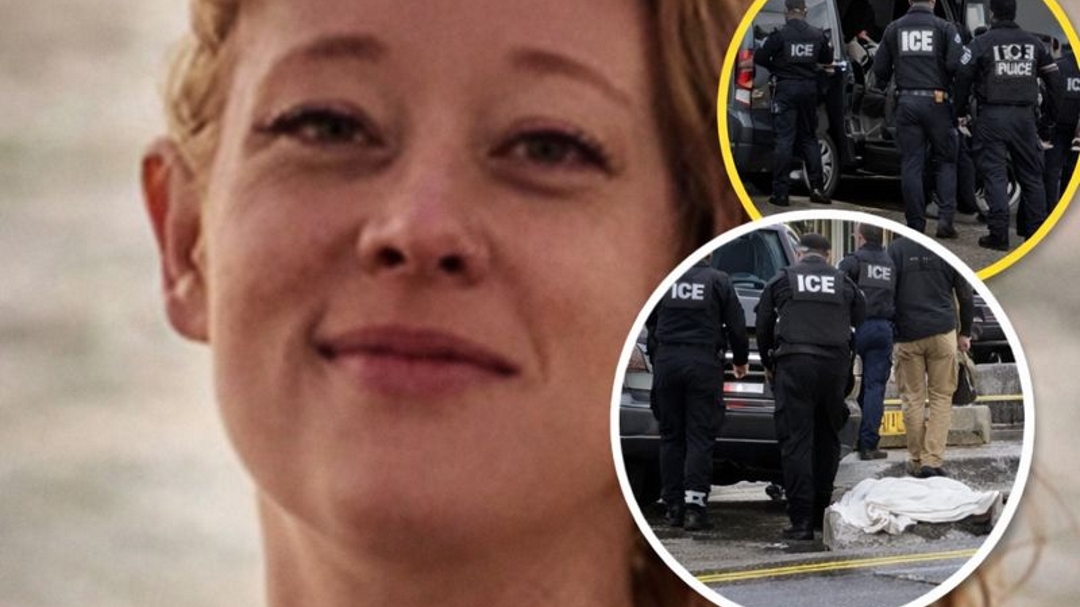
Shock and grief are rippling through Minneapolis after a federal immigration agent fatally shot 37-year-old Renee Nicole Good during an ICE operation in the city. As protests grow and officials clash over what really happened, Good’s mother is speaking publicly for the first time — describing a daughter who never should have died on a neighborhood street.
Renee Good was killed early Wednesday morning during a large-scale immigration enforcement action carried out by U.S. Immigration and Customs Enforcement. Federal officials say the shooting occurred after an agent perceived a threat during the operation. Local leaders and family members dispute that version of events, saying the facts do not justify deadly force.
Good’s mother, Donna Ganger, identified her daughter and described her as gentle, creative, and deeply devoted to her children. In interviews with local reporters, she said her daughter was likely confused and frightened in her final moments, adding that Renee had never been violent and had no history of confrontations with law enforcement. Friends echoed that sentiment, calling her a writer, poet, and loving mother who kept largely to herself.
According to reporting from local coverage detailing the family’s account, Good was a U.S. citizen who had recently moved to Minneapolis with her family. She lived only a few blocks from where the shooting occurred, a detail that has intensified anger among residents who say federal agents brought violence into a quiet neighborhood.
ICE officials claim the agent fired after Good allegedly used her vehicle in a way that posed a danger. But Minneapolis Mayor Jacob Frey strongly rejected that narrative, calling it “deeply misleading” and demanding that ICE halt operations in the city. Governor Tim Walz has also called for a full, transparent investigation, stating that early video footage raises serious questions about the justification for lethal force.
Details emerging from witnesses suggest the situation unfolded rapidly and chaotically. Video clips circulating online appear to show agents shouting conflicting commands as Good’s car moved only slightly. Moments later, shots were fired at close range. Those images have fueled outrage, especially as city officials emphasize that Minneapolis police were not involved in the operation.
This should never have happened. We demand answers and accountability for the death of Renee Nicole Good. — Minneapolis City Council (@MplsCityCouncil) January 2026
Protests erupted within hours of the shooting. Hundreds gathered near federal buildings and throughout south Minneapolis, holding vigils and chanting Good’s name. Some demonstrations led to temporary road closures and heightened security across the city. School districts canceled classes in certain areas, citing safety concerns as crowds continued to grow.
The incident has also drawn national attention, with immigration advocates pointing to it as an example of what they describe as aggressive federal enforcement tactics. Critics argue that ICE operations often escalate situations unnecessarily, particularly in residential areas. Supporters of the agency, meanwhile, insist agents face unpredictable dangers and must make split-second decisions.
Reporting from regional public radio coverage notes that this was one of the largest immigration enforcement actions conducted in Minnesota in years, involving hundreds of federal officers. The scale of the operation has raised questions about planning, coordination, and the use of force in densely populated neighborhoods.
Homeland Security officials have defended the agent involved, saying the shooting will be reviewed internally and by federal investigators. At the same time, Minneapolis leaders are calling for independent oversight, arguing that federal reviews alone will not satisfy public demands for transparency.
Renee was a mother, a writer, a human being. Her life mattered. This city will not forget. — Community Justice MN (@JusticeMNNow) January 2026
For Good’s family, the political battle offers little comfort. Her mother says the focus now is on protecting her grandchildren and ensuring her daughter’s story is not distorted. “She wasn’t a threat,” Ganger said. “She was a person who deserved to come home.”
As investigations continue, the case is likely to remain a flashpoint in the national debate over immigration enforcement, federal authority, and police accountability. Whether policy changes follow remains uncertain, but in Minneapolis, one family’s loss has already reshaped the city’s conversation about power, force, and human life.