
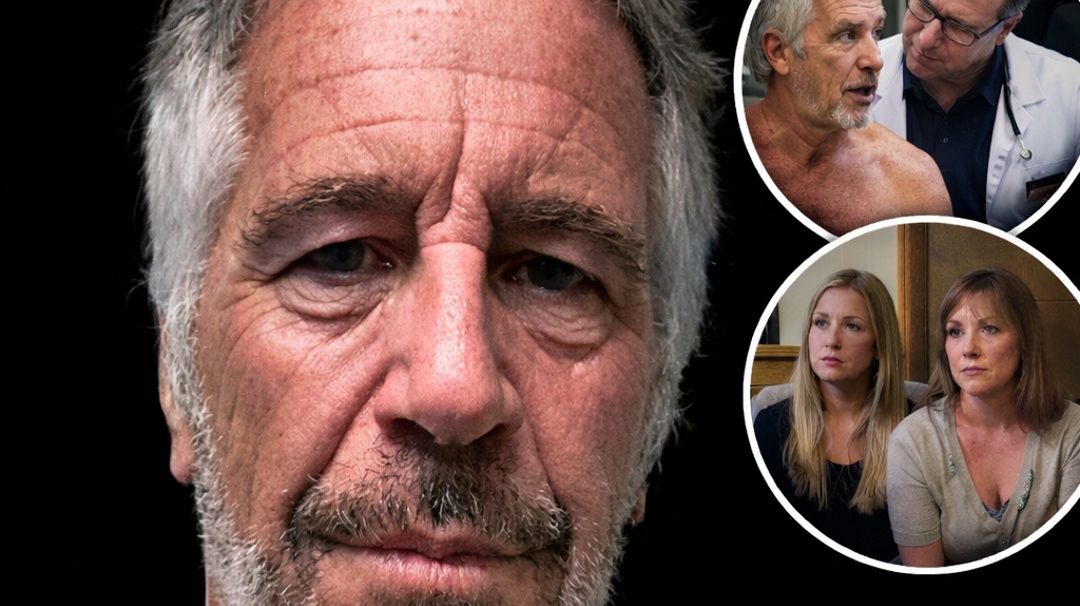
Years after the death of Jeffrey Epstein, new allegations and resurfacing testimony are once again fueling debate about how the financier maintained control over the people around him. Lawyers, journalists, and investigators continue to revisit claims that powerful systems of influence surrounded Epstein for decades — including allegations involving medical professionals.
Epstein, who died in federal custody in 2019 while awaiting trial on sex trafficking charges, left behind a web of unanswered questions that still dominate public conversation. Court filings, victim statements, and investigative reporting have continued to emerge, shedding light on the mechanisms that allegedly allowed him to operate for so long.
Among the most disturbing claims raised over the years are accusations that certain doctors or medical providers were involved in maintaining his influence over victims. Some survivors and attorneys have argued that medical treatment was sometimes used as a way to create dependency, maintain silence, or reinforce control.
These claims have not always been fully tested in court, but they have appeared in civil lawsuits and investigative reporting tied to Epstein’s network. Legal experts say the allegations highlight how systems of authority — including medicine, finance, and law — can sometimes be manipulated by powerful individuals.
Epstein’s operations first drew national attention long before his 2019 arrest. A controversial 2008 plea deal in Florida allowed him to avoid federal prosecution despite significant evidence gathered by investigators. That agreement has since become a central focus in discussions about accountability and justice.
Public outrage surged again when federal prosecutors in New York charged Epstein with operating a sex trafficking ring involving underage girls. The case was expected to expose extensive details about his connections to wealthy and influential figures.
However, the case never reached trial. Epstein was found dead in a Manhattan jail cell in August 2019. Authorities ruled the death a suicide, but the circumstances immediately triggered widespread skepticism and investigation.
The Department of Justice inspector general later released findings examining failures within the jail system the night Epstein died. Those findings pointed to severe negligence, including guards failing to complete required checks.
More details about the case and the investigation into Epstein’s operations can be found in reporting from BBC News coverage of the Epstein investigation, which outlines how federal authorities built their case.
Even after Epstein’s death, the legal battles did not end. Numerous civil lawsuits have been filed against individuals and institutions alleged to have facilitated his activities. Victims and their attorneys argue that uncovering the full scope of what happened remains critical.
In recent years, scrutiny has also expanded to professionals who may have interacted with Epstein or people connected to him. This includes bankers, lawyers, associates, and in some cases medical personnel who reportedly treated him or individuals within his circle.
Attorneys representing victims have said that examining these relationships could reveal whether any professionals knowingly enabled abuse or failed to report warning signs. At the same time, legal experts caution that accusations alone do not equal proof and that each claim must be carefully examined.
The Epstein scandal has become one of the most complex legal sagas in recent history. Investigators continue to sift through documents, financial records, flight logs, and testimony in an effort to understand how the network operated.
Some of the most high-profile developments came during the prosecution of Ghislaine Maxwell, a longtime associate of Epstein who was convicted in federal court in 2021 for helping recruit and groom underage girls. Her trial revealed new testimony about how Epstein’s system functioned.
Coverage of that trial, including victim statements and evidence presented in court, has been documented by outlets such as The New York Times reporting on the Maxwell case.
Despite years of investigation, many questions remain unresolved. Survivors continue to push for transparency, arguing that the public deserves to understand how such an operation was able to continue for so long without broader intervention.
Advocates say the case has exposed failures across multiple institutions, including law enforcement, financial oversight, and professional accountability systems. Some have called for stronger reporting requirements and protections for victims who come forward.
Legal scholars note that complex abuse cases involving wealthy or powerful figures often take years — sometimes decades — to fully unravel. Documents continue to surface, and ongoing litigation may still reveal new information.
For many survivors, the goal is not only justice but also recognition of the harm they endured. Several victims have said that public acknowledgment of what happened is a critical part of healing.
As the story continues to evolve, the Epstein case remains a symbol of the dangers posed when power, money, and influence collide with weak oversight.
Whether future investigations uncover new evidence or finally answer lingering questions, the impact of the scandal is likely to shape conversations about accountability for years to come.