
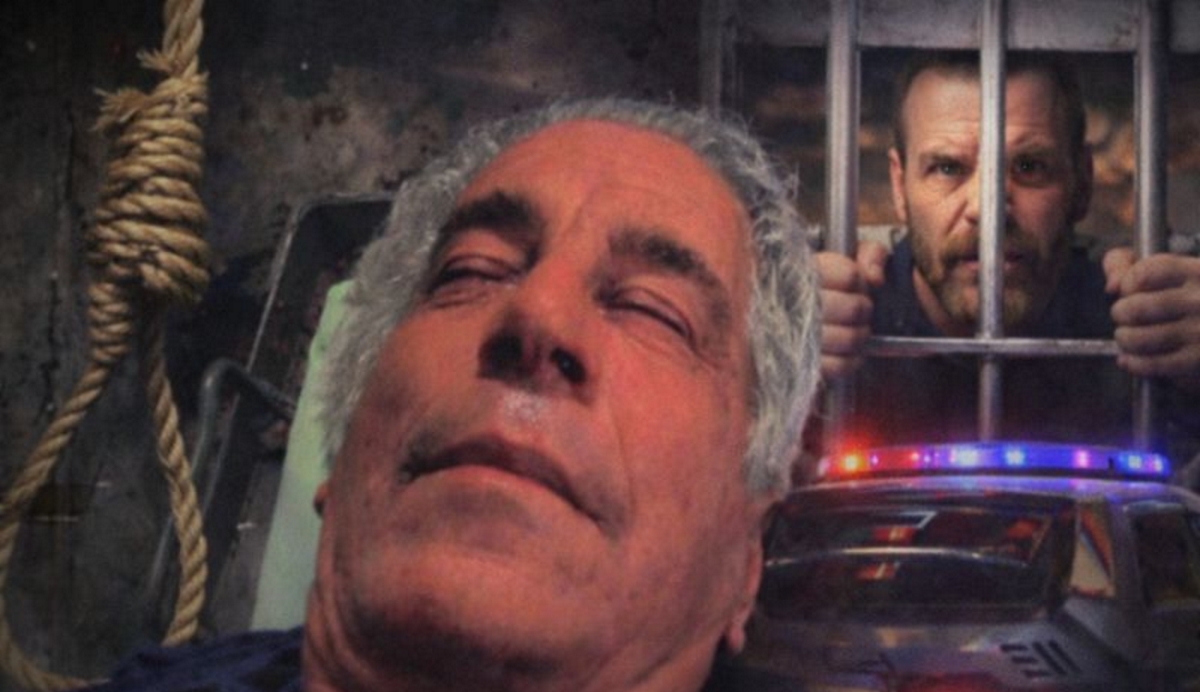
A stunning new development has reignited scrutiny around the final weeks of Jeffrey Epstein’s life, after reports resurfaced alleging that his jail cellmate attempted to kill him just 18 days before Epstein was found dead. The claim, supported by newly highlighted records and testimony, has unraveled a disturbing timeline that many believe was never fully examined.
The allegation centers on an incident inside the Metropolitan Correctional Center in Manhattan, where Epstein was being held in 2019. According to documents and prior reporting now being re-examined, Epstein was found injured in his cell weeks before his death, with marks on his neck that raised immediate concern.
At the time, officials described the incident as either a suicide attempt or an accident. However, later accounts pointed to the involvement of Epstein’s cellmate, who allegedly assaulted him. That detail, long buried in bureaucratic language, has taken on new urgency as observers piece together the sequence of events.
Was placed on suicide watch following the incident, only to be removed from it days later under circumstances that remain controversial. The decision-making around that removal has been questioned repeatedly, including in internal review summaries that noted multiple procedural failures.
What has shifted now is renewed focus on the severity of the earlier incident. Newly resurfaced medical notes and guard statements suggest the injuries may have been more consistent with an assault than previously acknowledged, a distinction explored in reporting that didn’t get full traction when it first appeared.
The question isn’t just how Epstein died — it’s what happened in the weeks before. — Investigative journalist (@CaseReopened) Dec 2025
Epstein’s cellmate at the time was later described by officials as a former police officer awaiting trial on unrelated charges. Sources familiar with the case have said the cellmate told investigators he tried to help Epstein, a claim that has been disputed by other evidence and accounts.
Legal experts stress that the distinction between an attempted murder and an assault is critical, not just legally but historically. If the earlier incident was indeed an attempted killing, it raises serious questions about why safeguards were relaxed rather than intensified. That dilemma has been discussed in legal analysis of the jail’s failures.
The Bureau of Prisons has acknowledged widespread breakdowns at the facility, including staff shortages, falsified records, and malfunctioning cameras on the night of Epstein’s death. But critics argue those explanations do not address why warning signs weeks earlier failed to trigger lasting protective measures.
Advocates for Epstein’s victims say the renewed attention matters because accountability was never fully delivered. Epstein’s death ended the possibility of a public trial that could have exposed how he operated and who enabled him, a concern echoed in investigations that changed the case.
Every new detail shows how many chances there were to prevent this. — Victims’ advocate (@JusticeForSurvivors) Dec 2025
Despite multiple reviews, no senior officials have faced criminal consequences tied to Epstein’s detention or death. Two guards on duty that night later reached a deferred prosecution agreement, fueling public skepticism about whether the full truth ever emerged.
The resurfaced focus on the alleged attack 18 days prior has intensified calls for a comprehensive, independent investigation. Critics argue that piecemeal disclosures and internal probes have only deepened mistrust rather than resolved it.
For many observers, the timeline now appears chillingly clear: an alleged violent incident, removal from suicide watch, reduced monitoring, and a death that closed the door on accountability. Each step raises questions that remain unanswered.
Officials maintain that Epstein’s death was ruled a suicide, but the accumulation of overlooked details continues to fuel doubt. As more records are re-examined, the case stands as a stark example of how institutional failure can compound into irreversible outcomes.
Whether the new attention leads to meaningful action remains uncertain. But the resurfacing of this alleged attempted killing has ensured that Epstein’s final days will not fade quietly into the archive.