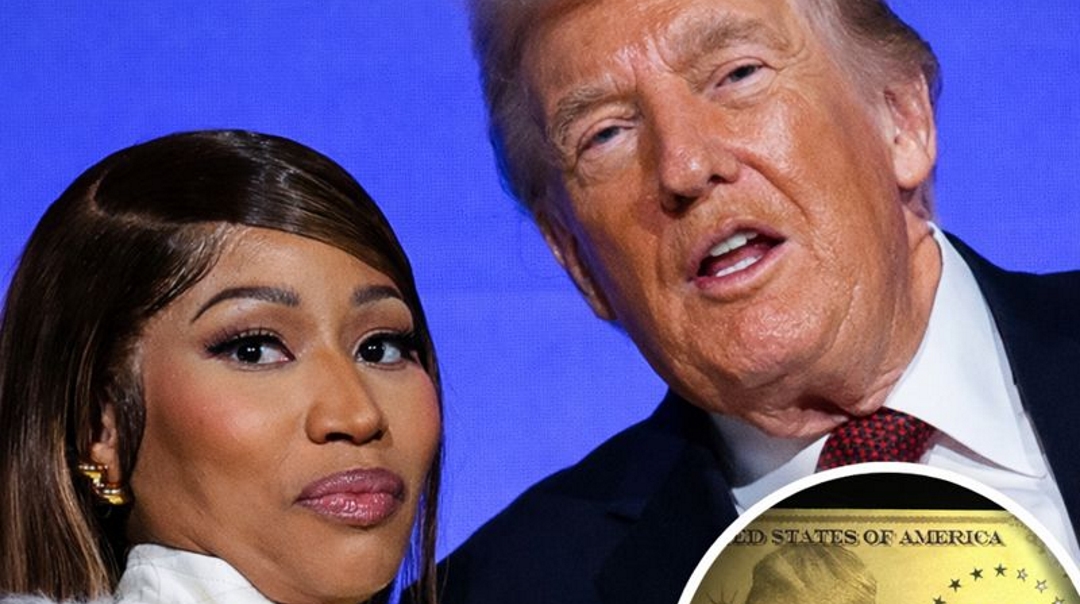
The rapper’s comments came amid renewed scrutiny of Trump’s past remarks on birthright citizenship and immigration reform, issues that have resurfaced as central talking points ahead of the next election cycle. Trump has repeatedly suggested limiting automatic citizenship for children born in the US to undocumented parents, a proposal that constitutional scholars say would face enormous legal hurdles.
Minaj’s involvement added a celebrity dimension to an already volatile issue. Fans and detractors alike dissected her words, with some praising her for speaking freely about her political views, while others accused her of oversimplifying complex legal realities.
The “Gold Card” itself appears to be a novelty or commemorative item rather than any legitimate financial or legal instrument. Experts note that while wealthy investors can pursue residency through programs like EB-5 visas, those pathways still require government approval, job creation benchmarks, and years-long processes — not a single luxury card.
Critics argued that presenting the card as a symbol of status or access reinforces harmful myths about how citizenship works in the United States. Advocacy groups warned that such narratives risk misleading audiences unfamiliar with immigration law.
Meanwhile, Minaj’s defenders insisted she was making a broader point about hypocrisy in political discourse and the selective outrage directed at public figures. They argued that celebrities are frequently targeted for expressing views that diverge from mainstream expectations.
The controversy also reignited debate over the role of entertainers in political conversations. While some believe high-profile figures can help engage younger audiences, others say their influence carries responsibility — especially when discussing topics with real-world legal consequences.