
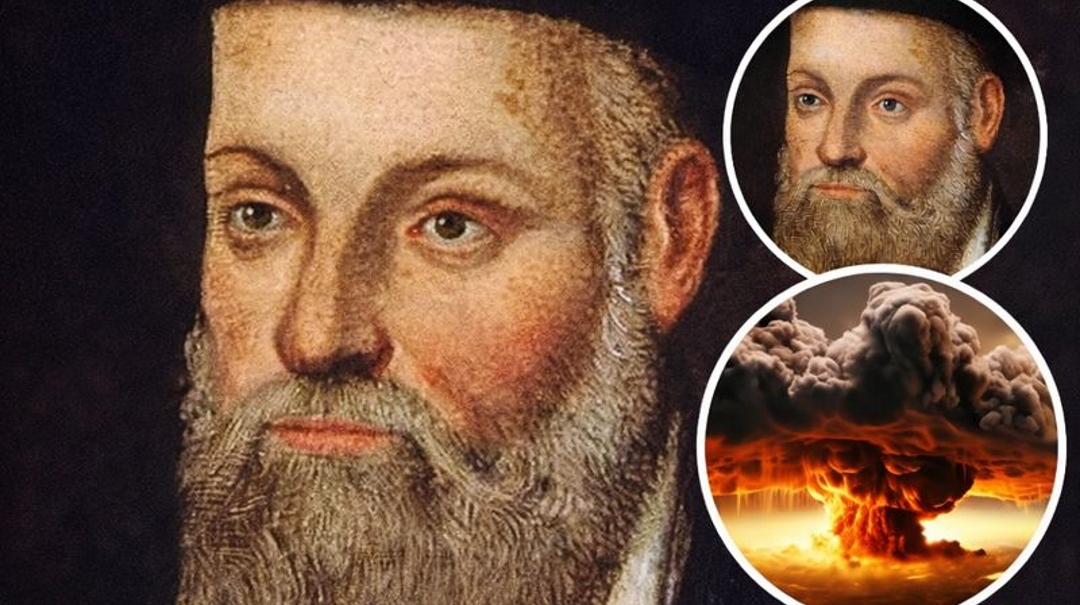
It starts the same way these stories always start: a breaking headline, a shaky clip, and a line from a 16th-century prophet that suddenly feels like it’s breathing down everyone’s neck.
In the past few days, Nostradamus has been dragged back into the timeline after a dramatic U.S. move involving Venezuela’s leadership exploded across social media, with people insisting one of his “chilling 2026 predictions” is already unfolding.
The trigger, according to the viral posts, is the kind of geopolitical jolt that makes even casual news readers pause: a high-stakes arrest and an escalating standoff that instantly got framed as the first domino in something bigger. One widely shared breakdown pointed to the arrest and the online scramble to connect it to Nostradamus, with readers circulating the resurfaced “great war” quatrain people keep quoting as if it’s a warning label we missed.
And to be fair, the language is the kind that invites panic if you’re already primed for it. The lines are bleak, vague, and soaked in disaster imagery—exactly the sort of thing that can be stretched over any crisis like plastic wrap until it looks like prophecy.
That’s the secret sauce of Nostradamus content: the writing is elastic. It’s not that he “called it” in a clean, timestamped way—he didn’t write, “On this date, in this country, this exact thing will happen.” What he left behind were quatrains that can be tugged into shape by whoever’s scared enough to try.
Still, the reason it’s catching fire right now is emotional, not academic. People are tired, the world feels tense, and every big international flashpoint comes with a low hum of dread—like something is building behind the scenes while regular life keeps pretending it isn’t.
The phrase getting pushed hardest is the idea of a “great war” beginning in 2026. On its face, that sounds like a prediction, but the internet version is always more dramatic: not “a conflict,” not “regional escalation,” but a looming, unstoppable global collapse.
What makes it stick is how easily the story can be threaded through multiple headlines at once. Venezuela becomes the spark, then the conversation drifts to wider tensions—alliances, sanctions, retaliation, and the kind of chest-tightening language leaders use when they want the world to listen.
That’s where the prophecy talk turns from eerie to messy. Because when people say “Nostradamus predicted this,” what they really mean is “This feels so bad I want a script for it.” Prophecy gives chaos a plot, even when the evidence is mostly vibes and recycled quotes.
Even UNILAD’s own coverage of Nostradamus-style 2026 fears leans into how people interpret the writing rather than presenting it as hard fact, noting how modern readers keep mapping current events onto his work and treating it like a dark mirror for the year ahead, as seen in the recent roundup of 2026 anxieties tied to his quatrains while still acknowledging how slippery the interpretations are.
That slipperiness is the point. Nostradamus didn’t give neat predictions for “2026” the way TikTok graphics claim. His writing gets retrofitted—sometimes by enthusiasts, sometimes by content farms, sometimes by people who genuinely believe history has patterns and the patterns have warnings.
But the emotional reaction is real, and it’s not hard to see why. When you watch a major international incident unfold in real time—detentions, accusations, talk of consequences—and then you’re told a centuries-old prophet predicted a “seven-month war,” your brain wants to connect the dots even if the dots aren’t actually numbered.
That’s why the same handful of quatrains keep getting recycled whenever the world heats up. The text stays the same, but the “meaning” shifts depending on what’s happening: war in one year, plague in another, political collapse the next.
Right now, the algorithm is rewarding the scariest possible interpretation. Posts are pairing the Nostradamus lines with images of mushroom clouds, maps, and doom-laced captions, because fear travels faster than nuance and because “maybe” doesn’t get shared like “it’s happening.”
What gets lost in that rush is the boring but important reality: real geopolitical events don’t need Nostradamus to be terrifying. They’re heavy enough on their own. When leaders clash and the stakes are national power, money, security, and pride, the outcomes can be brutal without any prophecy attached.
And if we’re being honest, prophecy content often becomes a kind of emotional outlet—something people grab when they’re trying to make sense of a world that feels like it’s sliding. It gives the fear a frame. It gives the dread a headline.
So did a Nostradamus prediction “come true”? Not in a provable, courtroom sense. What’s happening is that a real-world event hit the public like a punch, and people reached for a familiar myth to explain why it felt so ominous.
The most responsible way to read the moment is this: the news is serious, the tensions are real, and the consequences could be enormous. But the Nostradamus part is a lens people are choosing—not a verified forecast.
Still, it’s worth watching what happens next, because the story isn’t just about a quatrain going viral. It’s about how quickly panic spreads when the world feels unstable, and how easily a few ancient lines can turn today’s fear into tomorrow’s prophecy.