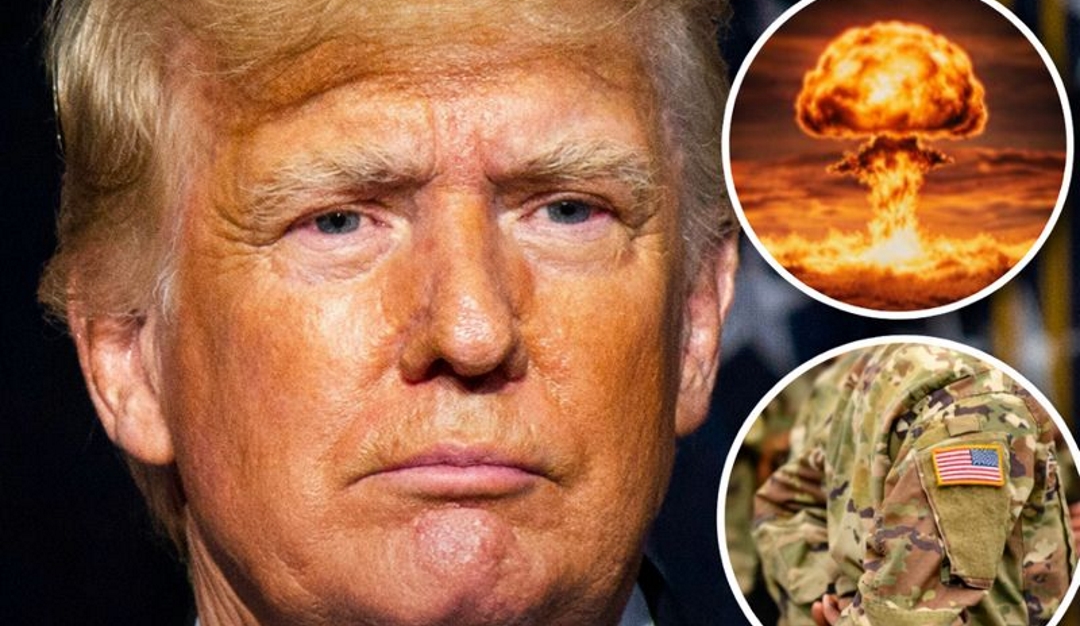
The image is unsettling for a reason. A grim-faced Donald Trump, a mushroom cloud hovering nearby, and U.S. troops standing ready all tap into a fear that has quietly crept back into public consciousness. As global tensions sharpen and nuclear rhetoric resurfaces, experts are once again explaining what an unthinkable scenario might actually look like on American soil.
One nuclear policy analyst recently reignited the conversation by outlining which U.S. cities would likely face the earliest danger if a full-scale global war were to erupt. The analysis was not framed as speculation or panic, but as a strategic breakdown rooted in decades of military doctrine, targeting logic, and historical precedent discussed in longstanding weapons assessments.
The warning centers on how adversaries would prioritize targets, not on population size alone. While many people instinctively assume the largest cities would be first, experts argue that military value, command infrastructure, and strategic positioning matter far more, a point echoed in defense modeling research that has circulated quietly for years.
According to the expert, cities tied to nuclear command and control, major military installations, and key logistics hubs would be at the top of the list. Washington, D.C. consistently appears in such analyses, not because of symbolism, but due to its concentration of leadership, intelligence coordination, and continuity-of-government operations referenced in policy briefings on deterrence strategy.
Other cities frequently cited include locations near strategic bomber bases, submarine ports, and missile defense systems. These areas are viewed as critical nodes in a conflict scenario, meaning disabling them early could limit retaliation or response. Analysts stress this logic has remained remarkably consistent since the Cold War, despite advances in technology.
Nuclear strategy hasn’t changed as much as people think. Targets are about capability, not headlines. — Strategic Analyst (@StratObserver) January 2026
The renewed discussion has gained traction as geopolitical flashpoints multiply. Ongoing conflicts, strained alliances, and rising military budgets have revived once-taboo conversations in policy circles. Reports examining current global force postures show that nuclear preparedness has quietly increased across several major powers.
What makes the warning resonate is its blunt realism. The expert emphasized that no modern missile exchange would resemble cinematic portrayals. Instead, the earliest strikes would aim to disrupt communications, eliminate response capability, and create confusion, not simply cause destruction. Civilian impact would be catastrophic regardless, but the initial focus would be strategic paralysis.
Social media reaction has been split. Some users accuse analysts of fearmongering, while others argue the public deserves transparency about risks leaders quietly plan around. The debate mirrors earlier eras when nuclear drills and public education campaigns were common, a contrast noted in historical retrospectives on Cold War preparedness.
People think talking about this creates fear. Ignoring it doesn’t make the risk disappear. — Global Security Watch (@GlobalSecWatch) January 2026
Importantly, the expert stressed that identifying potential targets is not a prediction of inevitability. Deterrence still relies on preventing such a scenario entirely. The point, they argue, is that understanding the stakes should sharpen diplomacy, not normalize conflict.
For everyday Americans, the discussion is jarring precisely because it pulls back the curtain on realities rarely addressed outside academic or defense circles. Cities people associate with opportunity and culture are also embedded in a vast strategic framework invisible during peacetime.
As political rhetoric intensifies and images like this circulate more widely, experts caution against sensationalism while urging seriousness. Nuclear war planning exists whether the public discusses it or not. The choice facing leaders, and voters, is whether the future is shaped by restraint or miscalculation.