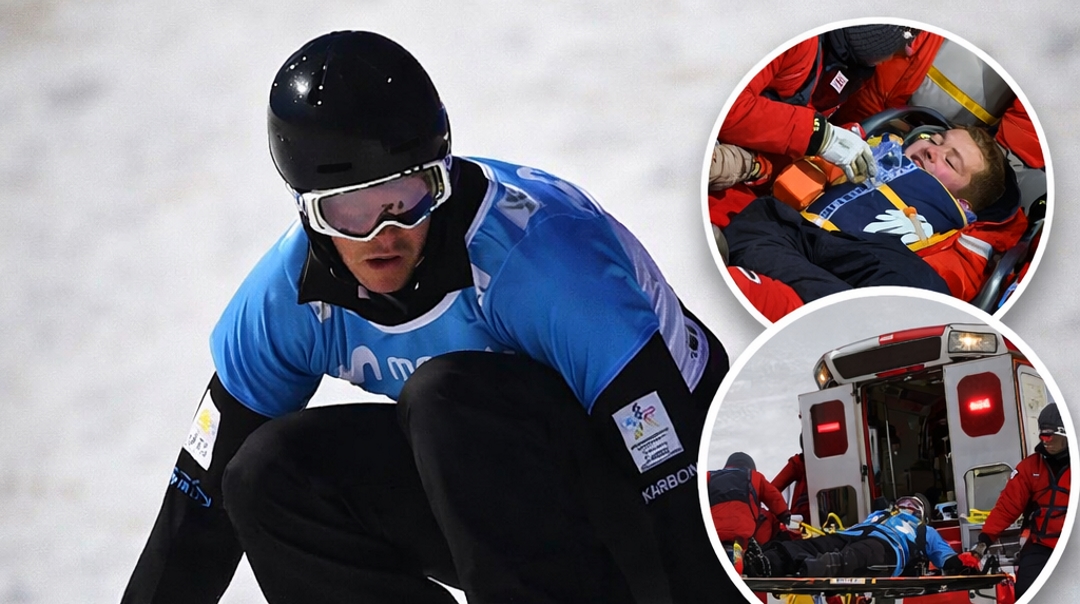
Reports also describe Bolton as being focused on reassuring teammates in the immediate aftermath, a detail that feels painfully human. Athletes are trained to think about the group, the plan, the mission — but in moments like this, that instinct often becomes a form of control, a way to keep the world from spinning off its axis entirely.
The broader Olympic scene has been marked by injuries, but this one lands differently because of the words attached to it. “Broken neck” doesn’t read like a sports update. It reads like a warning, like the sharp reminder that winter competition can still take everything from you in a fraction of a second, no matter how experienced you are.
For fans, it’s the whiplash of seeing an athlete’s name attached to preparation one day and catastrophe the next. For teammates, it’s the sickening realism of watching a friend disappear into medical care while they’re expected to refocus, reset, and race. And for Bolton’s family, it’s the nightmare every loved one tries not to imagine — the phone call, the rush of fear, and the desperate hope that the news doesn’t get worse.
There will be analysis of course: what happened on the course, what the conditions were, whether a bump caught him wrong, whether the landing was off by inches. But none of that changes the core truth. Bolton was training for the biggest stage in his sport, and a single crash took that stage away.
Now the road shifts from competition to recovery, from start lists to medical updates, from Olympic ambition to the slow, exhausting work of healing. His absence will be felt every time the gates open for snowboard cross, because the people closest to the sport understand what it means to reach that level — and how fast it can vanish.
As details continue to emerge, coverage of the incident has been reported by The Guardian and also by ESPN, both outlining how the crash unfolded, the diagnosis that followed, and the immediate impact on Australia’s Olympic campaign.