
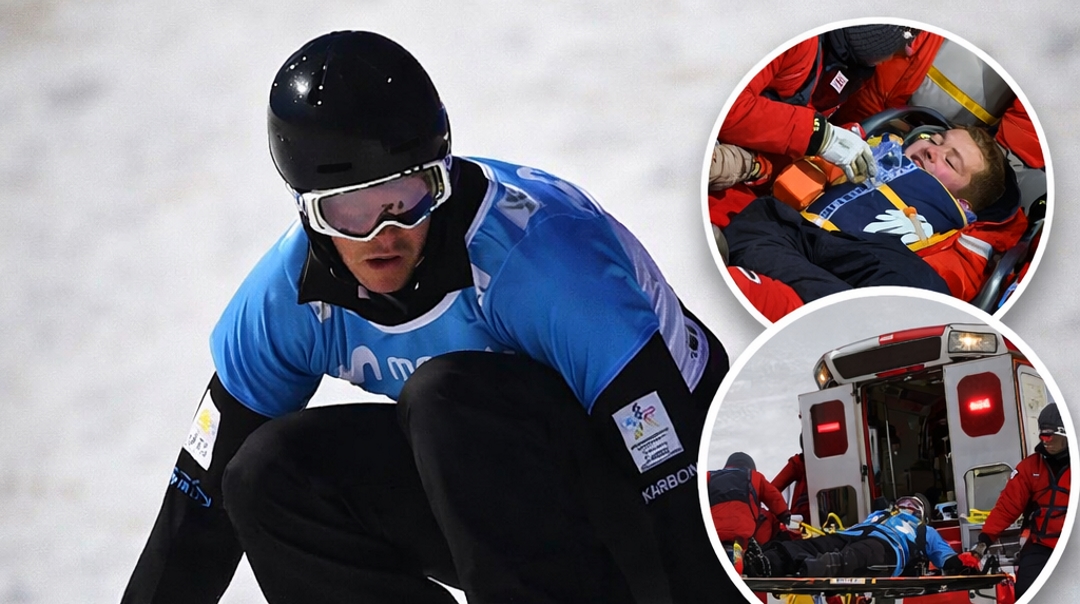
The run was supposed to be routine — one more hard, fast rehearsal before the real thing. Instead, it became the moment an Olympic dream snapped in an instant, leaving a veteran snowboarder facing a broken neck just days before the competition schedule tightened around him.
Australian snowboard cross rider Cam Bolton has been ruled out of the Games after a terrifying training crash left him with fractures in his neck, a brutal blow that landed right at the edge of the final preparations. The news hit his team like a sudden avalanche, because this wasn’t a rookie chasing a first taste of Olympic pressure — it was a seasoned competitor preparing for his fourth Olympics, still chasing the kind of run that rewrites a career.
What makes the story even harder to process is how it unfolded. Bolton reportedly crashed during a training session and managed to walk away, the kind of moment athletes try to shrug off because pain is part of the bargain. But the next day brought a different reality — a surge of neck pain sharp enough to demand scans, and those scans revealed the nightmare: fractures serious enough to end his campaign.
In elite winter sport, there’s a particular cruelty to injuries that arrive “almost” on time. If it happens early in a season, there’s rehab and a roadmap back. If it happens after a medal, there’s at least something to hold. But days before the competition window closes, injury becomes a door slamming shut, and the sound echoes for years.
Officials confirmed Bolton was airlifted for further treatment, and the team’s tone shifted instantly from competitive focus to protective concern. Snowboard cross is unforgiving even on a clean day — a sport of chaotic contact, blind landings, and split-second decisions — and it doesn’t take much for a high-speed mistake to turn into a life-altering impact.
The images that often accompany these situations only tell part of the truth. A stretcher. A medical jacket. The snow still glittering like nothing happened. The real weight sits in the quiet spaces: the moments after the crash when adrenaline fades and the body starts speaking clearly, the stunned looks among teammates who know exactly how close that line is, and the heavy certainty that one of their own is done before the starting gate even opens.
Bolton’s career has been built on that edge. Snowboard cross is a sport where the margins are violent, where you can be flawless for most of a run and still end up tangled in a wreck because someone else’s line clips your board. To survive in it — to keep coming back for Olympics — takes a kind of stubbornness that borders on faith.
That’s why the timing is so brutal. Bolton had been preparing for the snowboard cross event, with qualifying and racing looming, when the crash yanked the plan out from under him. In the span of a day, the conversation turned from tuning strategy to managing trauma, and the team had to scramble to name a replacement.
Australia confirmed another rider would step in, but there’s no such thing as replacing the emotional gravity of a teammate who has just been airlifted with a broken neck. The substitute can race, the lineup can be rebuilt, the schedule can move forward — yet everyone still feels the same cold question hanging in the air: how bad could it have been?
Team officials have said Bolton is in stable condition and receiving care, and that small phrase matters more than any scoreboard right now. Stable means the story didn’t become even darker. Stable means there is a future beyond this moment, even if it’s a future that looks nothing like the one he planned when he zipped up his gear and dropped into that training run.
Reports also describe Bolton as being focused on reassuring teammates in the immediate aftermath, a detail that feels painfully human. Athletes are trained to think about the group, the plan, the mission — but in moments like this, that instinct often becomes a form of control, a way to keep the world from spinning off its axis entirely.
The broader Olympic scene has been marked by injuries, but this one lands differently because of the words attached to it. “Broken neck” doesn’t read like a sports update. It reads like a warning, like the sharp reminder that winter competition can still take everything from you in a fraction of a second, no matter how experienced you are.
For fans, it’s the whiplash of seeing an athlete’s name attached to preparation one day and catastrophe the next. For teammates, it’s the sickening realism of watching a friend disappear into medical care while they’re expected to refocus, reset, and race. And for Bolton’s family, it’s the nightmare every loved one tries not to imagine — the phone call, the rush of fear, and the desperate hope that the news doesn’t get worse.
There will be analysis of course: what happened on the course, what the conditions were, whether a bump caught him wrong, whether the landing was off by inches. But none of that changes the core truth. Bolton was training for the biggest stage in his sport, and a single crash took that stage away.
Now the road shifts from competition to recovery, from start lists to medical updates, from Olympic ambition to the slow, exhausting work of healing. His absence will be felt every time the gates open for snowboard cross, because the people closest to the sport understand what it means to reach that level — and how fast it can vanish.
As details continue to emerge, coverage of the incident has been reported by The Guardian and also by ESPN, both outlining how the crash unfolded, the diagnosis that followed, and the immediate impact on Australia’s Olympic campaign.