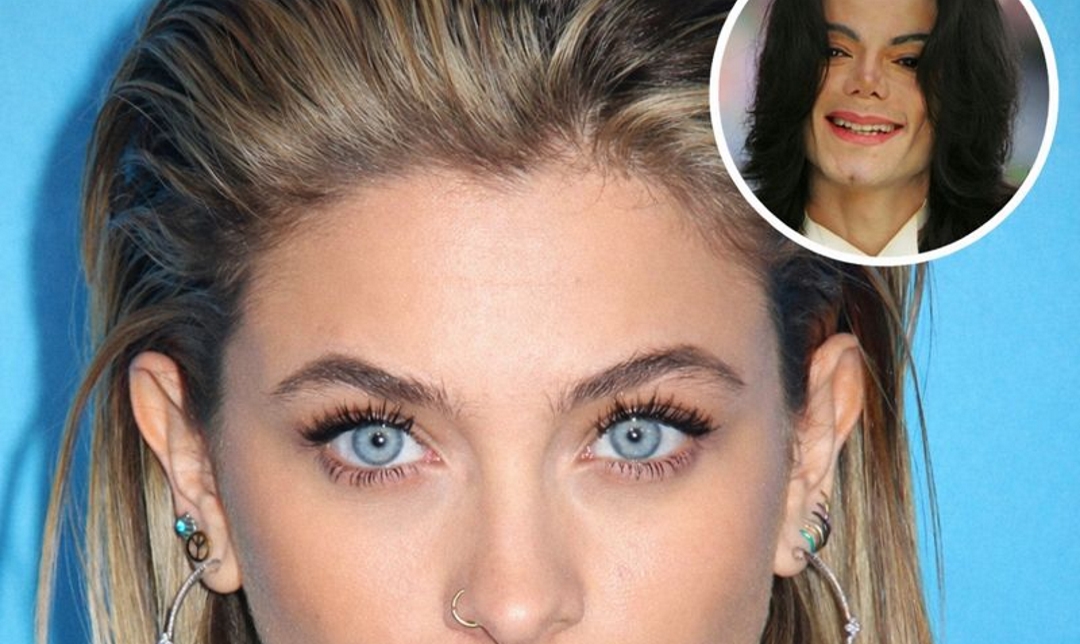
Paris Jackson has spent most of her life under a microscope, but few moments have reignited public debate quite like her recent comments about identity, race, and how she sees herself in the world. The daughter of Michael Jackson has once again found herself at the center of a cultural firestorm—this time for opening up about why she says she identifies as a Black woman.
The conversation resurfaced after clips and interviews began circulating online, pulling older statements back into the spotlight and drawing renewed scrutiny. In them, Paris speaks candidly about her upbringing, her father’s influence, and the way she was raised to understand herself, her heritage, and her place in society.
Paris has repeatedly said that her father told her she was Black, raised her within Black culture, and instilled that identity in her from a young age. She has described those lessons as deeply formative, shaping how she views herself regardless of how others perceive her appearance. In one interview, she explained that identity, for her, is about lived experience rather than genetics alone, a distinction that continues to fuel debate across social media.
Those remarks were quickly dissected across platforms, with critics questioning whether cultural upbringing alone can define racial identity. Supporters, meanwhile, pointed to the complexities of race, adoption, and multiracial families, noting that identity is often shaped by environment as much as biology, a discussion echoed in long-form cultural analysis examining race as both social construct and lived reality.
Paris has never shied away from difficult conversations. Over the years, she has spoken openly about mental health struggles, grief, and the weight of carrying one of the most famous last names in the world. She has also been vocal about feeling misunderstood, saying that people often strip her experiences down to sound bites without listening to the full context.
In addressing the backlash, Paris has emphasized that she is not attempting to rewrite biology or claim experiences she hasn’t lived. Instead, she frames her identity through the lens of how she was raised and the community she felt connected to growing up. She has acknowledged that others may disagree—and that disagreement, she says, is part of the larger conversation society still struggles to have.
Scholars who study race and identity say cases like this highlight long-standing tensions between self-identification and collective definitions. As outlined in recent academic commentary, race is not solely determined by DNA but also by social classification, power, and history—factors that rarely align neatly.
The reaction online has been fierce and divided. Some accused Paris of minimizing the lived realities of Black women, while others argued that dismissing her experience ignores the complexity of her upbringing. The discourse quickly spilled into trending hashtags and viral threads, with thousands weighing in from all sides.
Paris Jackson’s comments are complicated, but race and identity have never been simple. Nuance matters more than outrage. — Cultural Lens (@CulturalLensNow) March 2026
Paris herself has urged people to approach the topic with empathy rather than hostility. She has said that her intention was never to provoke, but to be honest about how she understands herself—a value she says her father taught her above all else.
Michael Jackson’s legacy looms large over the discussion. His own complicated relationship with race, appearance, and public perception has long been the subject of scrutiny and speculation. For Paris, those conversations were not abstract—they were part of daily life. She has described growing up immersed in Black music, Black history, and Black community spaces, a background she credits with shaping her worldview.
Experts in identity studies note that celebrity cases often magnify issues that everyday families quietly navigate. Transracial adoption, blended families, and cultural immersion all raise questions that society is still learning how to address, as explored in psychological research on identity formation.
This debate isn’t just about Paris Jackson. It’s about how we define identity in a world that doesn’t fit clean categories. — Dr. Alana Brooks (@DrAlanaBrooks) March 2026
For now, Paris Jackson continues to live openly, knowing that honesty often invites controversy. Whether people agree with her or not, her comments have forced a broader conversation—one that reveals how unresolved, emotional, and deeply personal questions of race and identity remain.
In a culture that often demands simple answers, her story underscores a more uncomfortable truth: identity is rarely simple, and listening may matter more than judging.