
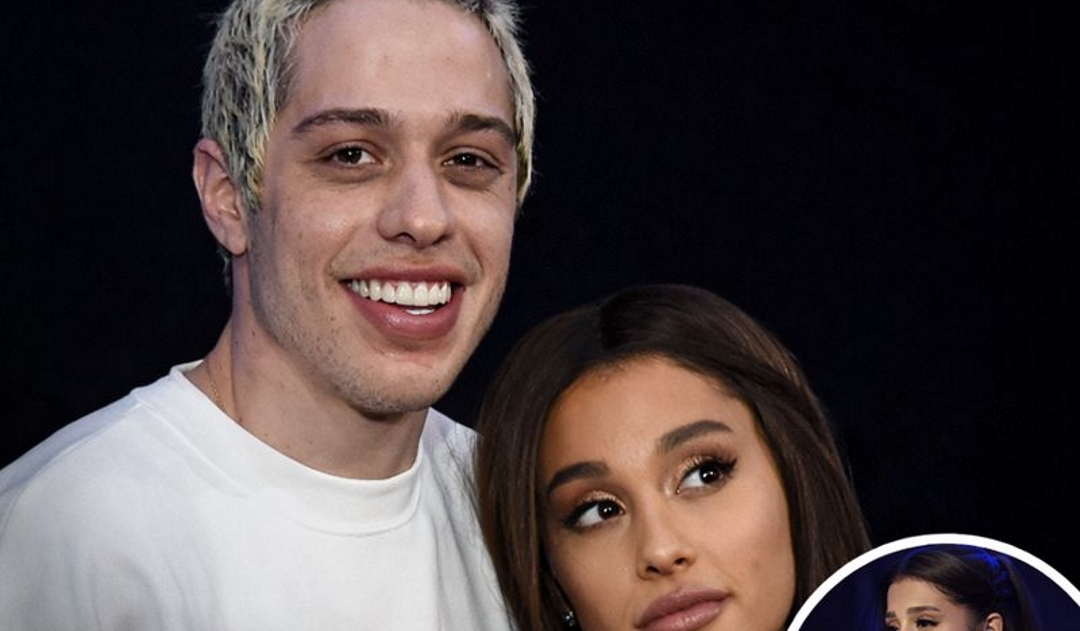
Years after their whirlwind romance ended, Pete Davidson and Ariana Grande remain linked by a moment that neither of them likely expected to follow them indefinitely.
The moment came when Grande, during a playful exchange with fans, made a now-infamous remark about Davidson’s anatomy — a comment that instantly went viral and became part of pop culture shorthand.
For Davidson, a comedian known for self-deprecation and dark humor, the joke landed differently once it escaped its original context and took on a life of its own.
At the time, the former Saturday Night Live star didn’t lash out or retreat. Instead, he did what he’s built his career on — he joked back, but with an edge that hinted at frustration beneath the punchline.
Davidson later addressed the comment in stand-up routines and interviews, explaining that while the internet treated it as harmless fun, the reality was more complicated.
He pointed out that body commentary, even when framed as praise or humor, can quickly cross into invasive territory. The joke followed him everywhere — from late-night interviews to tabloid headlines — often overshadowing his work.
In one widely discussed interview, Davidson explained that the constant focus on his body made him feel reduced to a meme rather than seen as a person. He joked that he wished Grande had said he was “average,” just so the conversation would stop.
The response struck a chord with fans who hadn’t considered how praise could still feel objectifying, especially when it becomes a defining label.
Media analysts later pointed out that if the roles had been reversed, the backlash might have been immediate. The incident quietly opened a broader conversation about double standards in celebrity culture and how male bodies are treated as fair game for public commentary.
Grande never appeared to intend harm. At the time, the couple was deeply in love, engaged, and openly affectionate in public. The comment was widely understood as playful — but intent didn’t stop the aftermath.
After their breakup, Davidson found himself answering questions about the remark far more often than questions about his comedy, mental health advocacy, or career.
Over time, he made it clear that humor was his shield, but also his limit. In later routines, Davidson turned the situation on its head, using irony to expose how absurd it was that one offhand comment could eclipse everything else.
The exchange also reflected how modern celebrity relationships are consumed in fragments — screenshots, quotes, and viral clips — stripped of nuance and replayed endlessly.
Pop culture writers have since revisited the moment as an early example of how internet virality can freeze celebrities in a single narrative, regardless of growth or context.
Coverage of Davidson’s reflections on the situation, including his comments on body image and media pressure, was widely discussed in a profile examining how the joke followed him long after the breakup.
Meanwhile, broader discussions about celebrity boundaries and online objectification were explored in analysis of how humor and masculinity collide in pop culture.
Today, Davidson has moved on publicly and privately. His career continues to evolve, and he’s spoken more openly about mental health, fame, and the cost of being perpetually online.
The joke, however, still resurfaces — proof of how quickly a moment can harden into a headline, and how difficult it can be to escape a narrative once the internet decides it belongs to you.
For Davidson, the response wasn’t just a comeback — it was an attempt to reclaim control in a culture that rarely lets celebrities rewrite their own punchlines.