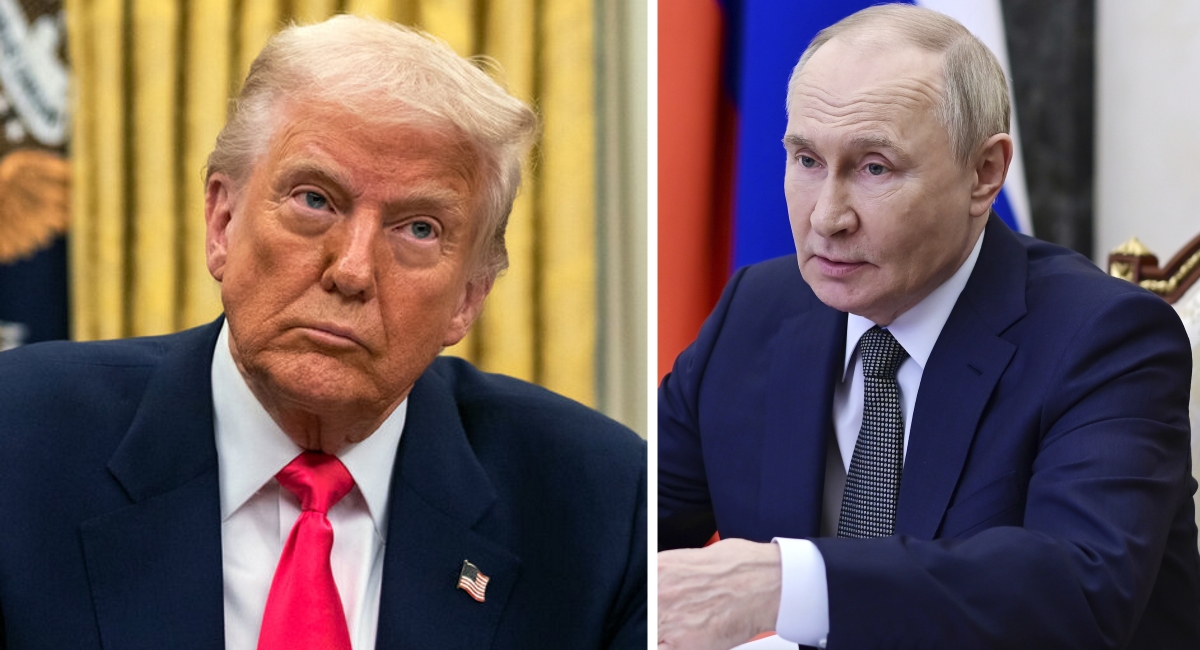
With global tensions at a breaking point and fears of a major geopolitical shift intensifying, Russian President Vladimir Putin has openly discussed the “long-term” impact he believes will come from his highly anticipated meeting with Donald Trump. The remarks, made during a press conference in Moscow and quickly picked up by international media, have sparked both alarm and speculation about what exactly the two leaders could be planning — and how it might reshape the global order.
Putin’s statement came after a question from a Russian journalist asking whether his sit-down with Trump would be purely symbolic or could lead to tangible changes. “It will not be only about immediate decisions,” Putin said, pausing for emphasis. “It will have consequences for many years ahead.” He added that the discussions would touch on “security, trade, and the architecture of the world,” signaling a meeting that could go far beyond casual diplomatic pleasantries.
Perhaps even more surprising was the way Putin spoke about Trump personally. In a comment that caught many analysts off guard, he described the former US president as “a man who does not fear making history, for better or for worse.” This remark has fueled speculation that Putin sees Trump not only as a political figure but as someone who could be persuaded into bold, potentially risky agreements that traditional US leaders might shy away from.
According to BBC News, US intelligence officials are already concerned about what might emerge from a one-on-one meeting between the two without a full diplomatic entourage present. “When Trump and Putin are in the room alone, we lose all ability to verify what’s agreed upon,” one former State Department official told the outlet. “And given both men’s styles, that’s a dangerous prospect.”
Putin says Trump meeting will have “consequences for many years ahead” — sparking intense speculation in Washington. pic.twitter.com/jAd7cTfO9O— Politics Watch (@PolWatch24) August 13, 2025
The meeting, which is expected to take place in a neutral European city later this month, comes amid heightened concerns about a possible escalation in Eastern Europe, ongoing disputes over nuclear arms control, and deep divisions within NATO. Trump has repeatedly said he could “end the Ukraine war in 24 hours” if given the chance, a claim that has both supporters and critics questioning what compromises he would make to achieve that outcome.
For Putin, the timing is strategic. With sanctions weighing heavily on Russia’s economy and its war in Ukraine grinding on longer than expected, a direct conversation with Trump — who is openly critical of the Biden administration’s foreign policy — could provide an opportunity to shift the narrative and potentially weaken Western unity against Moscow.
“Putin sees Trump as someone who could be more flexible on key issues like NATO expansion and sanctions relief,” explained political analyst Natalia Kiselev in an interview with The Financial Times. “But he also knows Trump values the image of being a dealmaker. That combination could lead to agreements that have serious ripple effects for decades.”
The Kremlin’s decision to publicize the idea of “long-term consequences” appears calculated to both raise expectations in Russia and sow uncertainty in the West. In Washington, lawmakers from both parties are already demanding more transparency around what will be discussed. Democratic Senator Chris Murphy warned on Twitter that “history shows private Trump-Putin meetings have been black holes of accountability” — a reference to their controversial 2018 summit in Helsinki, after which Trump was accused of siding with Putin over US intelligence agencies.
“If this meeting happens behind closed doors, the American people may never know what was promised.” — Sen. Chris Murphy on Trump’s planned talks with Putin. pic.twitter.com/DfTjFhNEb3— US Politics Today (@USPolToday) August 13, 2025
Trump, for his part, has embraced the controversy. Speaking to supporters in Florida last night, he said: “I’ve done more in one meeting than some presidents do in eight years. Putin knows it, I know it, and pretty soon the world will know it.” He stopped short of revealing specific agenda items but promised “major changes” were coming.
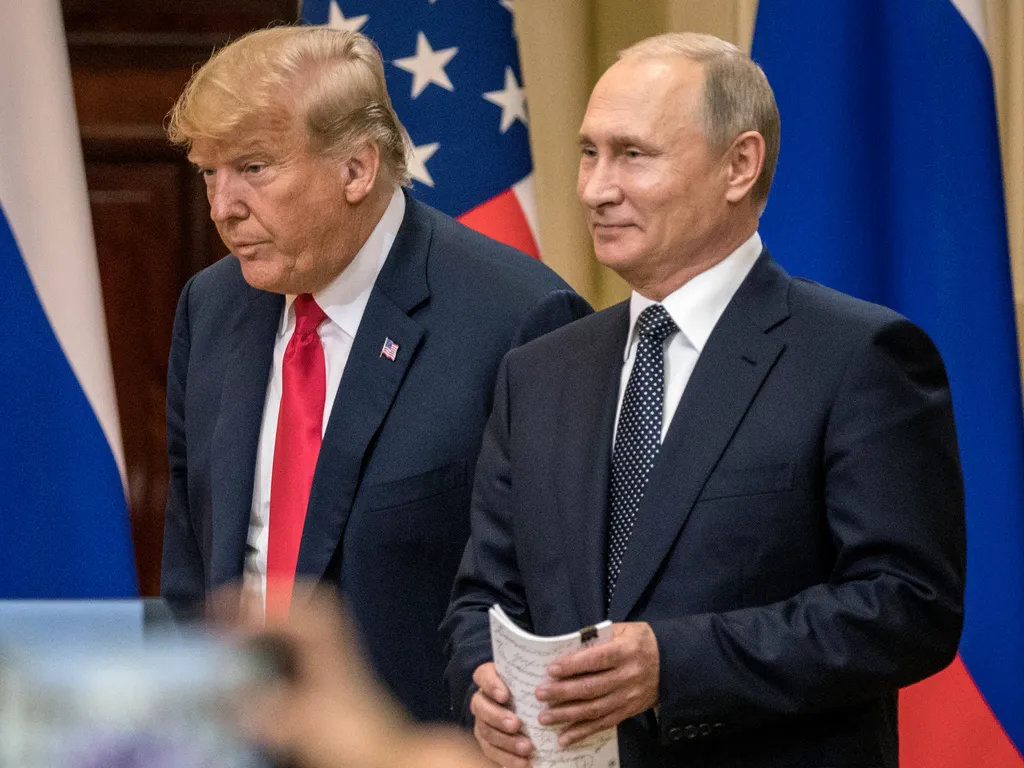
Meanwhile, European allies are bracing for the possibility that Trump could make concessions on Ukraine or NATO without consulting them. A senior EU diplomat told Politico that “the fear is not just what Trump might give away, but what he might agree to without realizing the long-term implications.”
One area of concern is arms control. The New START treaty — the last remaining nuclear arms agreement between the US and Russia — is set to expire in 2026. If Trump and Putin were to broker an extension or a replacement deal, it could reshape nuclear policy for years to come. On the other hand, if talks collapse, the world could face a new era of unchecked nuclear competition.
Energy is another potential flashpoint. Russia remains a major exporter of oil and gas, and Trump has previously signaled openness to relaxing some energy-related sanctions. “Putin would love to re-enter US energy markets in some way, even indirectly,” said Fiona Hill, a former National Security Council official who specialized in Russia. “That could have massive economic and geopolitical consequences.”
Fiona Hill warns that “energy deals struck in secret” between Trump and Putin could reshape global markets overnight. pic.twitter.com/jKjJxXgKYY— World Affairs Now (@WorldAffairsNow) August 13, 2025
Perhaps the most intriguing part of Putin’s comments, though, was the almost personal admiration he expressed for Trump. By calling him a man unafraid to “make history,” Putin seemed to be laying the groundwork for a narrative in which the two leaders could position themselves as global power brokers capable of cutting through years of stalemate.
Critics worry that flattery is part of Putin’s strategy. “He’s feeding Trump exactly what he craves — the idea that he’s a historic figure, a man of destiny,” said former CIA officer John Sipher in an interview with NBC News. “If Trump buys into that narrative, he might agree to things that serve Putin’s interests far more than America’s.”
The White House has so far refrained from directly criticizing the planned meeting, but National Security Advisor Jake Sullivan told reporters that “any talks between Trump and Putin must be approached with extreme caution.” He also stressed that the US “will not recognize any agreements that undermine international law or the sovereignty of our allies.”
As the meeting draws closer, speculation is mounting about what “long-term” really means in Putin’s vocabulary. Could it be a new geopolitical alliance? A dramatic policy shift on Ukraine? Or perhaps something even less predictable — a trade-off involving unrelated issues like Arctic territory or space exploration?
Whatever the case, experts agree that the consequences of this meeting, if it happens as planned, could reverberate far beyond the current news cycle. As one European diplomat put it to Reuters: “We may be looking at a moment that historians will study for decades — the question is, will they see it as a breakthrough or a disaster?”