
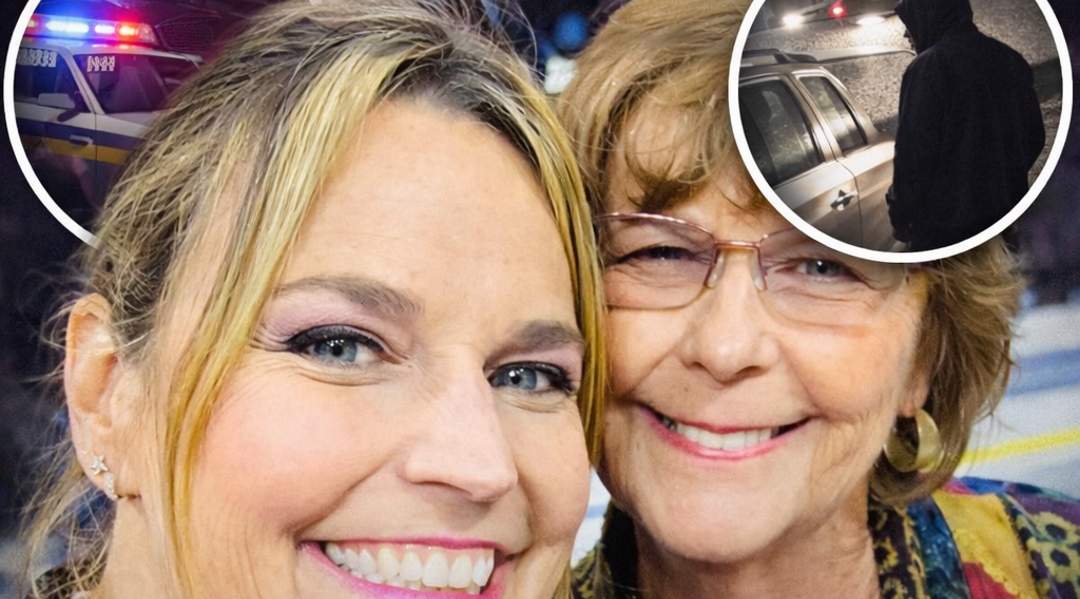
The first wave of concern felt simple and almost hopeful: an older woman hadn’t shown up when she was supposed to, and her family was frantic, asking the public to look, to call, to pray. But as the hours stretched into days, the tone shifted. What began as a missing-persons scramble is now being treated as something far more serious, with investigators saying they believe Savannah Guthrie’s mother, Nancy Guthrie, did not leave on her own.
Nancy is 84, described by officials as mentally sharp but limited in mobility, which is part of what has sharpened the fear around the case. When a person with mobility challenges and routine medical needs suddenly vanishes, it doesn’t read like a casual decision. It reads like a rupture, the kind that makes investigators stop talking in soft language and start using words that change everything.
In the most sobering update so far, police have indicated they are working the case as an abduction rather than a voluntary disappearance. In a detailed overview of what authorities have said publicly, investigators stressed that they do not believe she simply wandered away, and they have urged residents to share any surveillance footage or tips that could help establish a timeline.
That “timeline” is the word that keeps coming up, because the window of uncertainty is where cases like this either break open or collapse into heartbreaking silence. Nancy was last known to be at her home near Tucson, and her absence was flagged when she didn’t show up as expected. From there, the story turns urgent fast: welfare checks, calls to law enforcement, and a growing realization that something about the scene wasn’t right.
Authorities have not released every detail, and they won’t—cases like this are fragile, and premature specifics can compromise leads. Still, what has emerged is enough to rattle even people who don’t follow celebrity news. Investigators have described the home as a focus of their work, and they’ve acknowledged evidence that has pushed the case into a darker category than the public likely hoped it would be.
One of the most unsettling developments is that investigators say biological evidence was found at the home and has been sent for lab processing. That detail matters because it signals the difference between “we can’t find her” and “we think something happened to her.” According to a report citing law enforcement’s latest statements, officials have indicated the evidence belongs to Nancy, and they are working the case with the seriousness of a crime scene, not a simple welfare concern.
Even without graphic specifics, the implication lands hard: a home is supposed to be the safest place a person has. When police start talking about forensic processing, it suggests the safety of that space was breached in a way that can’t be explained by forgetfulness or a routine mishap.
Police have also emphasized that time is not a neutral factor here. With older adults, especially those who need medication, every hour can raise the stakes. Officials have warned that missing doses can become dangerous quickly, which adds a haunting edge to every update: it’s not only about where she is, but about whether she’s getting what she needs to survive.
Meanwhile, the public attention is a double-edged sword. On one hand, national coverage can produce tips, footage, and witnesses who might otherwise stay quiet. On the other, it can flood the environment with rumor, copycat claims, and opportunists who treat tragedy like a stage. Law enforcement has been careful not to validate speculation, even as unverified chatter swirls online about possible motives and messages. At this stage, what police appear to be prioritizing is evidence, corroboration, and a clean chain of information that can hold up under scrutiny.
For Savannah Guthrie, it’s the kind of nightmare that collapses the distance between public life and private terror. She is one of the most recognizable faces in morning television, but this isn’t a broadcast story to her. It’s the person who raised her, the person who anchored her world, and now the person the family cannot reach. In situations like this, fame doesn’t protect you—it just makes your grief visible.
What makes this case especially painful to watch is the emotional whiplash of uncertainty. Families clinging to hope still look for the smallest reassuring clue, while investigators speak in careful phrases that signal they’re preparing for outcomes no one wants to name. That tension is why these stories grip people: they force everyone watching to imagine the unthinkable and then sit with it.
Police are continuing to ask for help from anyone in the area who may have seen a vehicle, a stranger, an unusual movement late at night or early morning, or anything that seemed off but easy to dismiss in the moment. They are also working through the modern trail that exists around almost every home now—doorbell cameras, street cameras, and neighborhood surveillance that can stitch together minutes no witness remembers clearly.
For now, the update is both blunt and incomplete: authorities believe Nancy Guthrie was taken, they are treating the scene with forensic seriousness, and they are working against the clock. The rest—the who, the why, the where—remains locked inside an investigation that is still unfolding.