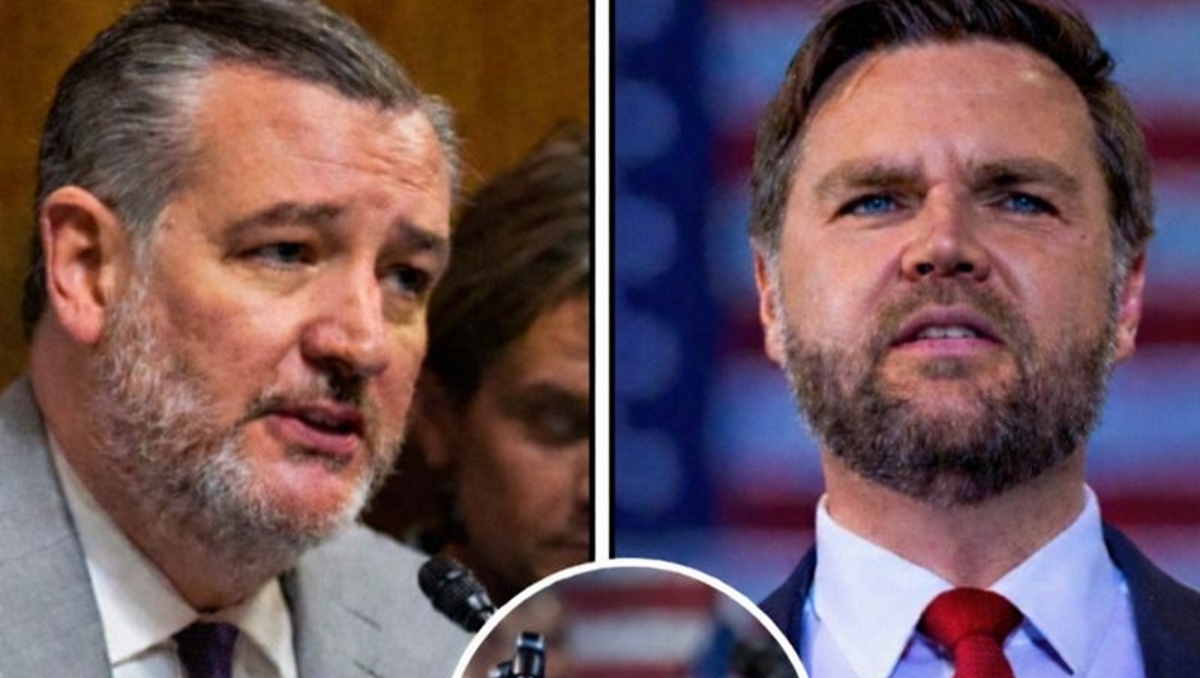
A simmering rift inside the conservative movement burst into the open this week as Ted Cruz and JD Vance found themselves on opposite sides of a public clash that quickly escalated into a broader fight over the party’s future. What began as pointed disagreement turned into a proxy battle over ideology, loyalty, and who gets to define the next phase of Republican politics.
The confrontation unfolded after dueling remarks at separate events, followed by sharply worded posts that left little room for reconciliation. Allies rushed in to frame the dispute as healthy debate, but critics saw something more consequential: a fracture between establishment instincts and a newer, insurgent vision.
Leaned into arguments about constitutional limits, institutional leverage, and winning within existing rules. He warned that abandoning long-standing conservative guardrails could backfire, a concern echoed in old-school strategy memos that stress durability over disruption.
By contrast, framed the moment as one that demands confrontation rather than caution. He criticized what he described as conservatives “canceling each other” and argued that endless infighting weakens the movement when voters are demanding clarity and results. His allies say the message resonates with a base tired of incrementalism.
The clash didn’t stay confined to policy nuance. Tone became the story. Supporters traded barbs online, with some accusing Cruz of clinging to a fading playbook while others charged Vance with courting chaos. Analysts noted that similar rifts have surfaced before, but the speed of amplification felt different this time, a dynamic examined in studies on viral infighting.
This isn’t left vs right — it’s old rules vs new instincts. — Political analyst (@FactionWatch) Dec 2025
Behind the rhetoric lies a real strategic divide. Cruz’s camp emphasizes courtroom victories, procedural leverage, and coalition-building. Vance’s allies argue those tools have failed to deliver for working-class voters and that sharper confrontation is necessary to force change. The tension mirrors debates outlined in think-pieces that never fully settle.
Donors and operatives are watching closely. Some worry the feud risks splintering messaging ahead of critical elections. Others believe the argument clarifies choices for voters, forcing leaders to articulate priorities rather than paper over differences. That calculation is familiar to strategists who lived through prior realignments, discussed in backroom accounts of party civil wars.
Public reaction has been predictably polarized. Grassroots supporters of Vance praised his willingness to challenge entrenched power, while Cruz loyalists argued experience and discipline matter more than rhetoric. The split reflects a broader question: should conservatives aim to reform institutions from within, or pressure them from the outside?
When movements argue in public, they reveal what they really value. — Campaign veteran (@GroundGame) Dec 2025
Media framing has only intensified the divide. Headlines cast the exchange as a “showdown,” while cable panels debated winners and losers. Yet both camps insist the stakes are larger than personality. They argue the outcome will shape policy priorities on trade, tech power, and the role of government in everyday life.
There’s also a generational undertone. Vance’s rise represents a cohort skeptical of promises made by previous leaders, while Cruz’s longevity embodies lessons learned through hard-fought institutional battles. That generational push-pull has been charted in data dives that quietly circulate among operatives.
For now, neither side appears inclined to de-escalate. Advisors say the argument will continue, not behind closed doors but in full view of voters. Whether that transparency strengthens or weakens the movement remains an open question.
What’s clear is that the Cruz–Vance clash has crystallized a choice conservatives have been postponing. It’s not merely about tactics for the next cycle; it’s about the identity of the party itself.
As the dust settles, the fight may cool—or it may harden into factions that shape primaries and platforms for years. Either way, the showdown has drawn lines that will be hard to erase.
In a political moment defined by intensity and immediacy, the argument between Cruz and Vance feels less like a detour and more like a preview.