
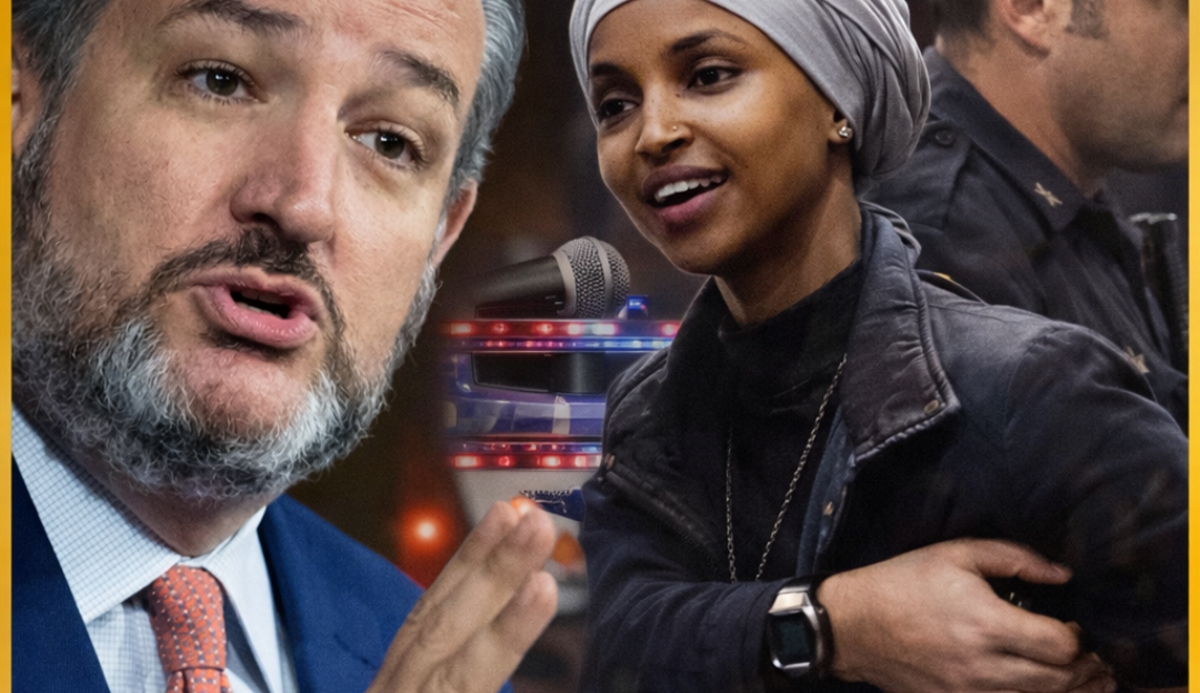
A heated political clash has reignited online speculation about arrests after old allegations involving Ilhan Omar’s marriage were dragged back into the spotlight. The renewed chatter, fueled by partisan sparring and viral posts, has spread quickly despite the absence of any new charges or law-enforcement action.
The flare-up began after a contentious exchange between rival political figures and commentators, where long-debunked claims were repackaged as breaking developments. Within hours, social feeds filled with assertions that legal consequences were imminent—claims that remain unsupported by court records or official statements.
Has repeatedly denied allegations of marriage fraud in the past, and no prosecutor has brought charges related to those claims. Previous reviews by authorities did not result in criminal findings, a point often overlooked when the topic resurfaces during moments of political tension.
What’s different this time is the speed and scale of amplification. Clips and screenshots circulated without context, often paired with insinuations rather than evidence. Media analysts note that recycled claims frequently gain traction when framed as “new,” a dynamic discussed in patterns that repeat online.
Supporters of Omar argue the episode is a textbook example of disinformation deployed to discredit a political opponent. They point to prior reporting and official reviews that found no basis for criminal prosecution, emphasizing that rumor should not be mistaken for proof.
Critics counter that public officials deserve scrutiny and say questions should be answered transparently. Legal experts respond that scrutiny has limits: allegations require evidence, and evidence must be tested in court—not on social media. That boundary is explained in explainers people rarely read during viral cycles.
Speculation spreads faster than facts—especially in election season. — Media analyst (@InfoHygiene) Dec 2025
The arrest rumors themselves illustrate how political conflict can mutate into legal fantasy. Posts implied imminent action without naming an agency, case number, or filing—basic details that would exist if a real process were underway. Journalists who checked dockets found nothing new, echoing lessons from verification guides on separating claims from cases.
This isn’t the first time Omar has faced recycled allegations during heated moments. Each recurrence follows a familiar arc: a spark from partisan rhetoric, rapid sharing, calls for arrest, then quiet dissipation once facts intrude. Researchers studying political misinformation describe this as “zombie claims,” explored in analysis that keeps resurfacing.
Legal scholars stress that marriage-fraud statutes are narrowly applied and require clear, provable intent. Absent filings, subpoenas, or indictments, arrest speculation is just that—speculation. Treating rumor as outcome risks normalizing accusations without due process, a concern raised in discussions about public trust.
No docket, no charge, no arrest—everything else is noise. — Court reporter (@DocketWatch) Dec 2025
For Omar’s office, the response has been consistent: there are no new developments, and prior allegations were addressed years ago. Allies say the resurfacing is meant to distract from policy disputes and mobilize outrage rather than inform.
For observers outside the partisan trenches, the episode underscores a broader problem. In an attention economy, claims that promise consequences—arrests, indictments, scandals—travel farther than clarifications. By the time corrections arrive, the narrative has already done its work.
None of this prevents legitimate accountability when evidence exists. But it does highlight why verification matters. Courts move on filings, not viral threads; arrests follow warrants, not hashtags.
As the political clash cools, the arrest speculation is likely to fade—until the next flashpoint revives it again. The lesson, repeated and ignored, is simple: without charges, there is no case. Everything else is theater.