
Bondi’s defenders have tried to reduce it to noise: “This is theater,” “this is politics,” “this is the same cycle.” But the reason it isn’t fading is simple — Epstein is not a normal political topic. The public doesn’t process it like budgets or hearings or agency turf wars; they process it like a stain that spreads, because the core story is about exploitation, power, and who got protected when it mattered most.
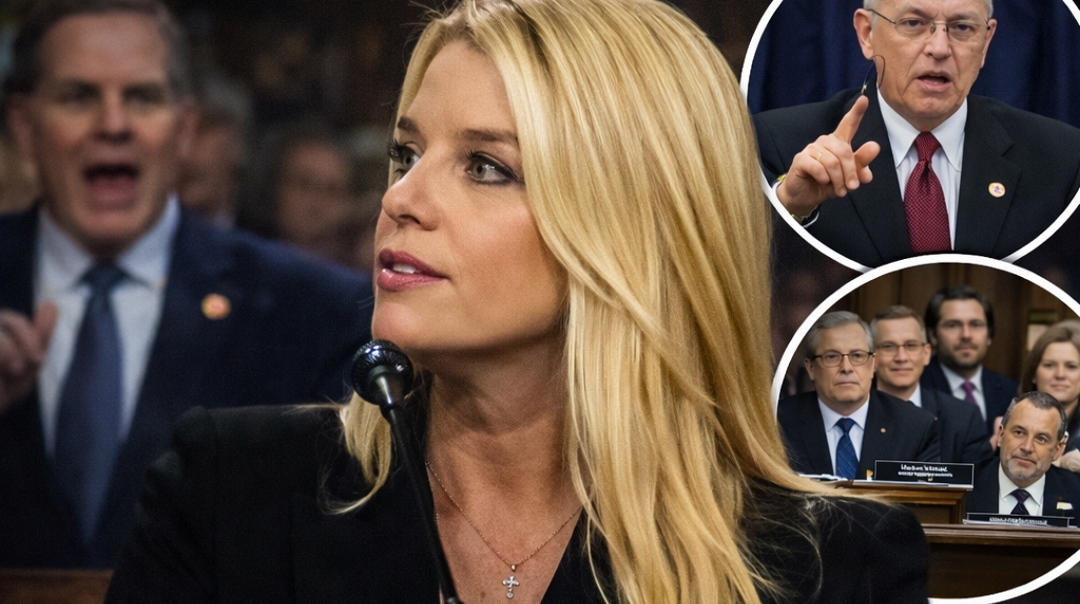
The hearing itself mattered because it created a clean, shareable image: Bondi under oath, under pressure, being pinned to specifics. And once that clip ecosystem begins, it’s almost impossible to stop the narrative from mutating. A pointed exchange becomes “caught lying.” A refusal to answer becomes “cover-up confirmed.” A timeline dispute becomes “they’re hiding the real list.” The story stops being about what happened and becomes about what people think happened.
That’s where “events under review” language thrives, because it sounds official even when it’s vague. People don’t need a document — they need a phrase that implies a backroom process is already underway. And the more opaque the issue, the easier it is to convince audiences that the most dramatic version is the true one.
But here’s what doesn’t change: resignation pressure, in Washington terms, usually leaves fingerprints. A named lawmaker goes public. A caucus leaks a plan. A leadership office signals displeasure. A committee chair makes a statement. If the claim is that GOP members are pushing for a resignation “tonight,” the public evidence should be unmistakable — and if it isn’t, the headline is doing more work than the facts.