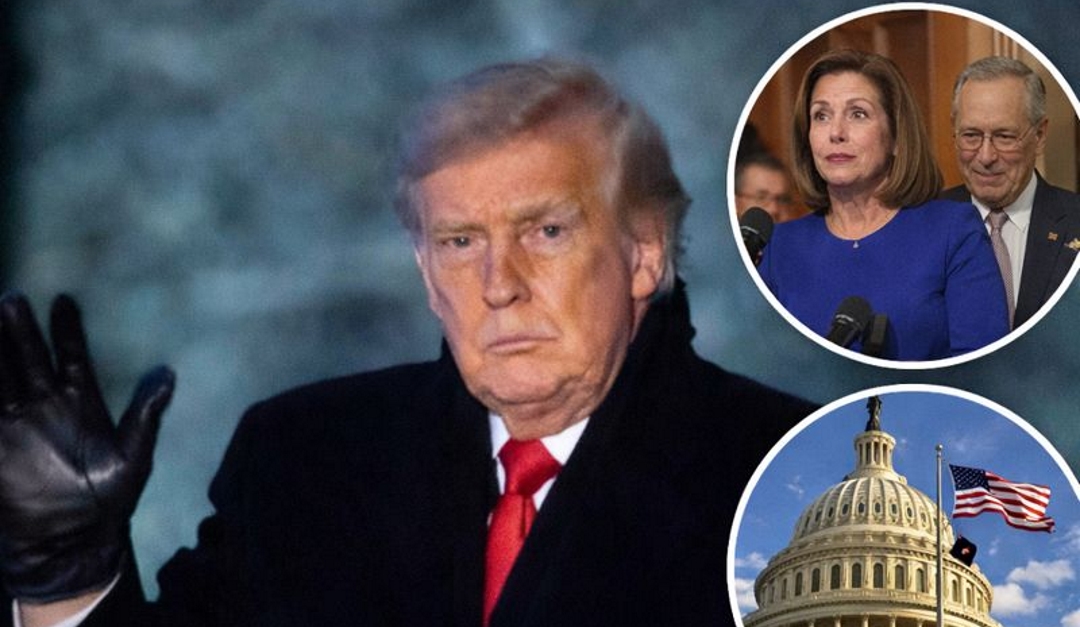
The image of Donald Trump standing solemnly against a dark backdrop has taken on renewed meaning this week as Democratic lawmakers openly discuss a constitutional mechanism rarely invoked in modern American politics. Calls surrounding the 25th Amendment have resurfaced amid escalating concerns about leadership stability, political fallout, and what some describe as an unprecedented moment for the presidency.
The push is not coming from a single corner of Washington. It has emerged through a chorus of statements, interviews, and strategic leaks,وڑfrom lawmakers who say the issue is no longer theoretical. They argue the conversation reflects growing unease within Congress itself, not just partisan outrage or cable-news theatrics.
At the center of the debate is the 25th Amendment, a constitutional provision designed to address presidential incapacity. While often referenced casually in political arguments, its actual use involves a complex process requiring cooperation from the vice president and a majority of the cabinet, as outlined in a breakdown of its legal framework.
Democrats advancing the idea insist they are responding to patterns of behavior rather than isolated incidents. Several lawmakers have pointed to what they describe as erratic decision-making, escalating rhetoric, and behind-the-scenes tensions with senior officials. Others have emphasized that raising the amendment is about safeguarding institutions rather than targeting an individual.
Republicans, meanwhile, have pushed back forcefully. Trump allies have framed the discussion as political theater designed to energize Democratic voters and undermine a sitting president. Conservative lawmakers have warned that normalizing such conversations risks destabilizing future administrations, a concern echoed in academic analysis of constitutional precedent.
The 25th Amendment isn’t a talking point — it’s a constitutional safeguard. Using it requires seriousness, not slogans. — Rep. Daniel Hayes (@RepHayes_DC) January 2026
Behind closed doors, the discussion appears more nuanced. Some Democratic leaders have privately acknowledged that invoking the amendment would be extraordinarily difficult without buy-in from officials unlikely to break ranks. Others see value in the pressure itself, arguing that even public debate sends a message about accountability and boundaries.
Historical context looms large over the moment. The 25th Amendment was ratified in the aftermath of President John F. Kennedy’s assassination, intended to clarify succession and incapacity questions that once plagued the nation. Since then, it has been used primarily for temporary transfers of power during medical procedures, not political crises, as noted in Senate historical summaries.
That rarity is precisely why the current conversation feels so charged. Legal scholars caution that blurring the line between incapacity and political disagreement could set a dangerous precedent. At the same time, others argue that failing to discuss constitutional remedies during moments of concern undermines the amendment’s purpose altogether.
This debate shows how strained our institutions have become. The question isn’t just about Trump — it’s about trust. — Policy Watch (@PolicyWatchUS) January 2026
Public reaction has mirrored Washington’s divide. Supporters of the discussion say it reflects responsible oversight, pointing to recent polling trends that show declining confidence in political leadership. Critics counter that the focus distracts from legislative priorities and inflames already deep polarization.
Trump himself has dismissed the idea outright, calling it absurd and politically motivated. In statements to supporters, he has portrayed the renewed attention as evidence of desperation among opponents, framing the debate as an attack on voters rather than the presidency.
For now, no formal steps have been taken beyond rhetoric and public pressure. Whether the conversation evolves into action remains uncertain, dependent on shifting political calculations and the willingness of key figures to cross entrenched lines. What is clear is that the mere mention of the 25th Amendment has become a symbol of the extraordinary tension defining this chapter of American politics.
As Washington watches and waits, the debate itself underscores how fragile consensus has become — and how constitutional tools once considered remote can suddenly feel uncomfortably close.