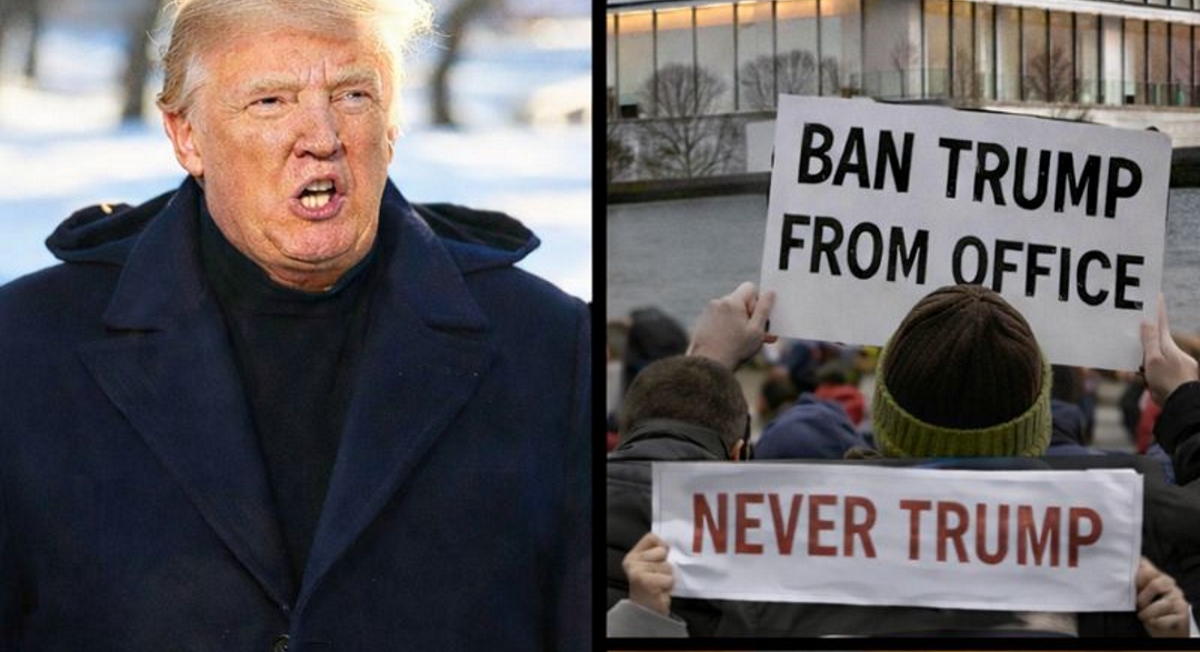
A protest unfolded outside the Kennedy Center this week after demonstrators gathered to condemn what they described as the lasting impact of a Trump-era ban, transforming one of America’s most iconic cultural venues into the backdrop for a political confrontation. Chants echoed across the plaza as activists accused the policy of symbolizing exclusion rather than security.
The demonstration drew a mix of immigration advocates, artists, and civil rights groups who said the location was intentional. For them, the Kennedy Center represents openness and cultural exchange — values they argue were undermined by the ban and its lingering legacy.
Organizers said the protest was sparked by renewed public discussion around the policy, which continues to reverberate in legal challenges, visa decisions, and family separations years later. While the ban itself has been modified and contested, critics argue its consequences never fully disappeared.
Originally defended the ban as a national security measure, insisting it was necessary to protect the country. Opponents countered that it disproportionately targeted Muslim-majority nations and fueled discrimination, concerns long documented in records that keep resurfacing whenever the policy reenters the spotlight.
Protesters held signs reading “Culture Without Borders” and “Art Rejects Bans,” while speakers took turns recounting personal stories of missed opportunities, delayed visas, and families left in limbo. Several performers said the policy disrupted international collaborations, an issue raised repeatedly in older arts-world backlash that many believed had faded.
When policies silence voices, culture becomes collateral damage. — Arts advocate (@StageForAll) Dec 2025
The Kennedy Center itself did not cancel events or close entrances during the protest, though security was visibly heightened. Officials declined to comment directly on the demonstration, noting that the venue frequently hosts events amid public gatherings. The Center has long positioned itself as politically neutral, even as it becomes an occasional focal point for national debates.
Still, the symbolism was hard to ignore. As a federally supported institution celebrating global artistry, the Kennedy Center has often been invoked in arguments about cultural diplomacy. Critics of the ban say staging the protest there underscored what they see as a contradiction between artistic openness and restrictive immigration policy.
Legal experts observing the demonstration noted that while the ban has been reshaped by courts and subsequent administrations, its precedent remains contentious. Some fear similar policies could resurface under different names, a concern explored in analysis that rarely reaches protest signs.
Policies may change, but precedents linger. — Constitutional scholar (@CivicLens) Dec 2025
Supporters of Trump dismissed the protest as performative outrage, arguing that national security decisions should not be dictated by symbolism or emotion. They maintain that the policy was lawful and necessary at the time, accusing critics of rewriting history to score political points.
Demonstrators pushed back, saying the human cost was never abstract. Several speakers described years-long separations from relatives and stalled careers, insisting that the protest was less about politics and more about recognition. Advocacy groups highlighted data showing reduced visa approvals long after the ban’s rollout, figures tracked quietly in numbers that don’t usually trend.
The protest also reflected a broader frustration with how cultural institutions become entangled in political disputes. Some artists expressed discomfort at being caught between neutrality and moral stance, noting that silence can be interpreted as complicity.
As dusk fell, demonstrators lit candles and held a brief moment of silence for families affected by travel restrictions. The gesture was meant to refocus attention away from partisan shouting and toward individual lives altered by policy decisions.
This isn’t about politics — it’s about people. — Community organizer (@VoicesUnited) Dec 2025
Whether the protest will influence future policy remains uncertain. But organizers said visibility itself was the goal, arguing that cultural landmarks should not be insulated from the consequences of political decisions.
For onlookers, the scene offered a reminder that debates over immigration and identity are far from settled. Even years after the ban first appeared, its shadow continues to surface in unexpected places — including the steps of a national arts institution.
As crowds dispersed and performances continued inside, the contrast was stark: art carried on, while the argument outside lingered. And in that tension between culture and policy, protesters say, the story of the ban is still being written.