
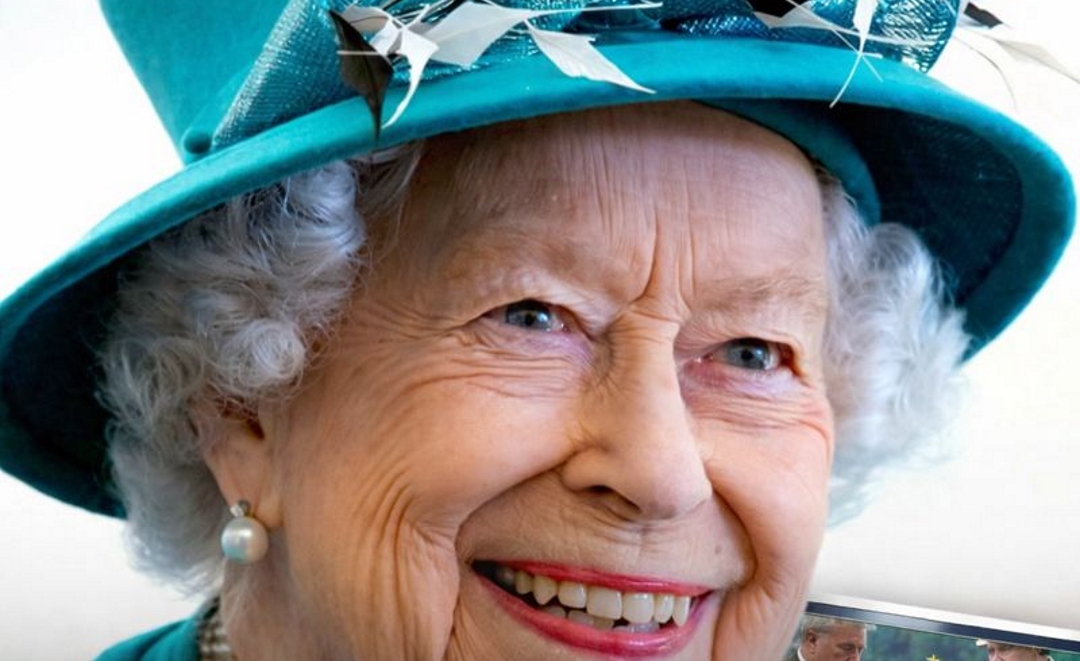
The image resurfacing online shows Queen Elizabeth II smiling in bright turquoise, a familiar symbol of stability that defined seven decades on the throne. But beneath the warmth of that portrait is a headline that landed with quiet force: her official cause of death has now been publicly confirmed.
More than a year after her passing, newly released records from Scotland formally list the cause of death as bone cancer, ending months of speculation and partial disclosures. The confirmation came through official death registration documents, which quietly entered the public record and were first noted by reporters reviewing recently updated Scottish filings.
At the time of her death in September 2022, Buckingham Palace announced only that the Queen had died “peacefully” at Balmoral Castle. No medical explanation was offered, consistent with royal tradition. That silence immediately fueled questions, particularly after reports emerged that she had been experiencing mobility issues, fatigue, and weight loss in her final months — details later revisited in subsequent coverage examining her health.
The newly confirmed diagnosis aligns with comments made shortly after her death by Boris Johnson, who wrote in his memoir that the Queen had been suffering from a form of cancer. At the time, the remark drew criticism for breaking long-standing norms of discretion. Now, with official documentation available, those remarks appear to have reflected reality rather than speculation.
Medical experts say bone cancer in elderly patients can be particularly aggressive, often progressing quietly while causing chronic pain and weakness. That assessment mirrors what the public observed during the Queen’s final public appearances, including her visibly frail condition during her last meeting with Liz Truss — an image that was widely discussed in analysis revisiting her final days.
The confirmation has prompted renewed discussion about the monarchy’s approach to transparency. While royal privacy has long been considered sacrosanct, critics argue that withholding basic medical facts in an era of instant information only deepens speculation. Supporters counter that Elizabeth’s restraint was consistent with her lifelong belief that duty should overshadow personal suffering.
Bone cancer listed as Queen Elizabeth II’s cause of death. Quiet confirmation, but it explains so much about her final year. — Royal Watch (@RoyalWatchUK) March 29, 2026
The revelation has also reframed how historians view the Queen’s final year. Despite deteriorating health, she continued to perform constitutional duties until just two days before her death, appointing a new prime minister and reviewing state papers. That determination has been highlighted again in international reporting on the announcement.
For many in Britain and across the Commonwealth, the news brought a mix of sadness and validation. The Queen’s visible decline had sparked concern, but official silence left the public piecing together clues from appearances and palace statements. Now, the record provides clarity without drama — fitting for a monarch whose defining trait was restraint.
King Charles III has not commented publicly on the release of the documents. Palace aides have likewise declined to expand on the findings, signaling that the monarchy considers the matter closed. Insiders suggest the family always intended the details to remain private until formal records made disclosure unavoidable.
Historians note that Elizabeth’s approach contrasts sharply with modern expectations but is deeply rooted in royal precedent. Past monarchs often took illnesses to the grave, a practice meant to protect institutional continuity. Yet the Queen’s death marked the end of an era not only politically, but culturally — one where silence was seen as strength.
Elizabeth II worked until the very end while battling cancer. That’s the part of the story that history will remember. — History Desk (@HistoryDeskUK) March 29, 2026
As the record settles into history, the focus has shifted away from mystery and toward legacy. The cause of death does not redefine Queen Elizabeth II — but it deepens understanding of the resolve she displayed in her final months, carrying out duty while privately enduring a serious illness.
The image now circulating captures more than a breaking headline. It reflects the closing chapter of a reign defined by endurance, discipline, and a quiet insistence that the crown must always come before the individual wearing it.