
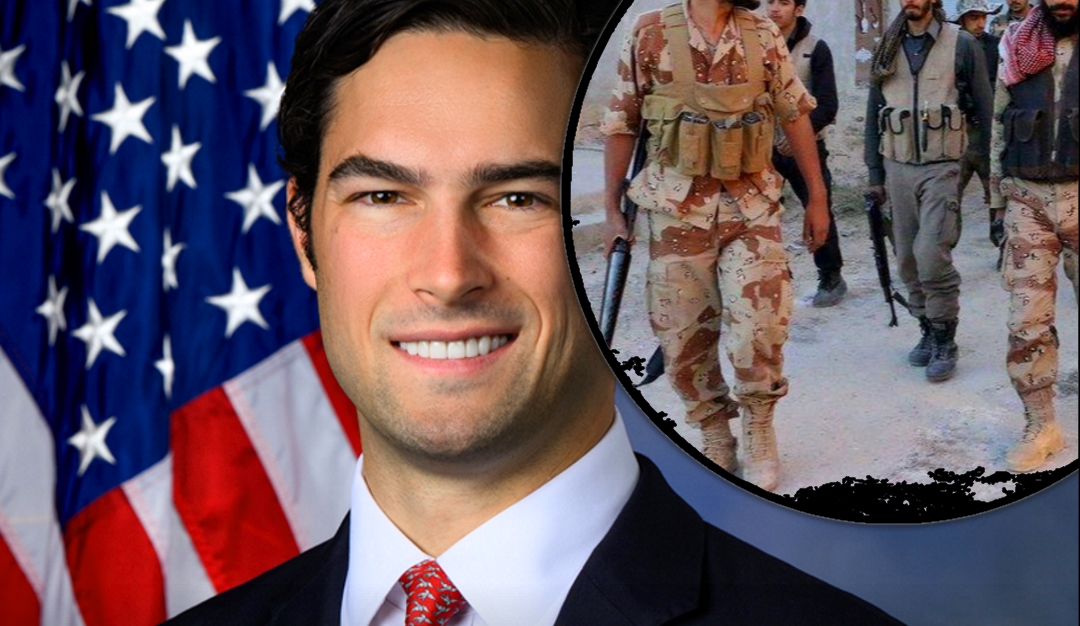
The news broke before sunrise: a National Guard member was dead, another critically wounded, and Washington, D.C. had been shaken by a shooting just blocks from the White House. But what followed wasn’t unity or mourning — it was a political firestorm. Within hours, several Republican lawmakers began demanding mass deportations, framing the attack as proof that “every one of them needs to go.” The country hadn’t even finished absorbing what happened before leaders turned grief into a rallying cry. (a detailed investigation)
Authorities identified the suspect as an Afghan man who arrived in the U.S. through earlier resettlement pathways. That alone became the spark — ignition for a massive political battle. Statements poured in from high-profile Republicans who argued immigration had “failed,” insisting that the only solution was to “deport them all,” a phrase repeated in speeches, interviews, and social-media posts. The tone wasn’t measured — it was explosive. The shooting, still under investigation, became a springboard for demands to overhaul decades of immigration policy. (a political brief)
On social media, some Americans expressed fear, others anger, but many were stunned at how quickly the tragedy had transformed into a push for sweeping deportations. One post captured the disbelief spreading through immigrant communities:
They didn’t wait for facts. They didn’t wait for answers. They just blamed millions of us for one man’s actions.— R. Safi (@RSafiVoices) Dec 3, 2025
Immigration advocates watched in real time as families across the U.S. grew terrified — parents wondering whether their asylum paperwork would be frozen, children asking if they would have to leave schools, communities holding emergency meetings to figure out what “deport them all” could mean for their neighborhoods. Reports began circulating that the administration was already preparing sweeping policy shifts. One official hinted privately that Afghan and Middle Eastern applicants could face “a total pause.” That preview quickly found its way into a PBS policy breakdown.
Experts warned the rhetoric could escalate into real consequences. For months, immigration systems had been strained — long backlogs, overwhelmed courts, unpredictable rulings. The D.C. shooting instantly transformed those cracks into fault lines. Several agencies reportedly received orders to re-review background checks for thousands of asylum seekers, particularly from “countries of concern,” a phrase that appeared repeatedly in a CBS vetting analysis. For many families, that meant the rug had been pulled out from beneath them, all because of a crime they had nothing to do with.
The backlash wasn’t limited to advocacy groups. Ordinary Americans — some immigrants themselves, others first-generation children, others simply witnessing a frightening moment in politics — spoke out, begging leaders to slow down and acknowledge the danger of targeting entire communities. One tweet, shared tens of thousands of times, summed up the fear:
We cannot let one horror turn into a license to punish everyone who came here seeking safety.— Maya Tran (@MayaTran_) Dec 3, 2025
The suspect’s motives were still unclear. Investigators continued searching for answers, combing through digital records and travel documents, reviewing interviews, and exploring potential ideological motives. But in a climate electrified by fear, the nuance barely mattered. Commentators described the political reaction as “seizing grief for gain,” a phrase that appeared in a New York Times political analysis. The push for deportations didn’t wait for motive, didn’t wait for evidence, didn’t wait for clarity — it erupted instantly.
At rallies across the country, immigrant families described feeling targeted by accusations they didn’t understand. Some spoke about children asking if “they were going to be taken.” Others described receiving hateful messages online, simply because they shared a cultural or religious background with the suspect. These experiences echoed patterns seen after earlier crises — moments when blame became indiscriminate. A legal expert referenced this trend in a policy commentary, warning that history shows how rapidly fear can transform into law.
Meanwhile, supporters of the deportation push insisted that national security required tough action. They argued the resettlement process “failed catastrophically,” pointing to gaps documented indirectly in a Reuters legal review. They framed mass deportations as not only justified, but necessary. Those statements poured gasoline on a fire already burning throughout the political landscape.
Critics countered with their own flood of evidence. They pointed out that large-scale deportations historically lead to mass human-rights violations. They highlighted past tragedies where hasty policies destroyed lives without improving safety. They cited data showing that immigrants — including refugees — are statistically less likely to commit violent crime. That context appeared in several analyses, including a Guardian public-safety report. But in the new climate, facts often struggled to cut through the noise.
By day three, the fear settled into something colder: uncertainty. People wondered whether their visas, applications, or asylum cases would be paused or canceled. They wondered whether a traffic stop could lead to deportation. They wondered whether the country they trusted would still protect them. And outside immigration offices in cities from Los Angeles to Philadelphia, lines grew as families tried to get answers officials couldn’t yet give.
Another tweet — heartbreaking, blunt, and painfully human — spoke to that moment:
The shooting scared everyone. But this reaction terrifies us even more. We don’t know what tomorrow looks like.— Lina H. (@LinaHopes) Dec 3, 2025
As the nation watches the investigation unfold, the political firestorm continues. Leaders demand rapid deportations. Advocates plead for restraint. Families brace for outcomes no one can fully predict. And woven through it all is the same question that defines this moment: will America let one act of violence justify punishing millions who had nothing to do with it?
Because the shooting shattered a city — but the rhetoric that followed threatens to shatter something deeper: the belief that justice belongs to individuals, not entire populations.