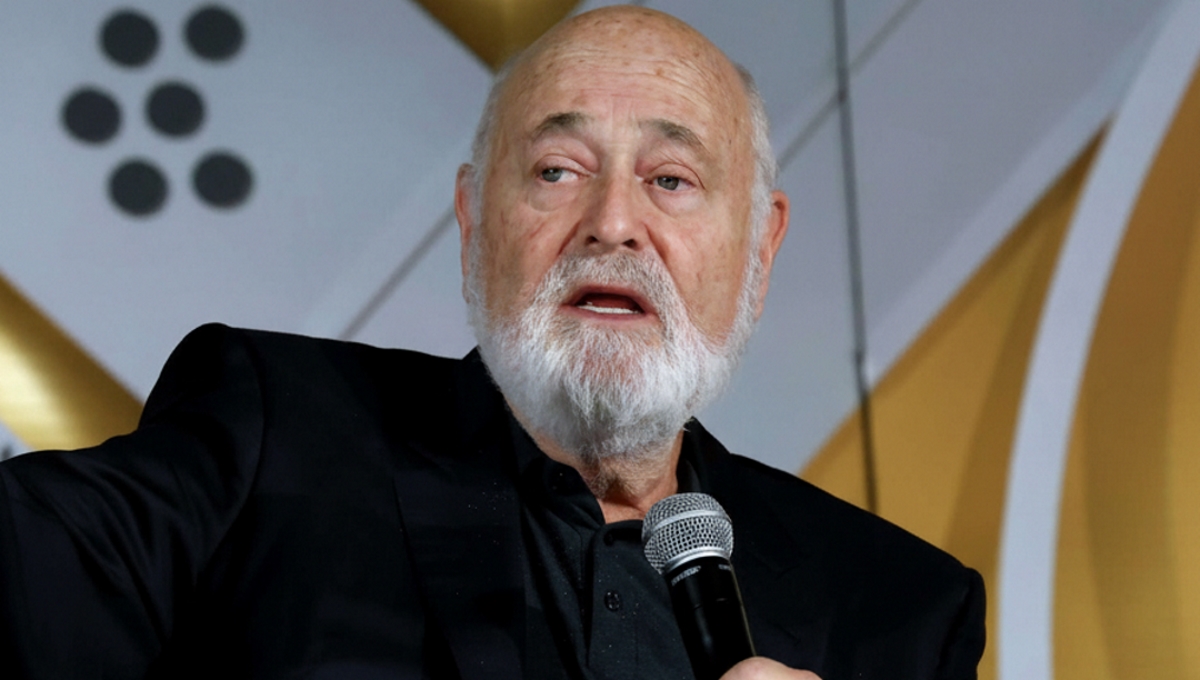
A resurfaced clip of Rob Reiner forcefully condemning political violence has exploded back into the spotlight, drawing sharp contrast with Donald Trump’s latest comments about the outspoken filmmaker. The moment has reignited a volatile debate over rhetoric, responsibility, and how public figures talk about harm in an era already saturated with threats and extremism.
The clip dates back to a moment when false reports, threats, and violent rhetoric involving conservative activist Charlie Kirk were circulating widely online. At the time, Reiner responded by rejecting the entire premise of political violence, saying no one should ever be harmed for their beliefs, regardless of ideology.
That response is now being widely reshared after Trump made remarks about Reiner that critics across the political spectrum described as cruel and dehumanizing. The contrast between the two reactions has become the core of the backlash now engulfing Trump.
In the resurfaced interview, Reiner appeared visibly shaken as he addressed the climate of hostility surrounding Kirk, a Turning Point USA founder who has long been a lightning rod for threats. Reiner said he felt “absolute horror” at the idea of violence being normalized in political discourse, comments highlighted again as users circulated the original footage alongside coverage from the original report that reignited attention.
Violence should never happen to anybody, no matter what their politics are. — Rob Reiner
The timing of the clip’s resurgence is no accident. Trump recently posted comments about Reiner that critics say crossed a moral line, framing the director not just as a political opponent but as a target of mockery and contempt. Media watchdogs noted that Trump once again leaned into personal attack rather than restraint, a pattern documented repeatedly in analyses of his political messaging.
Reaction was swift. Late-night hosts, political commentators, and even some Republicans condemned the tone of Trump’s remarks, arguing that personal tragedy and threats should never be weaponized. Jimmy Kimmel called the comments “vile,” while others said they reflected a deeper erosion of empathy in American politics, reactions captured as the story spread across platforms and was dissected by international media outlets examining the backlash.
Turning threats and suffering into political punchlines is beyond the pale. — Jimmy Kimmel (@jimmykimmel) Dec 2025
What struck many observers was not just what Trump said, but what Reiner had said earlier — and how different the tone was. Despite being one of Trump’s most vocal critics, Reiner chose to emphasize shared humanity when violence entered the conversation, a stance commentators contrasted with Trump’s more inflammatory approach.
Political analysts noted that moments like this tend to resonate because they reveal how leaders behave when the stakes are no longer abstract. Studies cited in research on rhetoric and real-world harm have long warned that language from influential figures can either cool tensions or inflame them.
Online reaction reflected that divide. Supporters of Reiner shared the clip as proof that condemning violence does not require ideological agreement, while Trump loyalists dismissed the backlash as overblown. Still, even some conservative commentators urged caution, warning that mocking or escalating rhetoric around threats risks normalizing something far more dangerous.
You don’t have to like someone to say they don’t deserve violence. — Political commentator (@CommentatorX) Dec 2025
The resurfaced footage has now become a touchstone in a broader conversation about where political discourse is headed. With threats against public figures increasingly common, watchdog groups tracking political intimidation say tone matters more than ever, concerns echoed in coverage of rising political threats in the U.S..
For many viewers, the clip is less about Rob Reiner or Charlie Kirk specifically and more about a disappearing norm: the idea that violence should be condemned without caveat. In a climate where outrage travels faster than context, that principle now feels unusually fragile.
Whether the backlash forces any reflection remains unclear. What is certain is that the contrast between Reiner’s response and Trump’s rhetoric has struck a nerve, exposing how differently powerful figures choose to speak when hostility enters the conversation.
As the clip continues to circulate, it leaves behind an uncomfortable question that no amount of spin can fully erase: when political conflict turns threatening, do leaders reach for restraint — or for applause?