
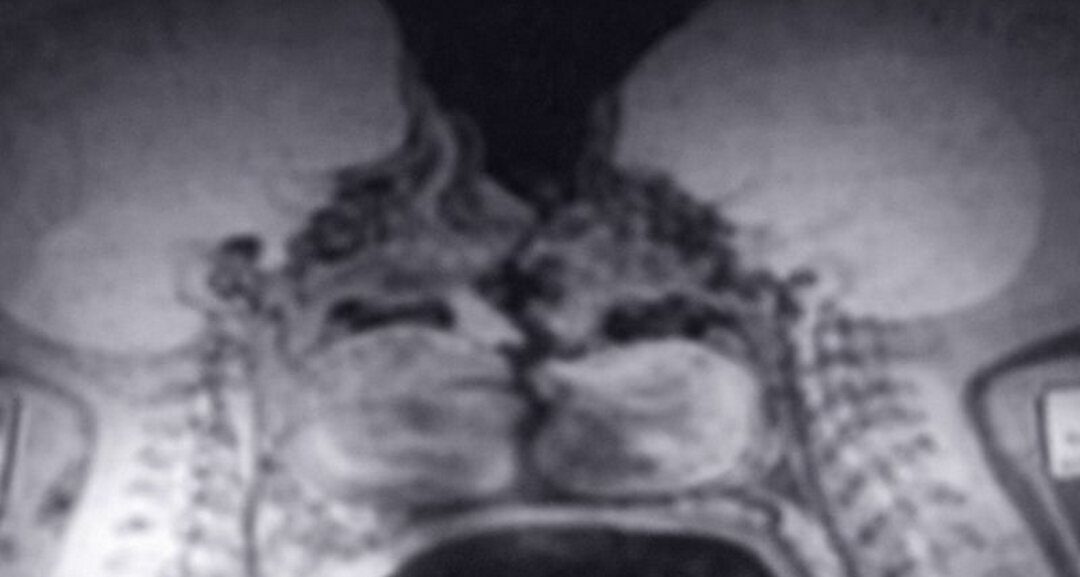
But one moment during the scan stopped researchers cold.
According to the study authors, there was a brief but consistent anatomical shift that didn’t match existing models. The change appeared only during a specific phase of arousal and disappeared moments later. It wasn’t an artifact of movement, machine error, or positioning — possibilities the team ruled out through repeated scans and control imaging referenced in follow-up analyses.
The researchers openly admitted they couldn’t fully explain it.
Some hypothesized it could be related to involuntary muscular coordination, others suggested vascular changes not yet mapped in real time. A few speculated that it involved neurological signaling triggering subtle physical responses beyond current imaging resolution. As noted in broader discussions on imaging limits, MRI technology still has boundaries when capturing rapid biological processes.
What made the finding more intriguing was its consistency. The unexplained shift appeared across multiple scans, ruling out coincidence. That reliability is what moved the observation from curiosity to genuine scientific puzzle, prompting calls for further study in expert commentary.
Importantly, the researchers stressed that the experiment wasn’t designed to sensationalize sex. Its purpose was medical accuracy. Better understanding internal movement during intercourse can inform pain treatment, fertility care, and post-surgical recovery — applications highlighted in clinical health research.
Still, the unanswered question lingered.
Even in one of the most intimate human acts — studied with cutting-edge technology — there remained something science couldn’t fully pin down. The finding served as a reminder that despite decades of research, the human body still holds mysteries, especially where biology, sensation, and neurological response intersect.
For researchers, the unexplained moment wasn’t a failure. It was an invitation — proof that even when we think we understand ourselves, there is always more happening beneath the surface.