
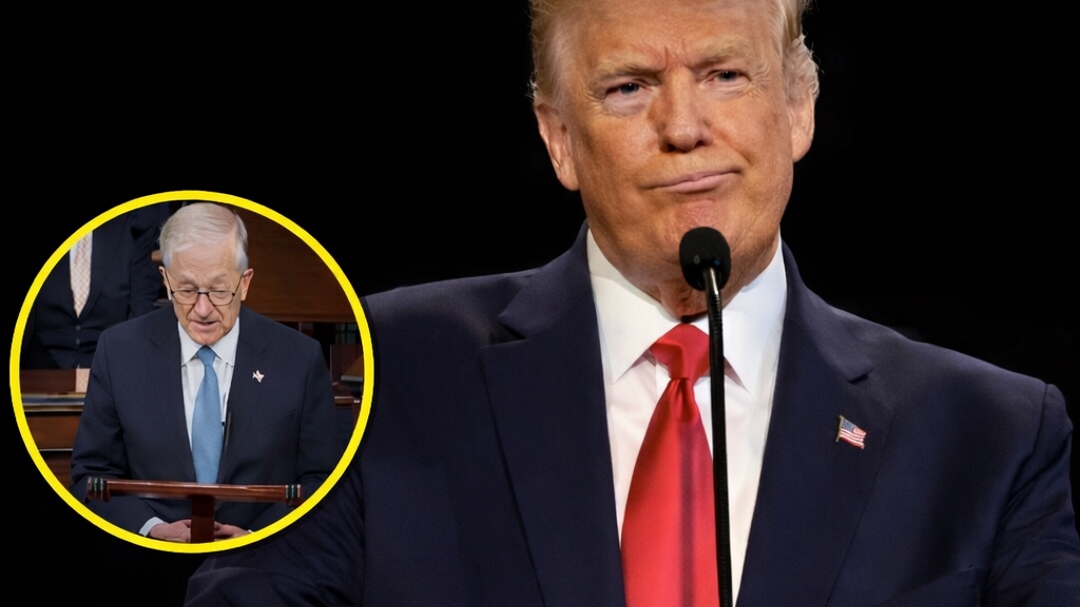
A sitting U.S. senator has publicly called for invoking the 25th Amendment to remove Donald Trump from office, igniting one of the most explosive constitutional debates in recent memory.
The remarks came during a nationally televised interview, where the lawmaker argued that the country faces what they described as a “serious leadership crisis.” The senator stopped short of detailing specific internal discussions but insisted that constitutional remedies exist for “extraordinary circumstances.”
The 25th Amendment, ratified in 1967, outlines procedures for replacing or temporarily sidelining a president who is unable to discharge the powers and duties of the office. Section 4 of the amendment allows the vice president and a majority of the Cabinet to declare a president unfit, triggering a transfer of authority. The full text of the amendment is available through the National Archives.
Historically, that provision has never been successfully used to remove a president against their will. It has, however, been temporarily invoked in limited medical situations, most recently during brief procedural transfers of power.
The senator’s call comes amid heightened partisan tensions and renewed scrutiny of executive decision-making. Supporters of the proposal argue that the Constitution provides clear guardrails for moments when leadership is questioned. Critics say such calls risk inflaming political divisions and weaponizing constitutional tools.
Trump allies swiftly condemned the statement, calling it “reckless” and “politically motivated.” Several lawmakers aligned with the former president said there is no legal or medical basis to justify such an action and described the push as an attempt to undermine voters.
Legal scholars note that invoking Section 4 would require the cooperation of the vice president and a majority of Cabinet officials — a high bar politically and procedurally. Even if triggered, Congress would ultimately vote on the president’s status, requiring a two-thirds majority in both chambers to sustain removal.
Political observers say the controversy underscores how the 25th Amendment has increasingly entered mainstream political rhetoric. During past administrations, lawmakers have occasionally floated the idea, though no formal action materialized.
In 2021, following the January 6 Capitol attack, discussion of the amendment intensified. At that time, House Speaker Nancy Pelosi formally urged then–Vice President Mike Pence to consider its use. Coverage from BBC News detailed the constitutional mechanics and political implications of the proposal.
The current senator did not indicate whether conversations have taken place with Cabinet officials or the vice president, instead emphasizing that “all constitutional options should remain on the table.”
Republican leaders dismissed the statement as symbolic rather than actionable, pointing out that no formal resolution has been introduced. Some suggested the move is intended to generate headlines rather than initiate a viable constitutional process.
Meanwhile, Democratic lawmakers are divided. A few voiced support for exploring constitutional safeguards if warranted, while others cautioned against escalating rhetoric without clear legal grounds.
Public reaction has been predictably polarized. On social media, supporters of Trump framed the call as proof of entrenched opposition unwilling to accept electoral outcomes. Others argued that constitutional accountability is foundational to democratic governance.
Constitutional experts stress that the 25th Amendment was designed for incapacitation scenarios — such as severe illness or medical emergency — rather than political disagreement. The language focuses on a president’s ability to perform duties, not policy disputes or partisan dissatisfaction.
Whether the senator’s remarks gain traction inside Washington remains unclear. Without backing from executive branch officials, any effort to invoke Section 4 would stall before it begins.
Still, the statement has added fresh fuel to an already volatile political climate. As election cycles approach and scrutiny intensifies, constitutional language once reserved for rare emergencies is increasingly surfacing in everyday political discourse.
For now, the debate remains rhetorical — but the mere invocation of the 25th Amendment signals how high the stakes have become in America’s ongoing political battle.