
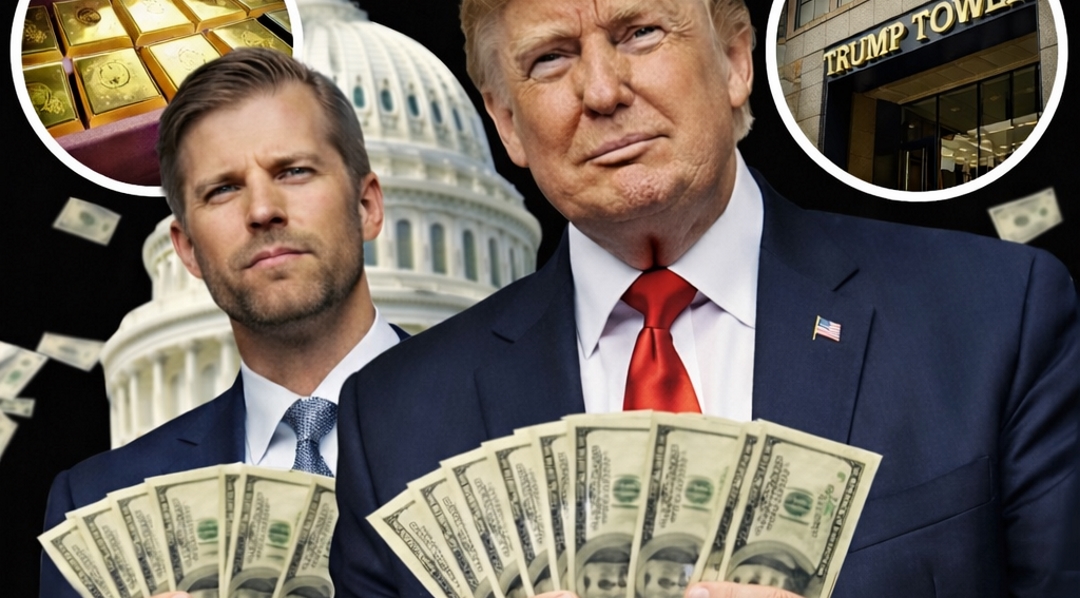
Donald Trump’s financial empire has been one of the most debated aspects of his public identity for decades. Long before his presidency, Trump built a brand that blended real estate, licensing deals, entertainment ventures, and media influence. Supporters often frame his wealth as proof of business success, while critics scrutinize the methods, tax structures, and branding strategies that contributed to his net worth. Financial estimates fluctuate depending on market conditions and valuation methods, but analysts generally agree that multiple revenue streams collectively helped drive Trump’s assets into the multibillion-dollar range.
While the term “profiteering” is often used politically or rhetorically, Trump’s wealth growth can be better understood by examining specific financial strategies and business developments that significantly expanded his income. Seven key factors consistently appear in financial reviews and investigative reporting.
1. Real estate branding transformed buildings into global licensing revenue
Trump’s name became one of his most profitable business assets. Rather than relying solely on direct property ownership, Trump expanded into licensing agreements that allowed developers to use the Trump brand on hotels, residential towers, and resorts worldwide. Licensing deals require far less capital investment while generating ongoing fees and profit sharing.
Financial analysts have noted that this strategy allowed Trump to scale globally without carrying the full financial risk of construction or operational costs. In valuation analysis tracking Trump’s wealth and business structure, licensing partnerships are frequently cited as one of the most efficient ways Trump expanded his revenue streams.
This model shifted Trump’s business approach from traditional real estate ownership toward brand monetization, creating income opportunities across multiple continents simultaneously.
2. Television success dramatically expanded his personal brand value
Trump’s appearance as host of “The Apprentice” and its related programming significantly increased his public visibility and business leverage. The show not only generated television salary income but also transformed Trump into a global celebrity entrepreneur.
Brand experts often point out that reality television exposure dramatically increased the commercial value of Trump’s name. Licensing fees, speaking engagements, product endorsements, and partnership opportunities grew substantially following the show’s success. The television platform helped reposition Trump from a New York real estate developer into a widely recognized international brand.
3. Golf resorts and luxury hospitality became major long-term investments
Trump invested heavily in golf courses and luxury resorts across the United States, Scotland, Ireland, and other locations. These properties generate income through membership fees, tournaments, tourism, and real estate development connected to resort communities.
While golf resorts require substantial upfront investment and ongoing maintenance costs, they also function as prestige properties that elevate brand value. In financial investigations reviewing Trump’s tax and business structures, reporting highlighted both the profitability and financial risk associated with his golf empire, showing how certain properties produced significant revenue while others faced fluctuating performance.
The golf portfolio has remained one of Trump’s most visible and controversial business segments, especially during and after his presidency.
4. Strategic debt management allowed expansion during high-risk periods
Trump’s business history includes several high-profile debt restructurings and financial recoveries, particularly during the 1990s real estate downturn. Rather than collapsing under financial pressure, Trump renegotiated loans, sold assets, and restructured business operations to maintain control of key properties.
Corporate finance specialists often describe these restructurings as high-risk but potentially high-reward strategies. By preserving brand value and maintaining ownership stakes in signature properties, Trump positioned himself to benefit from later real estate market recoveries. Critics argue these restructurings relied heavily on lender concessions, while supporters view them as aggressive but effective business survival tactics.
5. Merchandise, licensing, and consumer product deals diversified income
Trump expanded his business model beyond property development into merchandise and consumer product branding. Over the years, Trump-branded clothing, fragrances, home goods, and lifestyle products generated additional licensing income streams.
Although many of these product lines fluctuated in commercial success, brand licensing allowed Trump to earn revenue without managing manufacturing or distribution directly. Marketing experts often emphasize that celebrity-driven consumer branding became one of Trump’s earliest diversification strategies, helping stabilize income during real estate market volatility.
6. Political influence increased fundraising and business visibility
Trump’s entry into national politics dramatically reshaped the economic value of his public brand. His presidency elevated global recognition and intensified both support and opposition, which in turn influenced business activity connected to his name.
Supporters often increased spending at Trump-owned properties as political loyalty gestures, while critics and corporate partners sometimes distanced themselves. Economic analysts say political visibility can simultaneously increase brand loyalty among core audiences while limiting broader commercial partnerships. The net financial impact remains debated, but few dispute that political exposure significantly expanded Trump’s global brand awareness.
7. Real estate appreciation significantly increased asset valuation
Perhaps the most traditional contributor to Trump’s wealth has been long-term appreciation of real estate holdings. Properties in Manhattan and other major markets often increased dramatically in value over time due to urban development, tourism growth, and luxury housing demand.
Real estate valuation experts emphasize that property appreciation can create enormous wealth growth even when annual operating profits fluctuate. Trump’s early investments in high-profile urban developments positioned him to benefit from decades of rising property values, which remain a central component of his estimated net worth.
Trump’s financial legacy remains one of the most polarizing business stories in modern American culture. Supporters often view his wealth as evidence of entrepreneurial success and brand mastery, while critics focus on ethical concerns, debt reliance, and political-business overlap.
Regardless of perspective, Trump’s multibillion-dollar asset accumulation reflects a complex blend of real estate investment, brand licensing, media influence, and political visibility. Each factor contributed differently at various stages of his career, demonstrating how modern celebrity business empires increasingly rely on diversified revenue streams rather than traditional single-industry success.
As financial disclosures, market changes, and political developments continue shaping Trump’s economic influence, analysts expect his business structure to remain a subject of ongoing scrutiny and debate. His financial model illustrates how branding, media exposure, and strategic asset management can combine to produce extraordinary wealth in the modern global economy.