
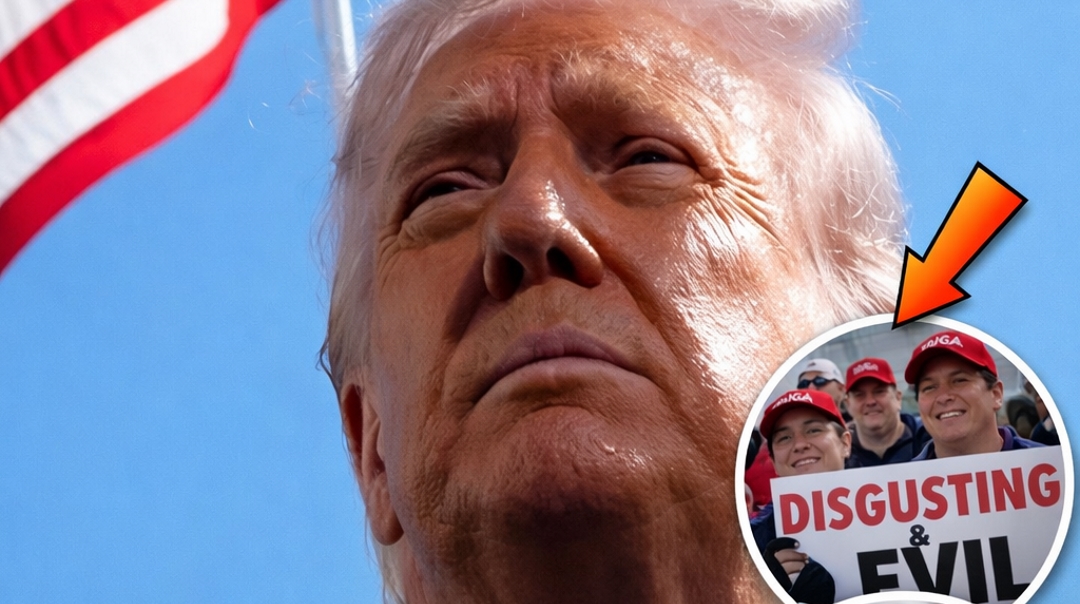
For years, Donald Trump’s political strength rested on something unusually durable in modern politics: unwavering loyalty. Rally after rally, controversy after controversy, his base stood firmly behind him. Critics predicted fractures many times before, yet they rarely materialized in any visible way.
But recently, a different tone has started to surface in places where that loyalty once seemed unquestionable.
At campaign events, on conservative talk shows, and across online communities that long defended him, a small but noticeable group of supporters has begun expressing frustration. Some say it quietly. Others are far more blunt. What was once near-universal enthusiasm now occasionally includes doubt.
The shift isn’t happening everywhere, and Trump still commands enormous support across the Republican electorate. But political observers say the conversations emerging among parts of his base reveal something important: expectations have changed.
In interviews outside recent political gatherings, a few longtime voters described feeling conflicted. One man who said he attended multiple rallies over the years explained that he still supports many of Trump’s policies but worries about constant political chaos surrounding him.
“I liked what he stood for,” the voter said. “But at some point you start wondering if all the fighting is helping or hurting.”
Comments like that would have been almost unheard of in earlier phases of Trump’s political rise. Back then, criticism from outside the movement often strengthened loyalty within it. Supporters viewed attacks from media and political opponents as proof that Trump was challenging a system they already distrusted.
Now, however, the questions are coming from inside the circle as well.
Part of the tension comes from the unusual place Trump occupies in American politics. He is both a former president and a continuing political force who dominates headlines, shapes party debates, and commands massive attention every time he speaks.
That visibility keeps expectations high. Every speech, policy position, and legal battle is examined not only by critics but also by people who once defended him without hesitation.
Some supporters say their concerns are strategic rather than personal. They worry about electability, about whether ongoing controversies could affect future elections, and about how independent voters might react. In private conversations at political events, those questions come up more often than they used to.
Others frame the issue differently. They argue that the political movement Trump helped build has grown beyond any single figure and needs to focus on long-term goals rather than constant battles.
Still, many voters remain fiercely loyal. At rallies across the country, thousands continue to cheer loudly, wear campaign gear, and defend Trump’s record in interviews with reporters. The idea that his support has collapsed simply isn’t supported by turnout or polling in most Republican circles.
What seems to be changing instead is the tone of discussion.
Political strategists say movements often reach this stage after years in the spotlight. Early enthusiasm eventually evolves into debate about direction, leadership style, and the future of the cause itself. That doesn’t necessarily mean the movement is weakening — sometimes it means it’s maturing.
Trump’s critics argue the emerging criticism proves his influence is fading. His allies dismiss that claim entirely, saying disagreement within a large political coalition is normal and healthy. Both sides, in different ways, are trying to shape the narrative of what the moment actually represents.
Meanwhile, the former president continues campaigning and speaking with the same confrontational tone that defined his rise. At recent events, he has doubled down on familiar themes: media distrust, political outsiders versus the establishment, and promises to reshape Washington.
Those messages still resonate strongly with millions of voters.
But for a smaller segment of his longtime supporters, the conversation has become more complicated. Some say they’re not abandoning him — they’re simply evaluating what comes next. Others insist the criticism is being exaggerated by media coverage that has long opposed him.
The truth may lie somewhere in between. Political loyalty rarely disappears overnight. More often, it changes slowly, through conversations at kitchen tables, debates among friends, and moments when voters reassess what they want from leaders they once followed without hesitation.
Whether this emerging frustration grows into something larger or fades as past controversies have is still unclear. American politics has repeatedly shown that predictions about Trump’s support can be wrong in both directions.
For now, one thing is certain: the discussion inside his own base is no longer as simple as it once was.