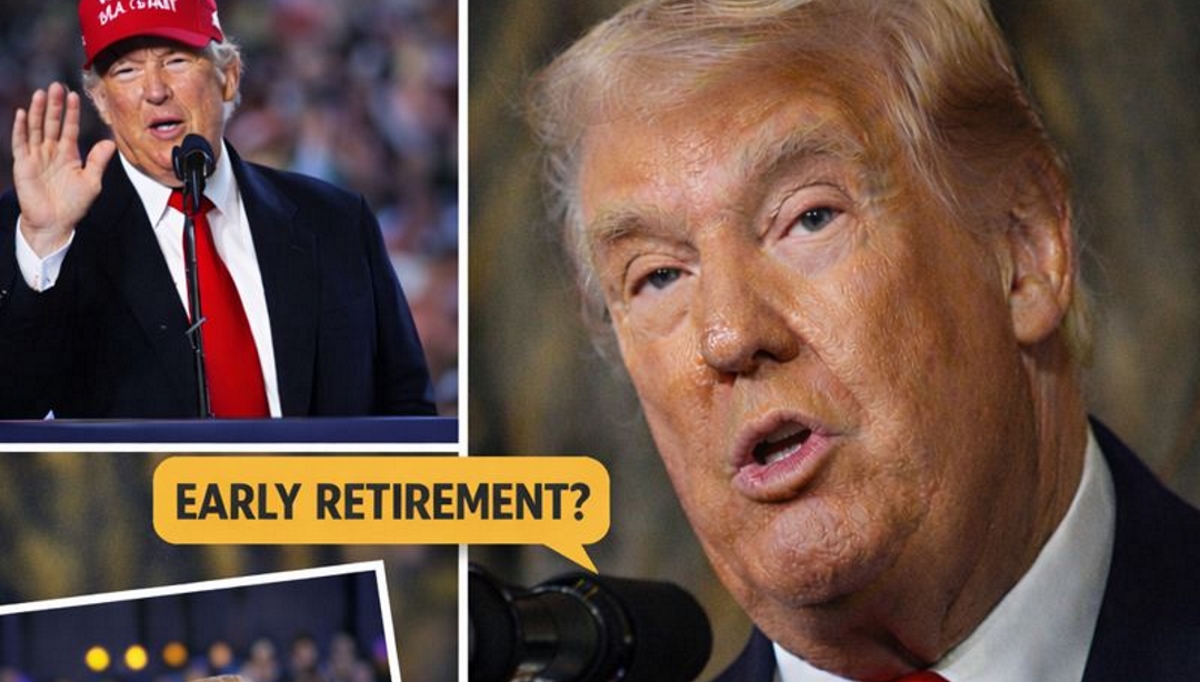
Fresh speculation is building around Donald Trump’s future on television, with political insiders and media analysts openly questioning whether the former president may be preparing for an early retirement from his long-standing role as a TV personality. While Trump has not announced any formal decision, recent shifts in tone, priorities, and public appearances have fueled growing curiosity.
Trump’s relationship with television has been central to his public identity for decades. Long before politics, he became a fixture of American pop culture through reality TV, transforming celebrity into political capital. That era reshaped modern media strategy, a transition often revisited in old industry retrospectives that chart how entertainment blurred into power.
Now, some close observers say the signals look different. Trump’s recent media activity has leaned heavily toward political messaging, rallies, and legal responses rather than entertainment-focused appearances. Several media executives quietly noted that the energy once devoted to television branding appears redirected elsewhere.
He has never hidden his transactional view of media. Television, he has often said, is valuable when it amplifies influence. Analysts argue that if TV no longer serves that function, Trump may see little reason to remain tethered to it.
Industry insiders point to declining interest in traditional broadcast formats as another factor. Reality television no longer dominates cultural attention the way it once did, and Trump has shown little appetite for adapting his persona to newer entertainment trends. That broader shift has been examined in quiet conversations inside Hollywood that rarely break into politics.
Supporters dismiss retirement rumors as overblown, arguing that Trump thrives on attention and will always find a camera. They note that even when absent from formal TV roles, he remains omnipresent through rallies, interviews, and digital platforms.
Trump doesn’t need TV. TV needs Trump. — Media commentator (@RatingsTalk) Dec 2025
Others see a strategic calculation at work. Trump’s political ambitions and legal battles demand message discipline, something entertainment television does not always allow. By stepping back from TV hosting, he could reduce distractions while maintaining control over when and how he appears.
There is also the question of legacy. Trump has long been preoccupied with how history will remember him. Some advisers believe he views television as a closed chapter — useful once, but now secondary to political impact. That mindset aligns with analysis that explores how figures exit fame when power eclipses popularity.
Critics argue the speculation misunderstands Trump’s instincts. They say he is unlikely to relinquish any platform voluntarily, especially one that helped build his brand. To them, talk of retirement sounds more like pause than departure.
Yet even critics acknowledge a shift in emphasis. Trump’s media appearances increasingly resemble political events rather than entertainment segments. The humor, theatrics, and production that once defined his TV persona have given way to grievance, confrontation, and messaging discipline.
He moved from entertainer to agitator — and that changes the medium. — Media analyst (@SignalShift) Dec 2025
Television networks themselves may also be reassessing the cost-benefit equation. Trump reliably drives attention, but he also brings controversy that advertisers and corporate partners increasingly scrutinize. Executives have grown cautious, a reality reflected in industry discussions about brand safety.
For Trump, that caution could feel limiting. He has historically thrived in environments where he sets the rules, not where guardrails constrain him. Digital platforms and live events offer that freedom in ways traditional TV does not.
Some allies suggest that if Trump does step away from television, it will not be framed as retreat but as evolution. They predict he would present the move as a choice, not a concession, emphasizing independence over ratings.
The broader implication extends beyond Trump himself. His possible exit from TV hosting would mark the end of a chapter in American media, one where reality television directly incubated political power. Few figures have demonstrated that pathway as effectively — or as controversially.
Trump didn’t just use TV. He rewired what TV could do. — Cultural historian (@MediaMemory) Dec 2025
For now, the rumors remain just that. Trump has not confirmed any retirement plans, and his unpredictability remains a defining trait. Still, the conversation itself signals how much his role has changed.
Whether he leaves television quietly, dramatically, or not at all, one thing is clear: Trump’s relationship with the medium is no longer what it once was. And in a media landscape he helped reshape, even absence can be a statement.
If Trump does step away from TV hosting, it will not erase his impact. It will simply confirm that, for him, television was never the destination — only the launchpad.