
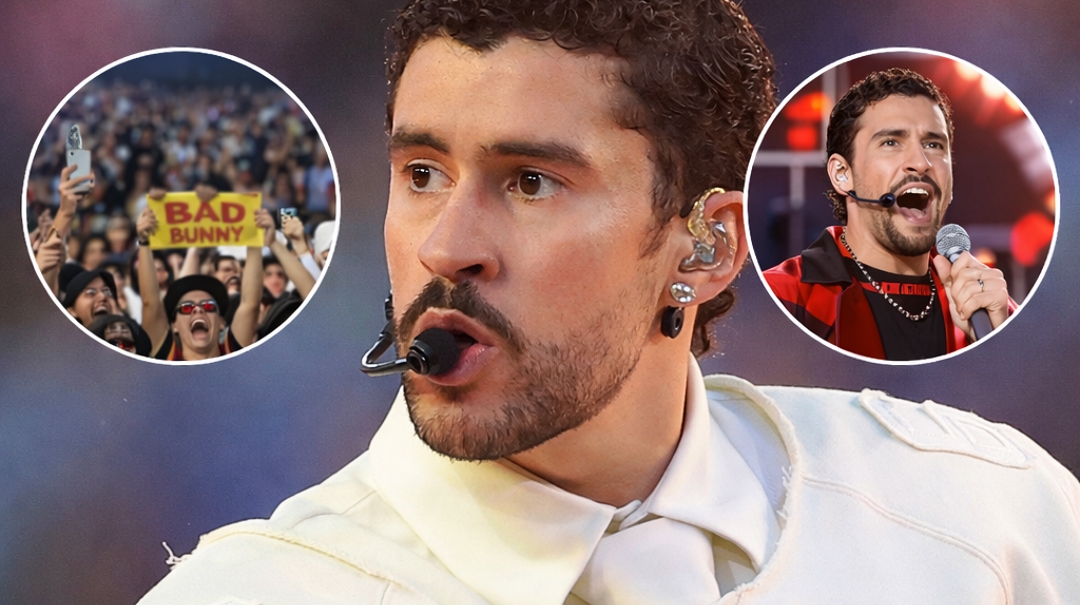
The Super Bowl halftime show is supposed to be untouchable territory, a cultural moment so massive that even mild criticism can ignite a national argument. This year, that argument arrived fast and loud. Within minutes of the final beat dropping, a wave of commentary labeled the performance “the worst of the century,” a phrase that spread across timelines like a spark hitting dry grass.
At the center of the storm was Bad Bunny, one of the most streamed artists on the planet, whose global dominance didn’t protect him from the blunt force of American sports-and-entertainment discourse. The reaction wasn’t subtle. It was polarized, emotional, and relentless, with critics declaring the show flat, confusing, or disconnected from what they believe a Super Bowl audience wants.
But almost immediately, the backlash to the backlash began.
Fans pushed back hard, arguing that the criticism revealed less about the performance and more about who the halftime show is still expected to serve. Social media filled with posts accusing detractors of ignoring Latin music’s influence, dismissing bilingual artistry, and clinging to outdated expectations of spectacle.
Some viewers complained the performance lacked the bombast of previous years. Others fixated on staging choices, pacing, or the absence of surprise guest appearances. A few high-profile commentators took it further, declaring it an all-time low point for the halftime tradition, language that poured fuel on an already burning conversation.
Yet defenders pointed out that the halftime show has never been a monolith. Over the decades, it has reflected shifts in culture, taste, and demographics, often lagging behind what the broader public is actually listening to. For Bad Bunny supporters, the criticism felt like a refusal to accept that the center of pop culture no longer looks or sounds the same.
Within hours, fan-shot videos from inside the stadium began circulating, showing packed sections dancing, singing along, and waving Puerto Rican flags. Clips from international viewers poured in as well, many expressing disbelief that a performance celebrated across Latin America was being dismissed so harshly in U.S. media.
One widely shared thread argued that calling the show “the worst of the century” ignored the reality that Bad Bunny is not a niche act, but one of the most commercially successful musicians alive, with stadium tours and streaming numbers that dwarf many past halftime headliners.
Critics, however, stood firm. Some argued that popularity alone doesn’t translate to a compelling halftime experience. Others said the show felt more like a tour stop than a once-in-a-lifetime event. The debate quickly became less about choreography or sound mixing and more about cultural ownership of the Super Bowl itself.
Media coverage reflected the divide. A detailed recap published by The New York Times’ breakdown of the halftime performance noted the generational and cultural split in reactions, highlighting how younger and international audiences responded far more positively than older, traditional viewers.
Bad Bunny himself didn’t immediately engage with the criticism, a move some interpreted as confidence and others as avoidance. When commentary continued to snowball, supporters flooded platforms with reminders of his record-breaking career, emphasizing that global impact does not require universal approval.
Several musicians and industry figures weighed in, cautioning against judging halftime shows solely through a narrow cultural lens. They pointed out that previous performances initially criticized have later been reevaluated more kindly, once the noise of the moment faded.
In fan spaces, the narrative shifted from defense to pride. Posts reframed the controversy as proof that Latin artists are now prominent enough to provoke discomfort in spaces that once ignored them entirely. For many, the outrage wasn’t a failure, but a sign of change.
Rolling Stone’s analysis of the response, published the following day, described the moment as a cultural flashpoint rather than a simple performance review, noting how the reaction to Bad Bunny’s halftime show exposed deep divides in audience expectations.
What’s clear is that the halftime show no longer exists in a neutral zone. Every choice, from language to wardrobe to rhythm, becomes symbolic. For Bad Bunny, the night cemented his place not just as an entertainer, but as a lightning rod for broader conversations about representation and power in American pop culture.
Whether the performance will be remembered as a misstep or a misunderstood milestone remains to be seen. History suggests that time often softens the harshest verdicts. What won’t fade is the intensity of the response, or the reality that fans were just as loud as critics, refusing to let a single narrative define the moment.
In a league built on spectacle, the loudest takeaway may not be whether the show was great or terrible, but that it forced the Super Bowl audience to confront how much the world around it has already changed.