
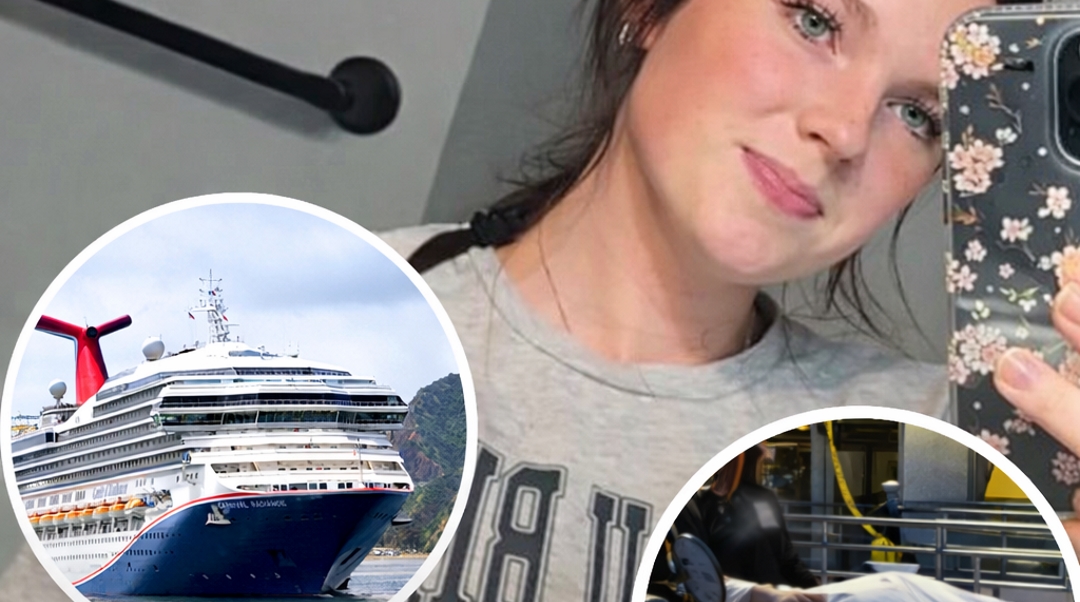
It was meant to be a carefree vacation, the kind families book to celebrate time together and escape everyday routines. Instead, it ended in tragedy. A teenage girl was found dead aboard a cruise ship, and as authorities launched a federal investigation, attention quickly turned to the last thing she left behind: a quiet, unsettling social media post shared shortly before her death.
The girl, whose identity has been widely reported but whose family has asked for sensitivity, had been traveling with relatives on a Caribbean cruise when the incident occurred. Initial statements from the cruise line described the death as under investigation, offering few details beyond confirming that authorities had been notified and the ship had cooperated fully.
What transformed the case from a tragic onboard death into a national story was the involvement of the FBI. Because the incident took place at sea and involved a U.S. citizen, federal authorities assumed jurisdiction, signaling that unanswered questions remained about how and why the teen died.
As news spread, people began revisiting the girl’s online presence. Her final post, shared hours before her death, showed her smiling, casually dressed, and appearing calm. There was no obvious distress, no dramatic caption, nothing that hinted at what would follow. That contrast—between the ordinariness of the post and the gravity of what happened next—has haunted those who saw it.
Friends and strangers alike flooded the comments with disbelief. Some noted how normal she seemed, how excited she appeared to be about the trip. Others questioned whether subtle signs had been missed, reading meaning into facial expressions, background details, or emojis that may never have carried any deeper intent.
According to early reporting on the case, the FBI confirmed it was reviewing the circumstances surrounding the teen’s death but declined to speculate, emphasizing that investigations at sea are often complex and take time. No cause of death was immediately released, and officials urged the public not to jump to conclusions.
The cruise line, meanwhile, issued a statement expressing condolences to the family and stressing that guest safety is a top priority. Crew members reportedly discovered the teen unresponsive, and medical staff were unable to revive her. Beyond that, details have been intentionally limited.
That silence has fueled speculation online. Some commenters have floated theories involving accidents, medical emergencies, or foul play, while others have pointed to the ship environment itself—tight spaces, unfamiliar layouts, late nights, and the unique risks of being at sea. Cruise experts often note that while serious incidents are rare, investigations can be complicated by jurisdictional boundaries and delayed access to forensic resources.
The teen’s family has largely stayed out of the public spotlight, issuing brief statements asking for privacy as they grieve. In cases like this, families often face a double trauma: the sudden loss of a loved one and the relentless public attention that follows when a death becomes a headline.
Social media has played a powerful role in shaping the narrative. Final posts, texts, or photos frequently become focal points in modern tragedies, treated almost like clues in a mystery. Psychologists caution against this impulse, noting that most people’s last posts are mundane by nature and rarely predictive of harm or danger.
Still, the emotional pull is hard to ignore. There is something deeply unsettling about seeing a young person alive and smiling, frozen in time just before everything ends. It invites questions with no easy answers and creates a sense of unfinished conversation—words left unsaid, moments that feel abruptly stolen.
As additional coverage has noted, the FBI’s involvement does not automatically imply criminal wrongdoing. Federal authorities often step in to ensure an independent review, especially when deaths occur in international waters. Still, their presence underscores that investigators are taking the matter seriously.
For many parents watching from afar, the story has struck a nerve. Cruises are often marketed as safe, family-friendly environments, and incidents involving young passengers challenge that sense of security. Even without evidence of negligence, the idea that something can go so wrong so quickly is deeply unsettling.
The case also highlights how little control families have once a tragedy occurs at sea. Ships operate under complex legal frameworks, and answers can take weeks or months. Autopsy results, toxicology reports, and witness statements all move at a slower pace than the internet’s appetite for resolution.
In the meantime, the teen’s final post continues to circulate, shared by people who never knew her but feel connected through the intimacy of that last image. It has become a symbol not just of her life, but of the fragility of moments we assume will continue.
Authorities have said they will release information when appropriate, and until then, many questions remain open. What happened in those final hours? Was it an accident, a medical event, or something else entirely? And could anything have changed the outcome?
For now, the focus remains on the investigation and on respecting the family’s grief. Behind the headlines, behind the speculation, is a life cut short and a family facing a loss no vacation was ever meant to contain.
The story resonates because it reflects a reality people struggle to accept: sometimes there is no warning, no clear narrative, no neat explanation. Just a final post, a sudden absence, and a long wait for answers that may never fully satisfy the questions left behind.